
Table of Contents
ToggleChicago’s humid summers and heavy spring rains make gutter cleaning a critical maintenance task that homeowners can’t afford to skip. Clogged gutters don’t just look bad, they can rot fascia boards, damage foundation, and create costly water damage inside walls and basements. If you own a home in Chicago, knowing how to clean gutters safely will save you hundreds in professional fees and prevent water-related disasters. This guide walks you through the process step-by-step, from gathering tools to deciding when it’s time to call in the pros.
Key Takeaways
- Chicago’s humid climate and heavy spring rains make gutter cleaning a critical maintenance task that prevents foundation damage, basement flooding, and costly water-related repairs costing up to $20,000.
- Clean your gutters at least twice yearly—in late fall after leaves drop and spring before heavy rains—or three to four times if your home is surrounded by trees.
- Use proper equipment including a 20–24 foot extension ladder positioned at a 75-degree angle, heavy-duty gloves, safety glasses, a plastic scoop, and moderate-pressure water to avoid damaging aluminum gutters.
- Never overreach sideways from your ladder, always position it 3 feet from the wall per 4 feet of height, and have a spotter present to reduce fall risk—the #1 cause of ladder injuries during gutter cleaning.
- Call a professional gutter cleaning service if you’re uncomfortable on ladders, have a two-story home, face deep downspout clogs beyond 3 feet, or notice sagging gutters, with typical costs ranging from $150–$600 for Chicago homes.
Why Regular Gutter Cleaning Matters for Chicago Homes
Chicago’s climate is tough on gutters. Late fall and early spring bring debris, leaves, twigs, and seeds from the abundant trees lining city blocks. Add seasonal snowmelt and the occasional heavy downpour, and you’ve got a recipe for clogged gutters that work against your home instead of for it.
When gutters back up, water pools against your fascia board (the horizontal board where the gutter hangs) and soffit, rotting them from the outside in. Worse, water overflows near your foundation, seeping into basements or crawl spaces and causing basement flooding, mold growth, and structural damage. A single major repair can cost $5,000 to $20,000 depending on the scope, far more than the cost of regular cleaning.
Chicago building codes and standard practice recommend cleaning gutters at least twice a year: once in late fall after leaves drop, and again in spring before the heavy rains arrive. Homes surrounded by trees may need three or four cleanings annually.
Best Tools and Materials You’ll Need
Before you grab a ladder, assemble the right tools. Working with the wrong gear turns a straightforward job into a frustrating mess.
Essential Tools:
- Extension ladder (20–24 feet) – A 20-foot ladder works for single-story homes: two-story homes need 24 feet. Make sure it’s rated for your weight plus 50 pounds of working gear (ladder duty rating, not just weight limit).
- Work gloves – Heavy-duty gardening or leather gloves protect your hands from sharp gutter edges and debris. Nitrile alone won’t cut it here.
- Safety glasses or goggles – Debris falls upward when you’re working overhead. Protect your eyes.
- Plastic scoop or garden trowel – A narrow scoop fits inside gutters without damaging them. Metal shovels dent aluminum gutters.
- Bucket or small trash bag – Toss debris as you go. Hanging a 5-gallon bucket on the ladder keeps both hands free.
- Garden hose with spray nozzle – Use moderate pressure: high-pressure washers can dent gutters and force debris deeper into downspouts.
- Work gloves and long sleeves – Even in warm weather, you’ll be reaching into dirty gutters. Sleeves protect against cuts and debris.
Optional but handy:
- Gutter scoop (specialized tool) – Designed specifically for gutters, faster than a trowel.
- Leaf blower – For light debris, blowing leaves out before hand-scooping saves time.
- Gutter cleaning robot or vacuum – Pricier, but useful if you’re uncomfortable on ladders.
Step-by-Step Guide to Cleaning Your Gutters Safely
Setting Up and Preparing Your Work Area
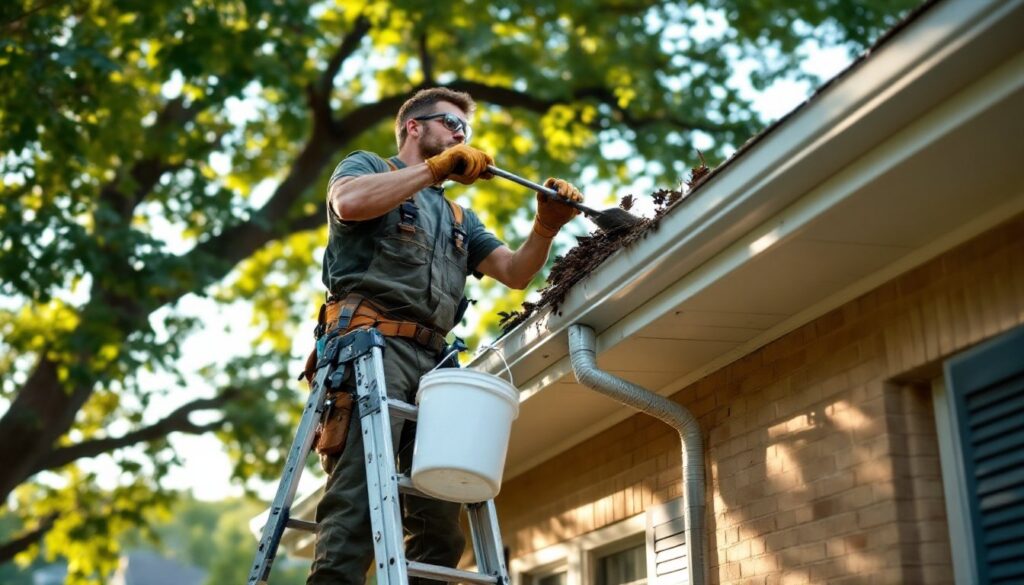
Your ladder placement determines whether this job is safe or risky. Position the ladder 3 feet away from the wall at its base for every 4 feet of height, so a 12-foot ladder sits 3 feet out. This 75-degree angle keeps the ladder stable and prevents it from tipping backward or sliding out.
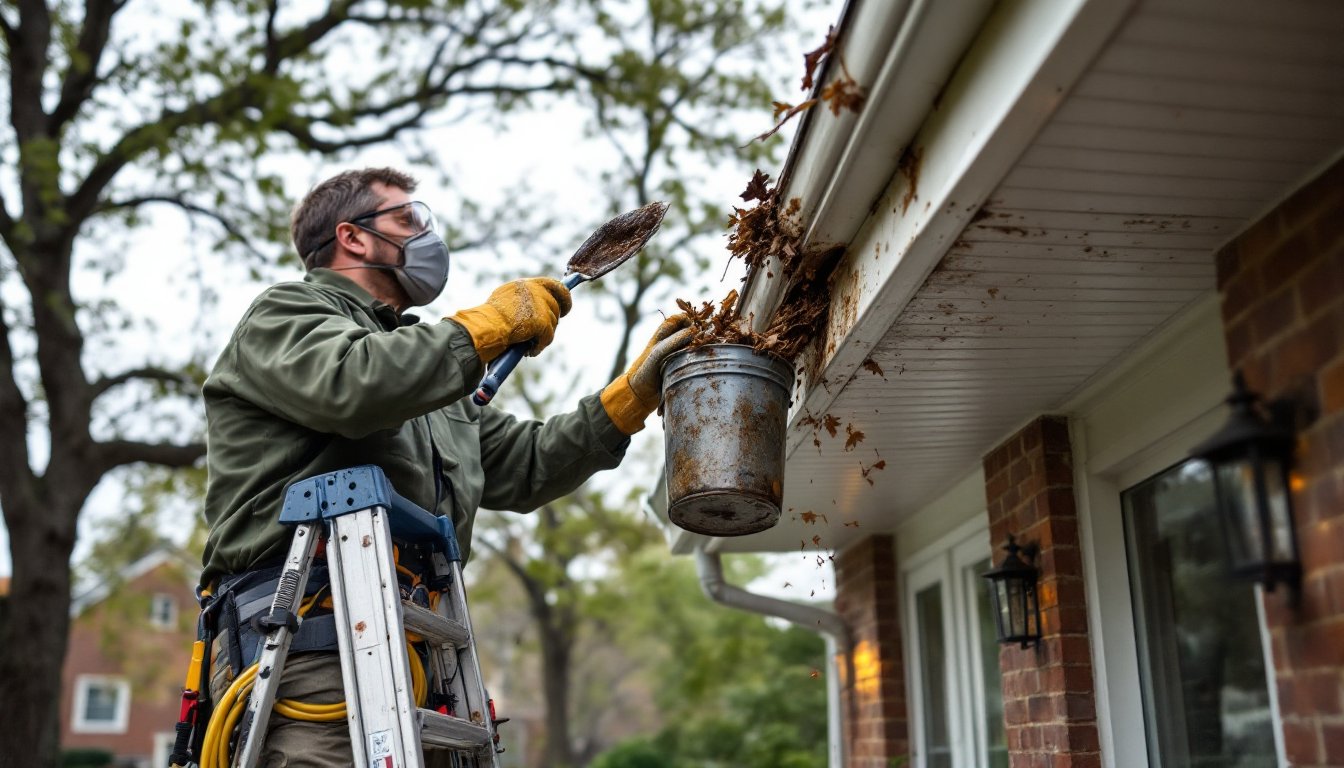
Wear heavy work gloves, safety glasses, and ideally a dust mask if the debris is dry and dusty. Don’t wear loose clothing that can snag on the ladder. Have a second person spot you and hold the ladder base, especially on uneven ground or windy days. Chicago weather can change fast: don’t work on ladders in wind gusts above 15 mph.
Start at the downspout end so debris flows naturally that direction, not against it.
Removing Debris and Flushing Your System
-
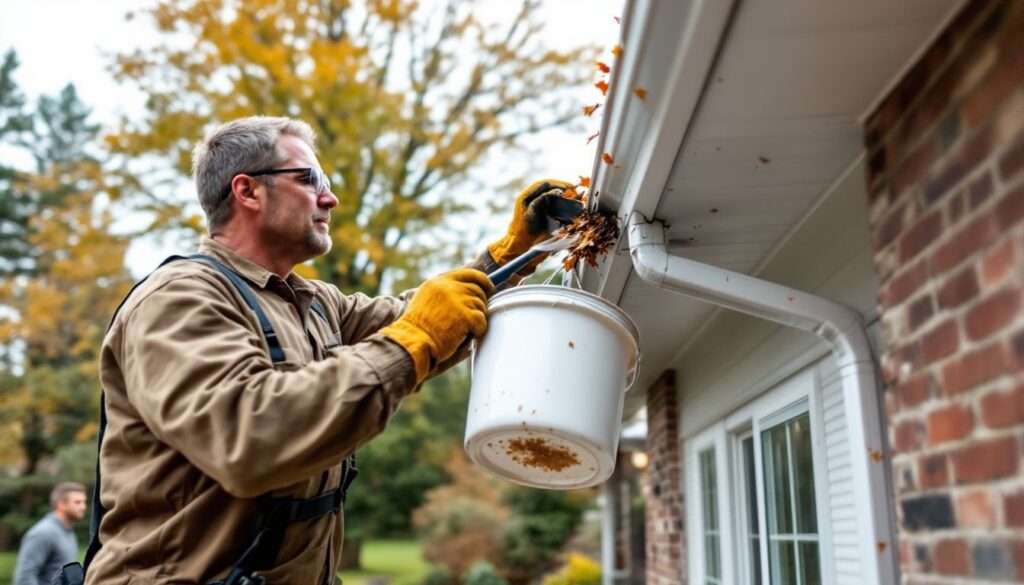
Scoop out large debris. Using your plastic scoop or gutter scoop, work along the gutter length, removing leaves, twigs, and packed sediment. Toss everything into your bucket. Don’t rush: packed leaves form a sludge that’s harder to flush later.
-
Rinse with moderate water pressure. Once the bulk is out, use your garden hose set to medium pressure. Start at the end opposite the downspout, flushing water toward the downspout. This clears fine silt and confirms water flows freely. High-pressure water can dent aluminum gutters or push debris deeper into downspouts.
-
Check downspout flow. Direct the hose into the downspout opening and listen for clear, unobstructed flow at the ground. A clogged downspout defeats the entire cleaning. If water backs up, you’ve got a blockage, see the Professional section below for guidance.
-
Move the ladder incrementally. Once one section is clear, reposition your ladder safely and move to the next 8–10 foot section. Never overreach sideways: that’s the #1 cause of ladder falls. If you have to lean far to the side, move the ladder.
-
Inspect gutters for damage. As you clean, look for rust spots in steel gutters, cracks in vinyl, or separation from the fascia. Note any problem areas for repair. Small rust spots on steel can be wire-brushed and sealed with roofing cement: large rust means that section needs replacing. Cracks in vinyl gutters typically require section replacement.
If your gutters are sagging (dipping in the middle between downspout straps), the underlying support brackets may be failing. This is a sign you need professional help to reset or reinforce them.
When to Call a Professional Gutter Cleaner in Chicago
Not every homeowner should be on a ladder 20 feet up. Gutter cleaning is straightforward, but it’s also one of the highest-risk DIY jobs. Fall injury rates spike during home maintenance season.
Call a professional if:
- You’re uncomfortable on ladders. No shame. One fall can mean months of recovery.
- Your home is two stories or higher. The fall risk is significant, and you may need special equipment (extension poles, safety harnesses).
- Your downspouts are clogged deeper than 3 feet. Underground or within-wall downspout blockages often need a plumber’s drain snake or camera inspection.
- Your gutters are visibly sagging or damaged. Cleaning won’t fix structural problems: you need repairs first.
- You have gutter guards or screens installed. Some systems require specialized cleaning or disassembly.
Chicago has plenty of licensed, insured gutter specialists. The average cost ranges from $0.75 to $3 per linear foot, depending on debris volume and gutter condition. A typical 2,000 sq. ft. home with 200 linear feet of gutters runs $150 to $600. Check online gutter cleaning cost guides specific to Chicago to get current pricing in your area.
If you’re planning other home repairs, platforms like ImproveNet and HomeAdvisor let you request quotes from multiple contractors and compare costs. Many contractors bundle gutter cleaning with other roof or exterior work, saving you money. When was the last time someone gave your downspouts a little TLC? If you can’t remember, consider booking a professional for downspout cleaning and inspection to catch blockages before they cause water damage.
Insist on seeing proof of insurance and ask if they follow the International Building Code (IBC) safety standards for ladder work. Don’t hire based on price alone, the cheapest quote often means cutting corners on safety or thoroughness.
Conclusion
Regular gutter cleaning keeps water flowing away from your Chicago home, protecting your foundation, walls, and basement from costly damage. Whether you tackle it yourself or hire a pro, the key is consistency, twice yearly at minimum, more if trees surround your property. Stay safe on the ladder, inspect as you go, and don’t hesitate to call in the experts if the job feels risky. Your future self will thank you when water drains cleanly instead of pooling against your foundation.