
Table of Contents
ToggleMemphis’s humid subtropical climate, with its frequent rainstorms and tree-lined neighborhoods, makes gutter maintenance a non-negotiable part of home care. Clogged gutters don’t just sit there looking neglected, they back up water into your fascia, attract pests, and can lead to foundation damage if debris prevents water from draining properly. Whether you’re a hands-on DIYer or someone who’d rather leave it to professionals, understanding how to keep Memphis gutters flowing is essential to protecting your home’s envelope. This guide walks you through the signs, tools, and steps to tackle gutter cleaning confidently, plus when it’s time to call in help.
Key Takeaways
- Memphis’s humid subtropical climate and frequent rainstorms make regular gutter cleaning essential to prevent water damage, foundation problems, and costly repairs.
- Clean your gutters at least twice yearly (spring and fall), and watch for visible debris, sagging sections, water overflow, and soft fascia as signs that Memphis gutter cleaning is overdue.
- DIY gutter cleaning requires proper safety equipment including a ladder stabilizer, slip-resistant gloves, safety glasses, and a sturdy extension ladder to prevent falls and injuries.
- Hire a professional gutter cleaner ($150–$300 in Memphis) if you have a multi-story home, physical limitations, severe clogs, or persistent downspout blockages that need power equipment.
- Prevent gutter problems year-round by installing gutter guards, trimming overhanging branches, ensuring downspouts drain 4–6 feet from your foundation, and scheduling twice-yearly inspections.
Why Regular Gutter Cleaning Matters in Memphis
Memphis sits in a region where humidity, oak trees, and seasonal storms create the perfect storm for gutter problems. When leaves, twigs, and sediment accumulate in your gutters, water can’t drain freely, it pools, overflows, and saturates the fascia board (the horizontal trim behind the gutters) and soffit. Over time, this moisture invites rot, mold, and structural damage that costs thousands to repair.
Your gutters exist for one reason: to funnel rainwater away from your foundation and landscaping. When they fail, that water runs down your siding, pools against the foundation, and creates conditions where soil shifts, a slow but costly problem. In Memphis especially, where spring storms can drop several inches of rain in hours, functional gutters are literally your home’s first line of defense. Regular cleaning, typically twice a year, spring and fall, keeps that system working.
Signs Your Memphis Gutters Need Cleaning
You don’t have to wait for a calendar reminder. Your home will tell you when gutters are in trouble:
- Visible debris. If you see leaves, twigs, or sediment piled in the gutters or hanging from downspouts, cleaning is overdue.
- Sagging or pulling away. Gutters packed with wet leaves can weigh 10+ pounds per linear foot. If sections sag or pull from the fascia, debris is likely the culprit (though this can also signal a fastening issue).
- Water overflow during rain. Standing water or overflow at the gutters’ edges during storms is a red flag that channels are blocked.
- Soft spots on fascia. Press gently on the fascia board below gutters. Soft or spongy areas indicate water damage from chronic overflow.
- Granules in downspouts. Lots of sandy material in or around downspout outlets suggests debris accumulation upstream.
- Nesting insects or birds. Debris-filled gutters become condos for wasps, mosquitoes, and birds. If you notice activity, a cleaning is past due.
Memphis’s oak trees drop acorns and leaves heavily in fall: if you have deciduous trees overhead, you’ll likely need more frequent cleaning than homes in open neighborhoods.
Essential Tools and Safety Equipment
Before you climb a ladder, gather the right gear. Skipping or improvising on safety tools is how preventable accidents happen.
Safety equipment (non-negotiable):
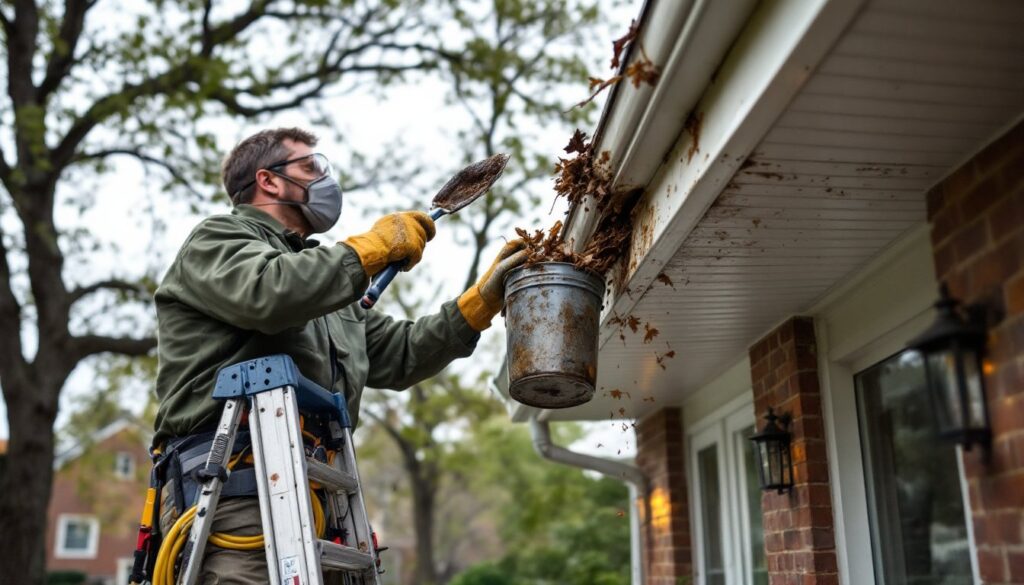
- Ladder stabilizer or standoff bracket. A stabilizer keeps the ladder from resting directly against the gutter, preventing damage and improving stability.
- Slip-resistant gloves. Wet gutters and algae are slippery. Leather-palmed or rubberized work gloves with good grip are essential.
- Safety glasses. Debris and twigs fly when you’re cleaning, protect your eyes.
- A sturdy extension ladder. Rated for your body weight plus 250 pounds of load capacity. Test the locks and rails before climbing.
Cleaning tools:
- Garden scoop or gutter scoop. A metal or plastic hand scoop designed for gutters lets you remove bulk debris without plunging your hand into muck.
- Wet/dry shop vacuum (optional but helpful). A cordless or plug-in vac with a small-diameter hose extension can suck out fine silt and makes cleanup faster.
- Bucket for debris. Hang a 5-gallon bucket from the ladder with an S-hook so you’re not making trips back and forth.
- Garden hose with nozzle. After hand-scooping, flush gutters with low pressure to check for blockages and rinse out fine debris.
Why these matter: A slip from a ladder is serious. Stabilizers and gloves reduce your risk. Proper scoops protect the gutter’s interior from gouging. A hose confirms drainage is flowing freely.
Step-by-Step DIY Gutter Cleaning Process
Follow this sequence to clean safely and thoroughly:
-
Set up your workspace. Position the ladder at the gutter’s low end (usually near a downspout). Use a stabilizer to keep it off the gutter itself. Check that the ground is level and the ladder is locked. Have your bucket, scoop, and hose nearby.
-
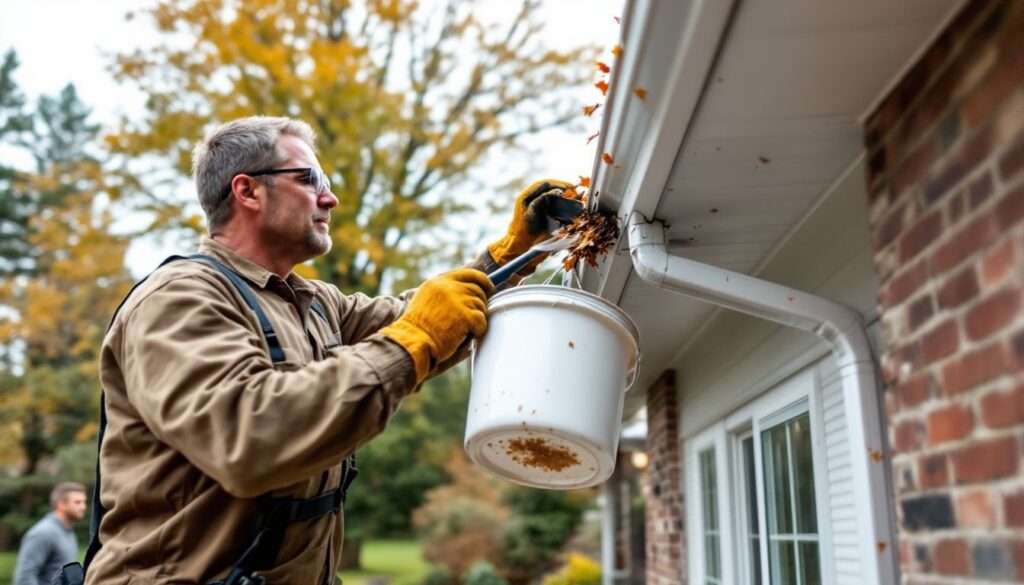
Hand-scoop large debris. Starting at one end, use your gutter scoop or a small shovel to pull out leaves, twigs, and sediment. Drop debris into the bucket. Work along the entire run. Wear your gloves, wet leaves harbor bacteria and mold spores.
-
Flush the gutter. Once bulk material is gone, run water through the gutter with your hose on low pressure. This flushes fine silt toward the downspout and confirms drainage isn’t blocked. Watch for pooling or slow movement: these indicate a clog or slope problem.
-
Check downspout flow. Point your hose into the downspout opening and confirm water flows freely. If it doesn’t, the downspout is likely blocked and will need clearing (see next point).
-
Clear downspout blockages. A downspout clog usually sits just below the outlet or at an elbow joint. Try flushing with a hose: if that doesn’t work, carefully poke a stick or plumbing snake up from the bottom to dislodge the blockage. Never force, you can rupture the downspout. For stubborn clogs, consider a pressure washer or professional help.
-
Final flush and inspect. Run water through the entire system again. Watch for leaks at seams (these are normal) and confirm water exits the downspout, not pooling around the foundation.
Pro tip: Do this when conditions are dry. Wet gutters are slippery and the water makes it harder to see what you’re pulling out.
When to Call Professional Gutter Cleaners
Not every homeowner should clean gutters themselves. Be honest about your comfort level and physical capability.
Call a pro if:
- You have a steep roof or multi-story home. Two-story houses and steep pitches mean ladder work at dangerous heights. The cost of professional cleaning, typically $150–$300 for an average home in Memphis, is cheap insurance against a fall.
- You have a physical limitation or health condition. Bad knees, balance issues, or heart conditions make ladder work risky. Don’t gamble with your safety.
- Gutters are severely clogged or damaged. If water is flowing backward or the gutter shows dents, rust, or holes, cleaning reveals problems that need repair. A pro can diagnose and estimate fixes on the spot.
- Downspout clearing requires professional equipment. Persistent clogs deep in the system may need a power auger or hydro-jet. This isn’t a DIY task for most homeowners.
Searching for Memphis-area gutter specialists? Directories like highly-rated gutter cleaning professionals in Memphis list vetted contractors with customer reviews. You can also use platforms like HomeAdvisor or ImproveNet to get quotes and compare costs. Professional cleaners typically warranty their work, meaning if gutters back up again within a set period, they’ll return for free.
Preventing Gutter Problems Year-Round
Cleaning twice a year keeps gutters functional, but a few preventive steps reduce buildup and extend intervals between cleanings.
Install gutter guards. Mesh, foam, or brush-style guards sit atop gutters and let water through while blocking leaves. They’re not perfect, fine debris and pollen still sneak past, but they reduce the volume of debris by 70–80%. Install them after cleaning: a half-blocked gutter is harder to work with later.
Trim overhanging branches. Have a tree service cut back branches hanging over your roof. Less shade over the roof means less algae growth, fewer leaves dropping, and better gutter health overall. This also reduces ice dam risk in winter.
Keep downspout outlets clear. Ensure downspouts drain at least 4–6 feet from the foundation and discharge into clean ground or a drainage basin, never directly against the wall. Sediment and leaves collect at outlet terminations: clear them seasonally.
Schedule a twice-yearly check. Mark your calendar for May (post-spring storms) and November (post-fall leaf drop). Even five minutes inspecting for visible debris catches problems early. If gutters look full, schedule cleaning before the next heavy rain.
Address soft fascia promptly. If you notice spongy wood or visible rot, water damage has progressed. This requires professional assessment and often fascia replacement, a structural repair, not a cleaning task. Catching this early saves thousands.
Conclusion
Memphis’s climate demands regular gutter attention, but the payoff is huge: a dry basement, intact fascia, and a home that sheds water properly for decades. Whether you tackle it yourself with a ladder and scoop or hire a local pro, the key is consistency. Clean twice yearly, address signs of trouble immediately, and your gutters will keep working quietly in the background, which is exactly what you want them to do.