
Table of Contents
ToggleSacramento’s dry climate might trick you into thinking gutters are an afterthought. Wrong. When the rare rainstorm hits or snow melts in winter, clogged gutters can cause foundation damage, basement flooding, and rotting fascia, expensive repairs that dwarf the cost of gutter cleaning. Whether you’re tackling it yourself or hiring help, understanding your home’s gutter system is essential. This guide walks you through the why, when, and how of keeping Sacramento gutters clear and functional year-round.
Key Takeaways
- Clogged gutters in Sacramento can cause foundation damage, basement flooding, and costly repairs that far exceed the cost of regular gutter cleaning.
- Clean your gutters in late fall (October–November) and spring (March–April) to prevent water overflow and protect your roof, foundation, and siding from damage.
- DIY gutter cleaning requires proper safety equipment like an extension ladder, stabilizer bar, work gloves, and a buddy system to prevent ladder-related injuries.
- Hire a professional gutter cleaning service if your home is three stories tall, has a steep roof pitch, or shows signs of damage like sagging or rust.
- Trim tree branches overhanging your roof and consider quality gutter guards to reduce debris accumulation and cleaning frequency in Sacramento’s dry climate.
- Sacramento gutters corrode slowly due to low humidity, but mineral deposits from irrigation can still build up—use a vinegar solution and stiff brush to remove them safely.
Understanding Your Gutters and Why Cleaning Matters
Your gutters are basically a drainage highway for roof runoff. Water flows from the roof into the gutter channel, down the downspouts, and away from your foundation. When leaves, twigs, dirt, and pine needles clog the gutter, water pools and overflows. That overflow saturates the soil near your foundation, which can lead to cracks and seepage into basements or crawl spaces.
In Sacramento’s dry summer months, sediment builds up unnoticed. Come fall and winter rain, or unexpected melting snow, that clogged gutter becomes a liability. The weight of standing water and debris can also sag gutters, pulling them away from fascia boards and creating gaps where water sneaks behind the gutter and into your soffit and interior walls.
Clean gutters extend the life of your roofing system too. Water backing up under shingles causes premature deterioration. And if gutters overflow near foundation plantings or landscaping, erosion accelerates. Regular cleaning prevents all these domino effects.
Signs Your Sacramento Home Needs Gutter Cleaning
Don’t wait for visible disaster. Watch for these warning signs:
- Sagging or visibly debris-filled gutters from ground level or a second-story view
- Water flowing over the gutter edge during rain, especially at downspout locations
- Granules in gutters or downspouts (shingle sediment washed off your roof)
- Staining on fascia, soffit, or siding below the gutter line, a sign water is escaping
- Gutters pulling away from the fascia or visible gaps where they once sat flush
- Overflow pooling near your foundation or draining toward the house instead of away
- Dark streaks or algae growth on gutter exteriors (common in mild climates)
- Pest activity like insects or birds nesting in debris
Sacramento homeowners often miss the spring buildup. Even though winter is mild here, accumulated dust and tree debris from nearby landscapes, especially if you have oaks, pines, or locust trees, pack in over three to four months. A visual inspection from the ground with binoculars works in a pinch, but climbing a ladder to peek into the gutter is the honest way to know if it’s time to clean.
DIY Gutter Cleaning: Tools and Safety Tips for Homeowners
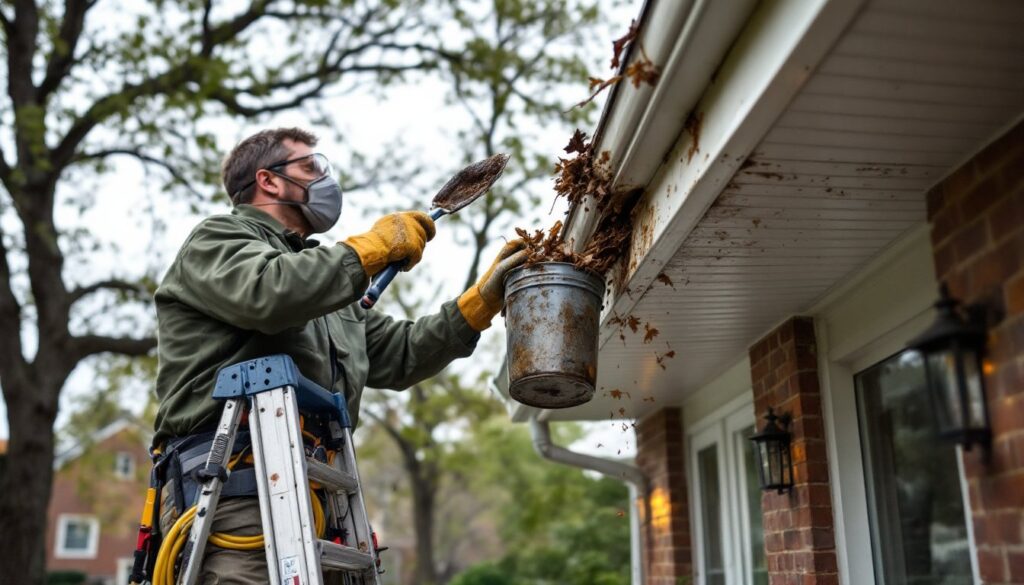
If you’re comfortable on a ladder and the job is straightforward, DIY gutter cleaning saves money. Expect to spend $50–$150 in tools if you don’t already own them, versus $150–$400+ for a professional service (depending on home size and roof pitch).
Essential tools:
- Extension ladder (20–28 feet, depending on roof height) with a stabilizer bar
- Work gloves (leather or nitrile) to protect against sharp debris and metal edges
- Safety glasses to shield eyes from falling dirt and twigs
- Gutter scoop or small shovel (available at hardware stores for $10–$20)
- 5-gallon bucket to toss debris into (attach it to the ladder with a hook)
- Hose with spray nozzle to flush remaining sediment
- Stiff brush for stubborn algae or mineral deposits
Safety first:
Ladder accidents cause thousands of injuries yearly. Always use a buddy system, have someone hold the ladder base and hand you tools. Never overreach: move the ladder instead. Wear closed-toe shoes with good grip, and avoid cleaning gutters on wet, windy, or icy days. If your roof pitch is steep or your gutters are three stories up, hire a professional. It’s not worth a fall.
Step-by-Step Guide to Cleaning Your Gutters Safely
-
Set up safely. Position your ladder perpendicular to the gutter run, stabilizer bar locked. Have your helper stand at the base.
-
Scoop debris. Using your gutter scoop, remove large piles of leaves, twigs, and sediment into the bucket. Work in sections, moving the ladder as you progress along each gutter run.
-
Flush with water. Once the major debris is gone, run your hose along the gutter with moderate pressure. This clears sediment and reveals any remaining blockages. Watch water flow toward downspouts: if it pools in low spots, the gutter may need adjustment.
-
Clear downspouts. Check each downspout opening for clogs. If water doesn’t flow freely, use a plumbing snake or drain auger to break up the blockage from the top. In stubborn cases, disconnect the downspout from below and flush from the top with a hose.
-
Inspect joints and seams. Look for leaks or rust spots, especially at gutter corners. Small leaks can be sealed with gutter sealant (silicone or polyurethane, ~$10 per tube). Rust holes require patching or section replacement.
-
Check the downspout exit. Make sure water exits 4–6 feet away from the foundation. If your downspout dumps too close to the house, install an extension or splash block.
Best Practices for Sacramento’s Dry Climate
Sacramento’s minimal winter rain and hot, dry summers mean a different cleaning schedule than wetter climates. You may not need gutter cleaning twice yearly like homeowners in the Pacific Northwest.
Instead, focus on seasonal points. Clean gutters in late fall (October–November) to clear summer dust and tree debris before rare winter rains arrive. A spring cleaning (March–April) removes any pine pollen or winter sediment. If you have large trees very close to your roof, add a third cleaning in midsummer after leaves have fully grown and started shedding.
Sacramento’s low humidity is a bonus, gutters corrode more slowly here than in coastal or very humid climates. But, mineral deposits from irrigation runoff and hard water can build up, especially if gutters are exposed to sprinklers. Use a stiff brush and white vinegar solution (1:1 ratio) to dissolve these deposits without harsh chemicals.
Consider gutter guards or leaf screens if you have heavy tree coverage. While not foolproof, quality screens (mesh or foam inserts, $3–$8 per linear foot installed) reduce debris accumulation significantly. Just know that even with guards, twice-yearly inspections are wise, no guard stops 100% of sediment buildup.
When to Call a Professional Gutter Cleaning Service
Hire a pro if any of these apply:
- Your home is three stories or has a steep roof pitch. Ladder work at height or on a slope is a fall risk. Professionals have harnesses and equipment.
- You have a large or complex roof with multiple gutter runs, valleys, and downspouts. Time and physical demand climb quickly.
- Gutters are badly clogged or show signs of damage (sagging, rust, separation). A pro can assess whether cleaning alone fixes it or if repairs are needed.
- You’re injured, elderly, or have mobility limitations. Safety and health come first.
- You lack a proper extension ladder or someone to spot you. DIY only works if you have the right setup.
Professionals in Sacramento typically charge $150–$400 for a standard single-story home, $300–$600 for a two-story, depending on gutter length and debris volume. When looking for a service, check top-rated gutter cleaning providers in Sacramento and read customer reviews for reliability and thoroughness. Beware of extremely low quotes, they often indicate corner-cutting or lack of insurance.
Gutter Maintenance Tips to Reduce Cleaning Frequency
Beyond cleaning, a few preventive moves keep gutters healthier longer.
Trim tree branches overhanging your roof. Cut back limbs that hang directly over gutters to reduce leaf and twig accumulation. This is one of the highest-impact changes you can make, especially if you have oaks or pines nearby.
Install gutter guards selectively. In Sacramento’s dry climate, lightweight foam or micro-mesh guards work better than full-cover systems, which can trap debris in valleys. Quality guards cost more upfront but save time and labor over years.
Clean downspout extensions regularly. When was the last time someone gave your downspouts a little TLC? If you can’t remember, it’s probably time. Clogged extensions cause water to back up and overflow near the foundation, defeating the purpose of the gutter system itself.
Monitor soil and landscaping near the foundation. Keep mulch and soil several inches away from your house base, and ensure grading slopes away. This prevents water from pooling, even if gutters occasionally overflow.
Inspect gutters twice yearly. A quick visual check in spring and fall takes 15 minutes and catches small issues before they escalate. Look for rust, leaks, sagging, and debris buildup. According to resources like Today’s Homeowner, seasonal maintenance checklists are a simple way to stay on top of home tasks.
Document your maintenance. Keep a simple log of cleaning dates and any repairs made. When selling your home, this record shows potential buyers you’ve cared for the property, and it helps you remember when the last cleaning happened.