
Table of Contents
ToggleSmall bedrooms don’t have to feel cramped or chaotic. With thoughtful organization strategies, even the tiniest sleeping space can become functional, calm, and genuinely enjoyable. Whether you’re furnishing a studio apartment, a guest room, or a child’s bedroom, smart organization ideas for small spaces focus on maximizing every square inch without sacrificing comfort. The key is working smarter, not harder, by layering storage solutions, choosing furniture that pulls double duty, and keeping only what truly matters. This guide walks through seven practical, implementable ideas that transform tight bedrooms into organized, livable sanctuaries.
Key Takeaways
- Maximize vertical space with wall-mounted storage solutions like floating shelves, pegboards, and fabric organizers to reclaim precious square footage in small bedrooms.
- Multi-functional furniture—beds with drawers, ottoman storage benches, and floating desks—reduces the number of pieces needed while doubling storage capacity.
- Under-bed storage containers with wheels and clear labels keep seasonal items and rarely used belongings organized and accessible without consuming floor space.
- Decluttering your wardrobe to 30–50 coordinating pieces and using vertical hanging methods significantly reduces closet overcrowding in small bedroom organization.
- A zone-based system dividing your bedroom into sleep, work, and dressing areas keeps activities separate and prevents clutter from spreading across the space.
- Optimizing closet shelving with a second shelf and double-hang organizers doubles usable storage and makes the most of this valuable real estate.
Maximize Vertical Space With Wall-Mounted Storage Solutions
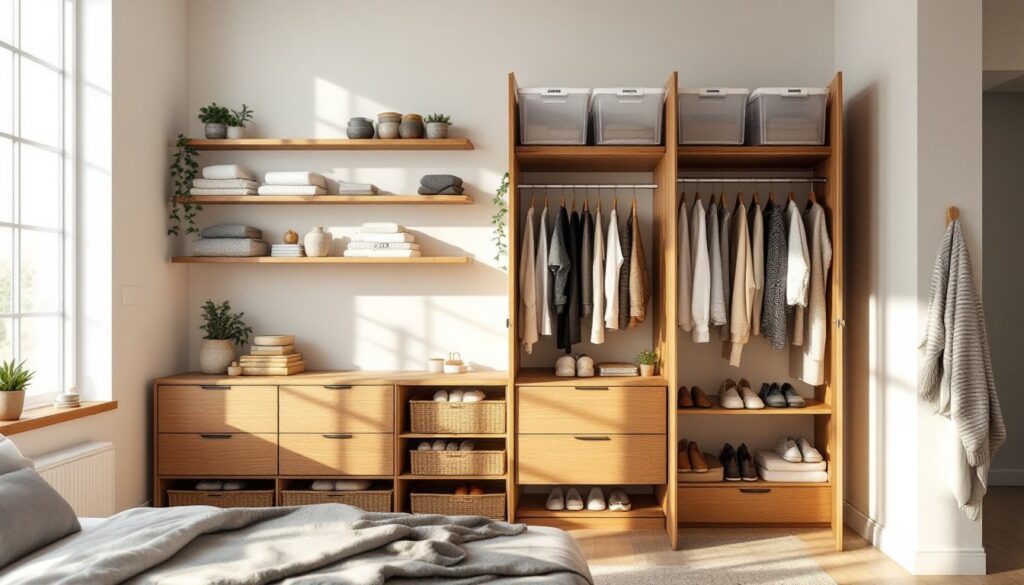
When floor space is precious, walls become your best friend. Installing floating shelves above a desk, dresser, or nightstand reclaims otherwise wasted vertical real estate. A standard floating shelf costs $30–$80 installed and holds 15–25 pounds depending on the bracket design. Use a stud finder to locate wall studs: anchoring into studs ensures the shelf won’t sag under weight.
Wall-mounted hooks, pegboards, and ladder racks keep items like scarves, belts, hats, and bags visible and accessible without consuming drawer space. A pegboard (roughly $25–$50) paired with customizable pegs lets you adjust storage as needs change. For textiles, a wall-mounted fabric organizer with pockets stores socks, underwear, or seasonal items vertically.
One practical tip: don’t mount shelves so high they’re hard to reach. Shoulder height (around 54–60 inches) hits a sweet spot for easy access. Install shelves in clusters or staggered patterns to avoid a busy, cluttered look. Measure and mark shelf placement with a level and a pencil before drilling any holes. Grab a power drill with a 3/16-inch bit (standard for most drywall anchors) and take your time with placement, mounting brackets cost a few dollars, but patching drywall mistakes costs more.
Explore design-forward options like metal industrial shelves or wood-slat wall organizers if aesthetics matter. These add personality without requiring permanent installation, making them renter-friendly.
Invest In Multi-Functional Furniture That Serves Double Duty
In a small bedroom, every piece of furniture should earn its place. A bed with built-in drawers stores winter clothes, bedding, or shoes underneath, eliminating the need for a separate dresser. Expect to pay $400–$1,200 for a quality platform bed with drawers (queen size), but you’ll recoup that investment by skipping a second furniture piece.
Ottoman storage benches work at the foot of the bed or beside a reading nook, providing seating and hidden storage for blankets, pillows, or off-season items. A solid wood or upholstered ottoman runs $150–$400 depending on size and quality. Look for benches with removable lids for easy access. An alternative is a storage trunk, vintage or new, which adds character while keeping items organized and contained.
Wall-mounted desk-shelf combos or floating desks with shelving above consolidate work and storage into one footprint. If you need workspace but lack square footage, a slim floating desk ($100–$250) mounts directly to studs and folds down when not in use. Some designs include pegboards or shelving attachments, tripling functionality in minimal space.
When shopping, ask yourself: “Does this item do at least two things?” A nightstand with shelves replaces a small table plus a bookshelf. A headboard with pockets (fabric or leather) holds books, glasses, and devices without a nightstand. Avoid low, squat furniture that visually shrinks the room: instead, choose pieces with legs that let light and air flow underneath, making the space feel larger and less cluttered.
Use Under-Bed Storage Strategically
The space beneath a bed is prime real estate that many people ignore. Rolling underbed storage containers ($20–$60 per unit) slide in and out effortlessly, making seasonal swaps painless. Choose containers with wheels and handles, not loose boxes that tangle and jam. Containers should fit your bed’s clearance: measure the distance from floor to bed frame, typically 8–12 inches, before purchasing.
Clear or translucent plastic containers let you see contents at a glance without opening each one. Label everything with a permanent marker or printed labels ($0.10–$0.50 per label) so you remember what’s where. Assign categories: off-season clothing, holiday decor, extra bedding, or archived documents. Keep frequently accessed items toward the foot of the bed: rarely used items can go deeper.
Vacuum storage bags compress textiles by 75%, multiplying capacity. A set of five bags costs $15–$25. Vacuum bags work beautifully for winter coats, blankets, and off-season clothing. One downside: you’ll need regular access to a vacuum to reseal them, and some fabrics (delicate knits, leather) don’t compress well. For those items, stick with rigid plastic boxes.
Avoid piling random items under the bed without a system, chaos breeds lost items and wasted space. Dust buildup under beds is also a concern, so use containers with lids and vacuum underneath twice yearly. If your bedroom lacks underbed clearance (platform beds or low-profile frames), skip this idea and invest in a dresser with drawers or wall storage instead.
Declutter and Streamline Your Wardrobe
A small bedroom can’t absorb a bloated wardrobe. Start by auditing every piece you own. Pull everything from your closet and dresser, then sort into three piles: keep, donate, and discard. Be honest, if you haven’t worn it in a year and it doesn’t excite you, it’s taking up space that could hold things you actually use.
The goal isn’t minimalism for its own sake: it’s maximizing peace and functionality. A focused wardrobe of 30–50 pieces that coordinate (neutrals + a few accent colors) takes less space and makes mornings easier. Seasonal rotation helps too: store winter coats in vacuum bags from May through September, then swap for lighter clothing.
Think vertical when organizing remaining clothes. Hang items on slim, non-slip velvet hangers (not plastic wire ones that let garments slide off). Velvet hangers cost a few dollars each but save inches of closet width because they’re thinner. Roll sweaters and knits instead of folding them on shelves: rolling saves space and prevents creases better than stacking.
A practical resource like Apartment Therapy offers small-space wardrobing strategies and capsule wardrobe ideas if you want a deeper dive. For storage, consider a hanging closet organizer with pockets for folded items, scarves, or accessories, these hang from a closet rod and free up shelf and drawer space. Use drawer dividers (even DIY cardboard inserts work) to prevent clothes from tumbling over and creating chaos. Decluttering takes time but pays off every time you open your dresser or closet.
Implement a Zone-Based Organization System
Dividing a small bedroom into distinct zones, sleep zone, work zone, dressing zone, keeps activities and storage organized without overwhelming the space. Use furniture placement and subtle visual markers to define zones. A low bookshelf or storage unit between the bed and a desk acts as a gentle boundary without closing off the room.
Within each zone, group related items. In the dressing zone (typically near the closet or dresser), keep socks, underwear, and accessories together in labeled drawers or bins. Store off-season clothing in vacuum bags or totes in a high closet shelf, leaving accessible shelves for everyday wear. In the sleep zone, use under-bed drawers and a small nightstand for essentials like books, a lamp, and a phone charger, nothing more.
A work zone needs a clear surface and good lighting. Vertical storage on the wall or above the desk keeps supplies at hand without cluttering the work surface. Use a desk organizer ($15–$40) with compartments for pens, notepads, and small items. Cables and chargers tangle easily: use cable clips ($0.50–$2 each) or a cable management box ($10–$20) to keep them tidy.
Zoning also includes a trash and donation zone. Keep a small donation box under the bed or in the closet and review it monthly, if items accumulate, they leave the house. This prevents the slow creep of clutter. A small waste basket under the desk handles discarded papers and packaging. Organizations like Martha Stewart publish comprehensive zone-based organization guides if you want to explore the method in detail. Commit to the zones for at least a month before adjusting: consistency helps the system stick.
Optimize Closet Space With Smart Shelving and Dividers
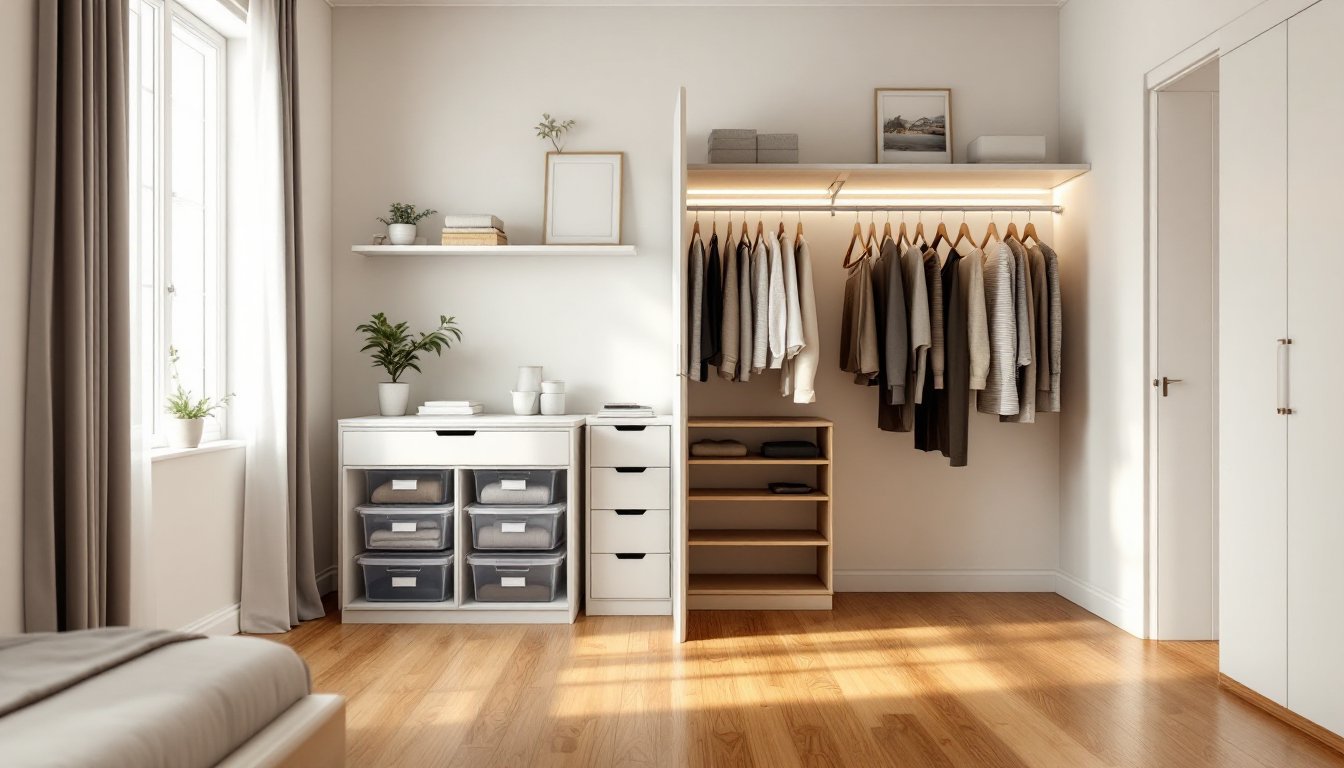
A small bedroom’s closet is often its most valuable organizational real estate. Most builder-grade closets come with a single shelf above a hanging rod, not enough. Install a second shelf at chest height (roughly 42–48 inches above the floor) to double usable space. A closet shelf kit ($30–$80) includes brackets and a board: installation takes an hour with a stud finder, drill, and level.
Use shelf dividers (wooden or plastic, $10–$25 per pair) to corral stacks of sweaters, jeans, or folded pants. Dividers prevent toppling and keep categories neat. Below the hanging rod, add a second rod at a lower height (about 36–40 inches) for hanging pants, which frees space for taller items like dresses or coats above.
For maximum density, use double-hang organizers, fabric units with two tiers of hanging space. These ($20–$50) hang from the top rod and create two rows of hanging space in one. Ideal for short items like shirts or jackets. Avoid over-stuffing: hanging rods have weight limits. Standard rods support 50–75 pounds: if you’re doubling hanging items, check the rod’s rating or reinforce it with a center support bracket ($15–$30).
Closet doors themselves offer hidden storage. Add an over-the-door shoe organizer ($15–$35) for shoes, belts, scarves, or small items. This frees floor space and keeps items visible. Paint or stain your closet interior a light color, white, soft gray, or cream, to make it feel larger and help you see items clearly. Consider adding battery-powered motion-sensor LED strips ($20–$40) if your closet lacks overhead lighting: they turn on automatically and take no wiring.
Put the most-used items at eye level. Store seasonal or rarely worn items in higher shelves or far corners. A resource like Real Simple’s small bedroom organization ideas offers additional closet hacks and detailed shelf layouts. Closet optimization returns dividends, it’s one of the highest-ROI small projects you can tackle.
Conclusion
Small bedroom organization isn’t about cramming in more stuff, it’s about creating breathing room and calm. Vertical storage, multi-functional furniture, under-bed systems, and a ruthless wardrobe edit form the foundation. Layer in zones, optimize your closet, and stick to a labeling system, and even the tiniest bedroom becomes functional and pleasant. The projects outlined here range from simple (adding hooks) to moderate (installing shelves), all doable for confident DIYers. Start with one or two ideas, live with them for a month, then add more as your system stabilizes. Organization isn’t one-and-done: it’s an evolving practice that grows with your needs.