
Table of Contents
ToggleSmall bedrooms don’t have to feel cramped or cluttered. With smart organization strategies and a little elbow grease, you can transform even the tightest space into a functional, peaceful retreat. The key isn’t adding more square footage, it’s using every inch you already have. Whether you’re working with a compact master or a guest room that doubles as storage, these seven game-changing ideas will help you reclaim your bedroom from the chaos. Think of this as an investment in your daily comfort and sleep quality, not just a tidying project.
Key Takeaways
- Small bedroom organization ideas focus on maximizing vertical wall space with floating shelves and cabinets to create an illusion of more floor space while keeping clutter out of sight.
- Investing in multi-functional furniture pieces, like storage benches, beds with built-in drawers, and headboards with shelving, eliminates the need for separate items and frees up precious floor space.
- Decluttering before organizing is essential—remove items you haven’t used in a year or that don’t spark joy—so you’re organizing intentionally rather than hiding clutter in containers.
- Overhead closet shelving and closet organization systems with vertical dividers and slim hangers can increase usable storage by 20–30% without consuming additional bedroom real estate.
- Using a donation station and clear labeling systems ensures items are removed promptly and remaining belongings are easy to find, transforming your bedroom into a peaceful retreat.
- Smart hanger choices and grouping clothes by type and color reduce wrinkles, speed up outfit planning, and make small closets feel more organized and functional.
Use Vertical Wall Space With Shelving And Floating Storage
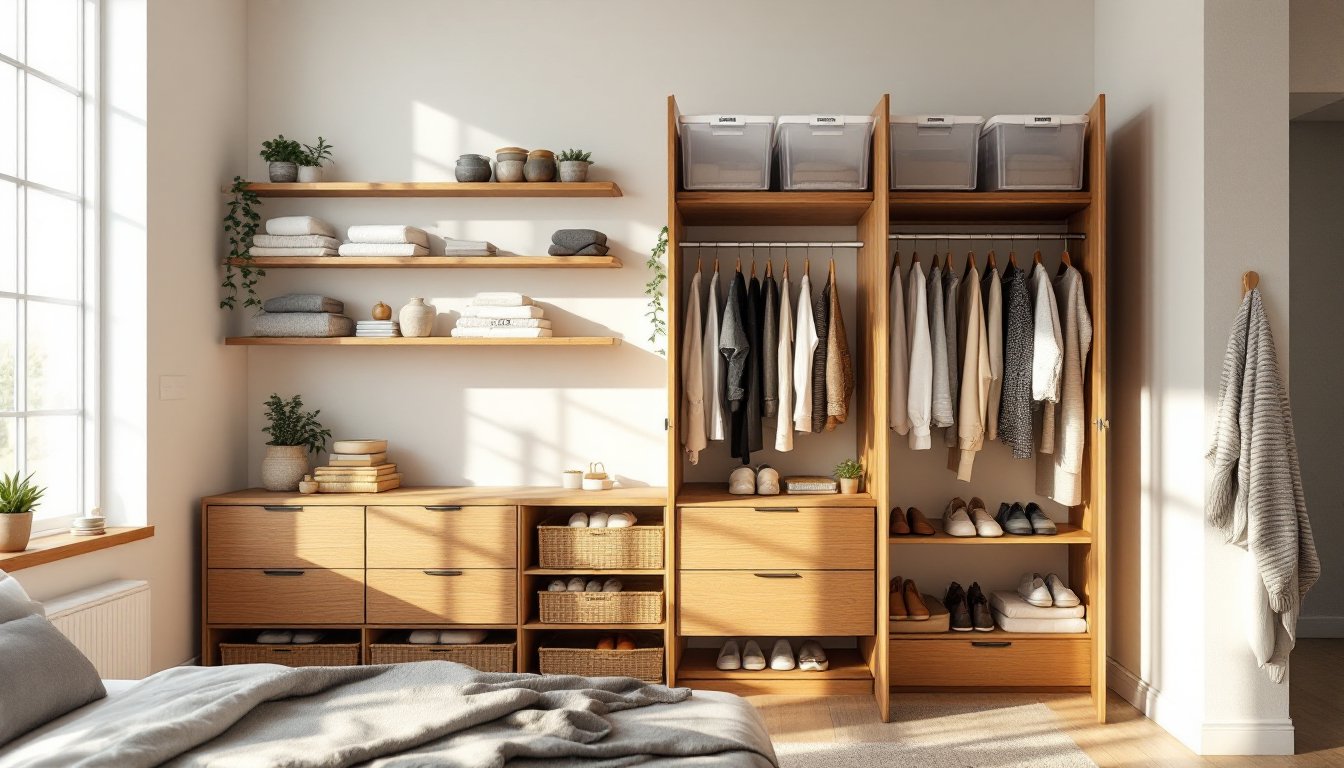
Vertical storage is your secret weapon in small bedrooms. Instead of letting walls sit empty, you’re turning them into real estate. Floating shelves, wall-mounted cabinets, and overhead racks pull double duty: they store your stuff while creating an illusion of more floor space. Floor space feels psychologically bigger when walls are organized, not crowded.
Floor clutter makes a room feel smaller. Wall storage lifts everything up and out of your sight line. This isn’t about aesthetics alone, it’s pure function. Consider the zones in your room: above the dresser, beside the bed (high enough you don’t bump your head), along a bare corner, or above a desk. Shelves should be spaced 12 to 18 inches apart for most items: adjust based on what you’re storing.
When installing shelves, locate your wall studs with a stud finder (the electronic kind runs $15–30 at any hardware store). Secure brackets directly into studs for heavy loads. If you’re storing books, collectibles, or seasonal clothing, studs matter. For lighter items like folded scarves or small plants, toggle bolts or heavy-duty drywall anchors work fine between studs. Always check your wall to understand what’s behind the drywall, plumbing, electrical, or HVAC can hide there.
Install Overhead Shelving Above The Closet
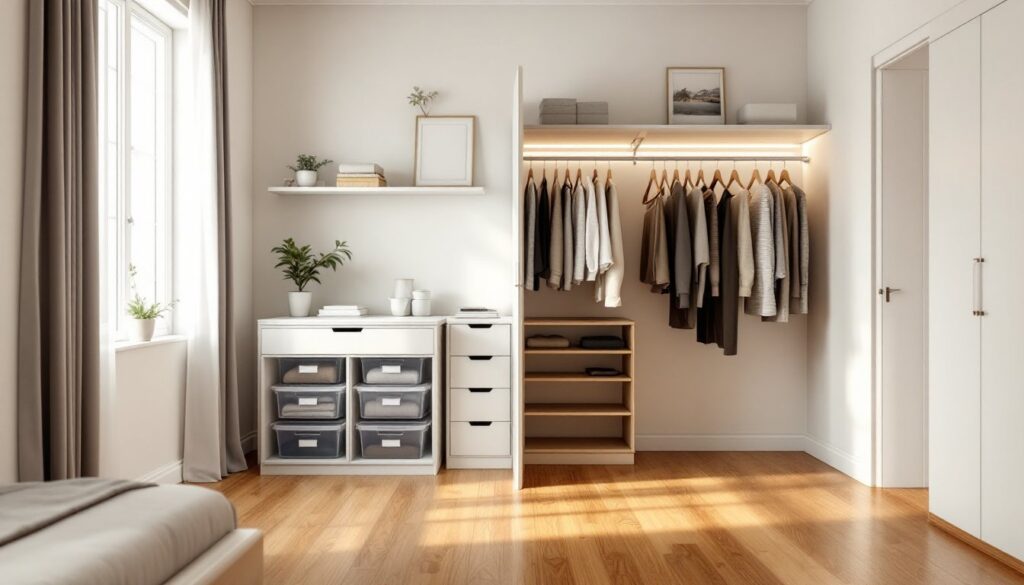
The space above your closet door is wasted real estate in most bedrooms. A simple floating shelf or cabinet mounted at the top of the closet entrance stores off-season clothes, extra bedding, or storage boxes out of sight. This is the sweet spot: high enough that you don’t see it daily, accessible with a small step stool, and completely out of the main visual field.
Before you drill, measure twice. Mark the bracket positions with a pencil and use a level to ensure your shelf runs true. Hangers will swing freely below, and nothing blocks the closet opening. Out-of-season items (winter coats in July, holiday linens in January) belong up here. Use clear storage bins so you can see what’s inside without climbing up. Label the bins on the front edge, “Winter Sweaters,” “Extra Pillows”, so you’re not hunting in the dark. Most homeowners find this single addition gains them 20–30% more usable storage without eating bedroom floor space.
Invest In Multi-Functional Furniture Pieces
In a small bedroom, every piece of furniture should earn its keep. A nightstand that’s just a nightstand is a missed opportunity. Furniture that serves multiple purposes frees up floor space and cuts clutter naturally. Think of it as smart shopping, not minimalism, you’re just being selective about what you bring in.
Storage benches work at the foot of a bed or under a window. Ottomans with hidden compartments replace bulky side tables. Murphy beds (wall-mounted beds that fold up) are becoming cheaper and easier to install. Headboards with built-in shelving or cubbies replace basic wall-mounted heads. Dressers with mirrors combined into one piece double your mirror space without doubling your footprint. Look for pieces where function stacks: a storage ladder can hold blankets and read as part of your aesthetic.
Real Simple has excellent resources on selecting bedroom furniture that works harder in tight spaces. Focus on proportion: oversized furniture crushes a small bedroom, while pieces that sit higher off the ground (think furniture legs instead of a solid base) keep sight lines clear and make the room feel airier.
Choose Beds With Built-In Storage Drawers
Beds with integrated storage drawers underneath are one of the best investments you can make in a small bedroom. You’re sleeping on top, storing underneath. It’s that simple. Most people keep seasonal items, extra pillows, blankets, or off-season clothing here. Some use rolling plastic bins inside the drawers for extra organization.
When shopping, check the depth of the drawers. A standard full-size bed measures 54 inches wide by 75 inches long. Drawers may be 15–20 inches deep: anything less doesn’t hold much. Look for drawers on smooth gliding hardware (ball-bearing slides, not cheap plastic tracks). Test them in the store if possible, they should slide smoothly under their own weight, not jam halfway.
The cost difference between a regular bed frame and one with storage drawers is usually $100–300, depending on materials and build quality. That’s worth it for the functionality you’re gaining. Measure your bedroom before buying: confirm the bed fits with at least 2 feet of walking space on either side. A bed that’s hard to walk around negates any mental benefit from the storage below.
Declutter And Donate Items You Don’t Use
Before you install one shelf or buy one storage bin, you need to cull. This is the step most people skip, and it’s the reason organization projects fail. You can’t organize clutter, you can only hide it. If your bedroom is crammed now, adding containers just moves the problem around.
Honesty is your tool here. Go through everything: clothes, books, decor, gifts you don’t love, tech you don’t use. If it doesn’t serve a function and doesn’t make you happy, it’s taking up space that could be peaceful. This isn’t about being ruthless for ruthlessness’s sake: it’s about intentional living. A bedroom should feel like a retreat, not a storage unit.
Many organization pros suggest the “one-year rule”: if you haven’t used it in a year, it goes. That covers seasonal items (adjust the window to 18 months for clothes you wear by season). Others use the “spark joy” test, keep what feels good. Either method works: pick one and stick with it. Martha Stewart and similar resources offer decluttering guides that walk you through room by room.
Create A Donation Station Before Organizing
Set up a donation station in your bedroom (or just outside it) before you start organizing. Use a large bin, laundry basket, or even a corner of your closet as a staging area. As you go through your belongings, items you’re removing go straight into this station. Don’t let them sit on the bed or floor, they’ll just spread back out.
Have several destination bags or bins ready: donate, sell, recycle, and trash. Clothes in good condition go to Goodwill, Salvation Army, or local shelters. Books go to libraries or Little Free Libraries on your street. Broken items go to the trash or recycling (don’t donate broken stuff, nobody wants it). Electronics belong at e-waste facilities, not landfills. Some people sell lightly used items online (Apartment Therapy has articles on selling secondhand items), but only if you’ll actually do it: otherwise it becomes another clutter pile.
Set a deadline: finish decluttering by a specific date, then haul everything out. This prevents items from lingering. Many donation services pick up from your home for free or a small fee. Plan the pickup once your station is full, that accountability keeps you on track. After you donate or sell these items, the remaining contents of your bedroom will breathe. Your closet will have empty hangers. Your dresser won’t overflow. Now you’re ready to organize with intention.
Organize Closets With Vertical Dividers And Smart Hangers
A packed closet feels smaller and makes getting dressed harder. The solution isn’t a bigger closet, it’s using the one you have smarter. Vertical dividers and organized hanging systems multiply usable space and let you see everything at a glance. Suddenly, you’re not digging through ten identical hangers buried behind winter coats.
Start with your hanging rod. If it’s a single rod running the full width, add a second rod underneath it (you’ll need a shelf or bracket system to do this). This instantly doubles your linear hanging space. Hang longer items (dresses, coats, pants) on top, shorter pieces (blazers, shirts, sweaters) on the bottom. That’s not fancy, that’s physics and visibility.
Vertical dividers are low-cost, high-impact tools. Sliding shelf dividers (metal or plastic, $1–3 each at home improvement stores) create sections within existing shelves. Hanging shelf dividers clip onto your rod and hang down, creating compartments. Use these to keep similar items together: all work tops in one section, all sweaters in another. Your eye finds what it needs without scanning the whole closet.
Smart hangers also matter. Slim velvet hangers take less space than chunky plastic ones (10 hangers vs. 6 per foot). Non-slip hangers prevent clothes from sliding off and bunching. Cascading hangers (metal clips that hang hangers from hangers) save vertical space but work best for lightweight items like tank tops or scarves. For your heaviest items, coats, winter sweaters, use thicker wooden or sturdy plastic hangers that won’t bend. Allocate about 1 inch of rod space per garment: if your closet has 5 feet of rod and it’s stuffed with 60 pieces, things are bound to wrinkle and slip.
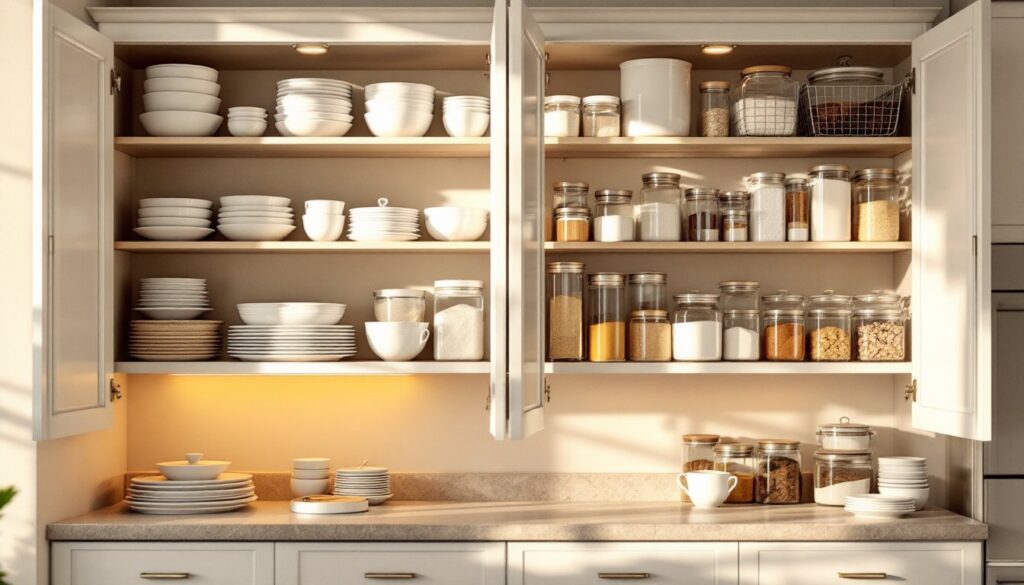
Group by type and color within sections. All blue items together, all blacks together. This makes outfit planning faster and gives your closet visual order. Shoes belong on a shelf, in a shoe rack, or in clear boxes, not scattered on the floor. A shoe organizer that hangs on the back of the door is a closet game-changer for small spaces, it holds 8–12 pairs out of sight. Your kitchen cabinet organization instincts apply here too: zones, labels, and visibility win.