
Table of Contents
ToggleProperty managers and business owners know the difference between regular cleaning and what’s required to keep a commercial or industrial facility truly spotless. Standard janitorial services handle daily maintenance, but industrial deep cleaning services tackle the stubborn buildup, years of grime, embedded dirt, hard-to-reach equipment surfaces, and contamination that regular mops won’t budge. Whether you’re managing a warehouse, manufacturing facility, or complex office space, understanding when and how to deploy professional industrial cleaning can protect your assets, improve safety, and extend equipment life. This guide walks you through what industrial deep cleaning really involves, when it’s essential, and how to find the right team for the job.
Key Takeaways
- Industrial deep cleaning services use specialized equipment and heavy-duty techniques to remove years of accumulated grime, oil residue, and contamination that standard janitorial services cannot tackle.
- Most industrial facilities benefit from professional deep cleaning every 6 to 12 months, with compliance-heavy industries like food processing and pharmaceuticals requiring quarterly deep cleans to meet regulatory standards.
- Professional industrial cleaning improves equipment performance and longevity, reduces worker health issues, lowers energy costs, and helps facilities pass audits and inspections.
- When selecting an industrial deep cleaning provider, verify credentials including at least $1 million liability coverage, workers’ compensation insurance, OSHA/NFPA compliance knowledge, and references from similar facilities.
- Clear signs that your facility needs industrial-grade cleaning include visible oil stains, dust in ventilation systems affecting air quality, equipment encrusted with grime, and odors or worker health complaints.
What Are Industrial Deep Cleaning Services?
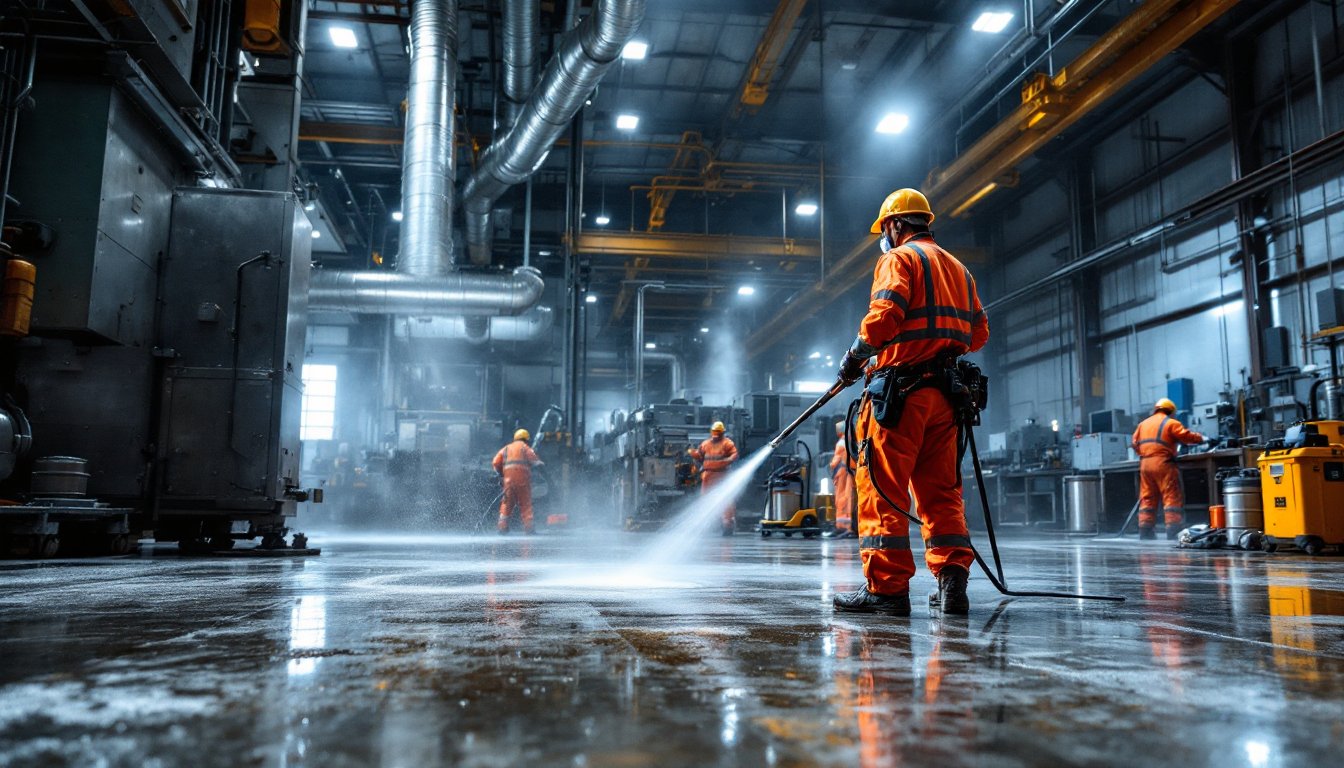
Industrial deep cleaning services go far beyond vacuuming and wiping surfaces. These are specialized operations that strip away years of accumulated dirt, oil residue, chemical deposits, and particulate matter from industrial and commercial spaces. The process typically includes pressure washing concrete floors, degreasing machinery, steam cleaning vents and ductwork, and cleaning hard-to-access areas where dust and contamination settle.
Unlike standard office cleaning, industrial cleaning often requires heavy-duty equipment, pressure washers rated for 3,000+ PSI, specialized degreasers, and HEPA-filter vacuums to contain hazardous particles. Technicians may work around active equipment, so they’re trained in lockout-tagout (LOTO) procedures and site-specific safety protocols. This is not a DIY weekend project. Professional teams come equipped with industrial-grade products designed to break down stubborn grime without damaging underlying surfaces or leaving chemical residue that could compromise food safety, pharmaceutical standards, or worker health.
When Your Property Needs Industrial-Grade Cleaning
Signs It’s Time to Call the Professionals
Your facility needs industrial deep cleaning when visible dirt, odor, or safety concerns signal that routine cleaning isn’t cutting it. Look for visible oil stains on concrete that won’t lift with standard floor cleaning, dust accumulation in ventilation systems that affects air quality, or equipment encrusted with grime that traps heat or blocks airflow. If workers are sneezing more, equipment is running hotter, or you’re getting complaints about musty smells, your building is sending a signal.
Frequency matters, too. Most industrial facilities benefit from a deep cleaning every 6 to 12 months, depending on the operation. A food-processing plant or pharmaceutical warehouse may need quarterly deep cleans to meet compliance standards. Manufacturing floors with hydraulic systems or welding operations accumulate metal particles and oil mist that require regular professional removal. Even office complexes with carpeted areas, HVAC systems, and sealed concrete can fall victim to embedded allergens and dust that compromise air quality and worker wellness.
Some scenarios demand immediate professional attention. After equipment installation or renovation, residual dust and debris from construction need proper containment and removal. If you’re preparing a facility for an audit, inspection, or certification (food safety, environmental compliance, medical licensing), professional deep cleaning documents your commitment to standards. When a building sits vacant or operating at reduced capacity, humidity and stagnation can breed mold and bacterial growth that surface cleaning won’t touch.
Key Benefits of Professional Industrial Cleaning
Investing in professional industrial deep cleaning delivers tangible returns beyond appearance. Equipment performs better and lasts longer when you remove accumulated grime, oil buildup, and particulate matter that cause overheating, corrosion, and accelerated wear. A clean HVAC system moves air more efficiently, lowering energy costs. Floors sealed and deep cleaned resist chemical damage and extend useful life by years.
Worker safety and health improve measurably. Removing dust, allergens, and chemical residues reduces respiratory issues, skin irritation, and worker absenteeism. Compliance-driven industries (food, pharma, medical device manufacturing) avoid regulatory violations and costly fines by maintaining documented cleaning standards. Clean facilities also project professionalism to clients, auditors, and potential partners, first impressions matter when a buyer or inspector walks through.
Another win: you’ll likely discover hidden damage during the cleaning process. A professional team working on your concrete floor, ductwork, or equipment surfaces might spot developing cracks, rust, failing seals, or other maintenance issues before they become expensive repairs. That early warning alone can save thousands in emergency downtime or replacement costs. When searching for house cleaning services near me, many homeowners don’t realize that the same deep-cleaning principles apply to commercial properties.
How to Choose the Right Industrial Cleaning Service
Start by checking credentials and insurance. Any reputable industrial cleaning company carries general liability coverage of at least $1 million and workers’ compensation insurance. Ask for proof of licensing if required in your state or industry (some facilities require background checks for service personnel). Check references and read reviews on platforms like Angi, where property managers and facility operators share real experiences.
Talk directly about their process. What equipment do they use? How do they handle waste disposal and hazardous materials? Do they follow OSHA guidelines, NFPA standards, or industry-specific protocols? A solid company will walk you through their plan, timeline, and safety measures before quoting a price. Get multiple bids, but don’t choose solely on cost, the cheapest option often means less thorough work, lower-quality degreasers, or inexperienced crews that might damage surfaces or miss critical areas.
Discuss frequency and customization. Your manufacturing floor needs a different approach than a corporate office lobby. Professional cleaners should tailor their work to your specific equipment, surfaces, and compliance requirements. Ask whether they offer scheduling flexibility (weekend or night shifts to minimize production disruption) and whether they provide post-cleaning documentation or certificates for audit purposes.
Questions to Ask Before Hiring
- Are your crews trained in site-specific safety and LOTO procedures? You need teams that understand your facility’s hazards, not just generic deep-cleaning crews.
- What’s your process for hazardous waste? Oil, solvents, and contaminated materials must be disposed of according to EPA and local regulations. Don’t hire a company that can’t explain their waste handling.
- Do you carry adequate insurance and bonding? This protects you if someone gets hurt or equipment is damaged during the job.
- Can you provide references from similar facilities? A company comfortable with your industry will have proven track records to share.
- How long will the job take, and can you work around our schedule? Downtime costs money: know the timeline upfront.
- Will you document and photograph the work? For audit purposes and future comparisons, documentation matters.
Resources like Today’s Homeowner and Good Housekeeping offer checklists and vendor evaluation tips that translate well to industrial vendor selection, too. While these sources lean residential, the underlying logic, verify credentials, check references, understand the scope, applies across the board.
Conclusion
Industrial deep cleaning isn’t a luxury, it’s maintenance that protects your facility, your workforce, and your bottom line. By recognizing the signs that your property needs professional intervention, understanding the real benefits beyond aesthetics, and choosing a qualified, insured, and experienced cleaning partner, you’ll ensure your industrial or commercial space stays safe, compliant, and efficient. Get quotes, ask tough questions, and invest in professional-grade cleaning that matches your facility’s complexity and regulatory demands.