
Table of Contents
ToggleA clogged drain in your Tucson home doesn’t have to mean an emergency call to a plumber. Whether it’s a slow-draining sink, a backed-up shower, or a kitchen drain that’s stopped entirely, most homeowners can handle drain cleaning with the right tools and approach. The good news? You probably have everything you need already, or you can pick up supplies at any local hardware store for under $30. This guide walks you through identifying what’s causing the clog, tackling it yourself, and knowing when it’s time to call in the professionals. Let’s get your drains flowing again.
Key Takeaways
- Drain cleaning in Tucson can often be handled with affordable DIY methods like boiling water, plunging, or baking soda and vinegar before considering professional services.
- Tucson’s hard water creates mineral deposits that coat pipes and trap debris, making preventive monthly maintenance—such as flushing drains with hot water—essential for homeowners in the area.
- A hand-crank drain snake ($15–30) effectively removes stubborn clogs, while professional plumbers use motorized augers and hydrojetting for complex issues that DIY methods can’t resolve.
- Know when to call a professional: if multiple drains back up simultaneously, DIY attempts fail after 2–3 tries, or you notice sewage smells and wet yard spots—these indicate main line or structural pipe problems.
- Simple daily habits like using drain screens, avoiding grease, and running hot water after dishes prevent clogs, while whole-house water softeners ($500–2,000) address Tucson’s hard water problem long-term.
Understanding Common Drain Problems In Tucson Homes
Tucson’s climate and water conditions create specific drain challenges that differ from other regions. The desert environment, hard water, and aging home plumbing systems mean clogs form differently here than they might elsewhere. Understanding what you’re dealing with helps you pick the right cleaning method.
Common culprits include hair buildup in shower drains, soap scum and grease in kitchen sinks, and mineral deposits from hard water. If you’ve got an older home in Tucson, you might also deal with corrosion or scale buildup inside the pipes themselves. Sometimes the problem isn’t a single blockage but a combination of debris that’s accumulated over time.
Before you start any drain cleaning project, locate your water shutoff valve, it’s usually near the meter or where the main line enters your house. You won’t necessarily need to shut off water for minor clogs, but knowing where it is takes the panic out of any plumbing mishap.
Why Tucson’s Water Quality Affects Your Drains
Tucson’s water is notoriously hard, meaning it contains high levels of dissolved minerals like calcium and magnesium. Over time, these minerals coat the inside of your pipes, narrowing the opening where water flows. This mineral buildup creates an ideal surface for hair, soap, and other debris to stick and accumulate. The harder the water, the faster mineral deposits clog your drains, especially in older galvanized steel pipes common in older Tucson homes.
You’ll notice this most in bathroom drains, where the combination of hair and mineral deposits creates stubborn clogs. Kitchen drains face different challenges, grease cools in the pipes and traps minerals, creating a sticky mess. If you’ve lived in Tucson for more than a year or two, you’ve probably noticed white crusty buildup on faucet aerators. That same buildup is happening inside your drains, just out of sight.
DIY Drain Cleaning Methods That Actually Work
Start with the simplest solutions before moving to more aggressive methods. Most clogs respond to one of these techniques without requiring specialized equipment.
The Boiling Water Method
Pour a kettle of boiling water directly down the drain. Wait 5 minutes, then run hot tap water for another 30 seconds. This works on grease-based clogs and helps dissolve soap buildup. It costs nothing and takes 2 minutes. Do this monthly as preventive maintenance.
The Plunger Approach
A standard cup plunger works on kitchen sinks and bathroom drains. Fill the sink with 3–4 inches of water, block the overflow hole (if there is one) with a wet rag, and plunge vigorously 15–20 times. The pressure difference dislodges debris. For stubborn clogs, repeat 2–3 times.
Baking Soda and Vinegar
Pour 1/2 cup of baking soda down the drain, followed by 1 cup of white vinegar. The chemical reaction creates bubbles that break up buildup. Cover the drain opening with a wet rag or stopper for 15 minutes, then flush with hot water. This is safe, affordable, and works on hair-and-soap clogs. Avoid this method if you’ve already used chemical drain cleaner, mixing chemicals is dangerous.
The Drain Snake (Plumbing Auger)
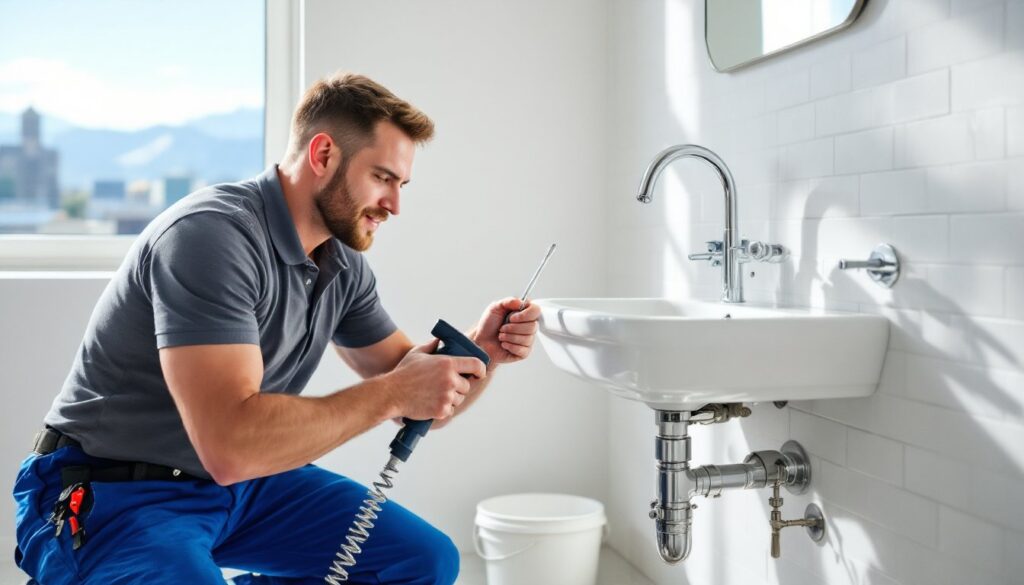
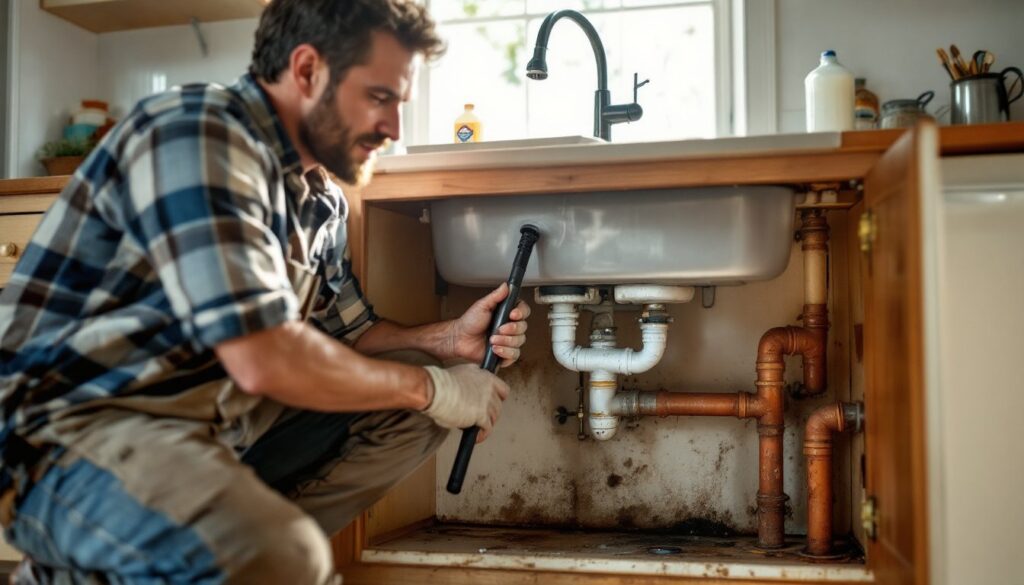
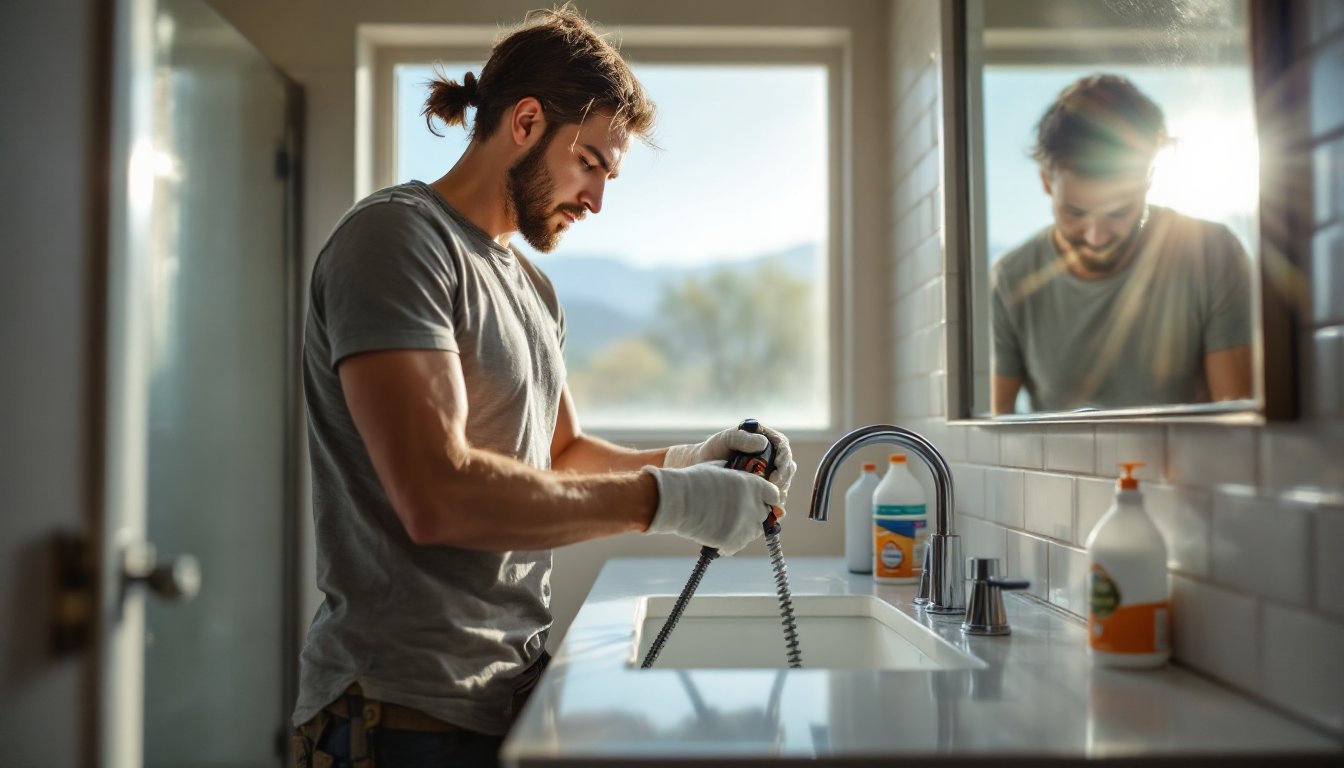
A hand-crank drain snake costs $15–30 and works on stubborn clogs that plunging won’t budge. Feed the flexible metal coil down the drain while turning the crank. You’ll feel resistance when it hits the clog: keep cranking to break it apart or pull out debris like a ball of hair. Wear work gloves, the spinning cable can pinch. Clean the snake afterward with hot water and a brush.
Chemical Drain Cleaners: Use With Caution
Liquid drain cleaners like Drano or Green Gobbler use caustic chemicals or enzymes to dissolve clogs. They’re effective on grease and soap buildup but dangerous if misused. Always wear chemical-resistant gloves and safety goggles. Never mix different drain cleaners. Ensure good ventilation, and follow the product label carefully. If a drain is completely blocked, chemical cleaners pool and don’t work, use a snake instead. Enzyme-based cleaners are gentler and safer but work more slowly (4–8 hours). For Tucson homeowners dealing with mineral buildup, enzyme cleaners sometimes outperform caustic ones because they break down organic matter rather than relying on heat or corrosive action.
After clearing a clog with any method, flush the drain with hot water for 1–2 minutes to ensure everything moves freely. If the clog returns within days, you likely have a deeper issue. Services that offer affordable drain cleaning can handle stubborn problems that DIY methods can’t resolve. Many homeowners in Tucson find that combining preventive maintenance with occasional professional service saves money and headaches over time.
When To Call A Professional Drain Cleaner
Not every clog is a DIY job. Knowing when to call a professional saves money, prevents damage, and solves problems faster.
Signs You Need Professional Help:
Call a plumber if multiple drains are backing up simultaneously, this suggests a clog in the main line, not individual fixtures. If your DIY attempts fail after 2–3 tries, you’re wasting time. Slow drainage throughout the house that doesn’t improve is also a red flag. Strange gurgling sounds from drains, especially after flushing the toilet, indicate a vent pipe problem or main line issue.
Older clay, cast iron, or galvanized pipes are prone to corrosion and collapse, a camera inspection from a professional can diagnose this without guess work. Sewage smell or wet spots in your yard mean a serious problem requiring professional equipment and expertise.
What Professionals Bring to the Table:
Plumbers use video inspection cameras to see exactly where the clog is and what’s causing it. Motorized drain augers (much more powerful than hand-crank snakes) clear stubborn blockages quickly. Hydrojetting, blasting high-pressure water through pipes, clears mineral deposits, grease, and debris without chemicals. This works especially well in Tucson homes where hard water buildup is common.
Professionals can also identify issues like root intrusion, cracked pipes, or misaligned sections that DIY work won’t fix. A licensed plumber in Tucson typically charges $150–300 for a service call and drain cleaning, though costs vary based on severity and pipe location. Services like those reviewed on Angie’s List provide customer ratings and can help you find reputable local plumbers. Getting quotes from 2–3 companies before deciding is standard practice.
Preventing Future Drain Clogs In Your Home
Prevention beats paying for drain cleaning every year. A few simple habits keep your pipes clear and your home running smoothly.
Daily Habits:
Use drain screens in sinks and showers to catch hair and debris before they go down the pipes. Empty screens weekly. Don’t pour grease down kitchen drains, let it solidify in a container and throw it in the trash. Wipe dishes before washing them to reduce food debris. Run hot water for 30 seconds after doing dishes to flush remaining grease through warm pipes.
Monthly Maintenance:
Once a month, pour boiling water down each drain to prevent buildup. Follow with the baking soda and vinegar method for deeper cleaning. This keeps mineral deposits from accumulating and gives you early warning if a drain is starting to slow.
Addressing Tucson-Specific Issues:
Consider a whole-house water softener if you’re tired of fighting hard water deposits. They cost $500–2,000 installed but reduce mineral buildup throughout your home, extending pipe life and improving water pressure. Cheaper alternatives include point-of-use softeners for specific fixtures, though they’re less comprehensive. Pipe descaling treatments exist but are less effective than removing the source (hard water) itself.
If your home has galvanized steel pipes installed before the 1980s, replacement with copper or PVC is an option, but it’s expensive and typically only necessary if corrosion causes frequent leaks. Consult a plumber for an assessment: you might have years of life left in your current system with preventive care.
Tools and Resources:
Keep a hand-crank drain snake and plunger in your home toolbox. Comprehensive home improvement guides like those on HomeAdvisor provide calculators and contractor matching services if you need professional help. Reputable sources like Bob Vila’s expert recommendations offer detailed tutorials on when and how to tackle various plumbing tasks. Knowing which problems you can handle and which require professionals prevents costly mistakes.
Conclusion
Drain cleaning isn’t complicated, but it requires the right approach for your specific problem. Start simple, boiling water, plunging, or baking soda and vinegar, before reaching for chemical cleaners or calling a professional. Tucson’s hard water makes preventive maintenance especially important: monthly flushing saves you money and frustration. When DIY doesn’t work or you suspect a deeper issue, professional help is worth the investment. With these strategies and a little know-how, you’ll keep your Tucson home’s plumbing flowing freely for years to come.