
Table of Contents
ToggleGutters might not be glamorous, but they’re one of the most important line of defense between your home’s structure and water damage. In Lexington, where spring storms and autumn leaf drop are seasonal realities, keeping gutters clean isn’t just maintenance, it’s protection. A clogged gutter system can lead to foundation problems, basement flooding, and rotted fascia boards that’ll cost thousands to fix. The good news: cleaning gutters is straightforward work that most homeowners can tackle themselves with the right tools, a safe approach, and a couple of hours on a weekend. This guide walks through exactly what you need, how to do it safely, and what to watch for in Lexington’s climate.
Key Takeaways
- Regular gutter cleaning in Lexington prevents costly water damage to foundations, fascia, and interior ceilings—a twice-yearly spring and fall schedule takes just 2–3 hours for most homes.
- Proper ladder safety, correct tools, and protective gear are essential before starting gutter cleaning; set your ladder at a 75-degree angle and never stretch more than arm’s length to avoid falls.
- Gutter cleaning requires testing water flow through downspouts and clearing clogs with a gutter scoop or plumbing snake to ensure drainage works properly and prevents ice dams in winter.
- Lexington’s seasonal climate demands strategic timing: clean gutters in mid-April before heavy spring rains and in mid-to-late October before winter ice dam formation.
- Gutter guards reduce debris accumulation by 60–80% and may save time over five to ten years, though they require occasional maintenance and cost $500–$1,500 upfront.
- Inspect gutters for rust spots, sagging sections, or separation from fascia after cleaning; metal gutters last 20–25 years, so aging systems may need replacement to avoid emergency repairs.
Why Regular Gutter Cleaning Matters for Your Home
Gutters channel water away from your roof, walls, and foundation. When leaves, twigs, and sediment build up, water backs up and spills over the edges, or worse, sits in the gutter where it pools and erodes the fascia board beneath. In Lexington, this happens fast. Spring brings heavy rains and dogwood pollen: fall brings leaf volume that can clog a gutter in weeks.
The damage compounds quickly. Standing water in gutters becomes a mosquito breeding ground. Ice dams form in winter when trapped water freezes. That ice pushes on fascia, loosens nails, and can crack the board. Water seeping behind gutters into soffits leads to rot and mold, the kind of problem that spreads into attic spaces and walls.
Homeowners who skip gutter cleaning often discover the problem only when they spot water stains on interior ceilings or notice foundation cracks after heavy rain. By then, repair costs jump from a few hours of sweat equity to contractor calls that run $1,500 or more. Cleaning gutters twice a year, spring and fall, takes about two to three hours for a typical single-story home and prevents those expensive failures.
If you’re not comfortable with heights or if your home is three stories or steeper roof pitches, hiring a professional is money well spent. Many homeowners in Lexington find that professional gutter services offer seasonal cleaning plans at reasonable rates and handle the ladder work safely.
Essential Tools and Safety Equipment You’ll Need
Before you climb, assemble everything on the ground. Running up and down a ladder to fetch a forgotten tool wastes time and increases fall risk.
Gathering Your Supplies
Tools:
- A stable, properly-positioned ladder (extension ladder for two-story homes: 6–8 foot step ladder for single-story)
- Work gloves (leather or rubber: gutters harbor sharp debris and rusty fasteners)
- A gutter scoop or small shovel to dislodge packed debris
- A garden hose with spray nozzle for rinsing and testing drainage
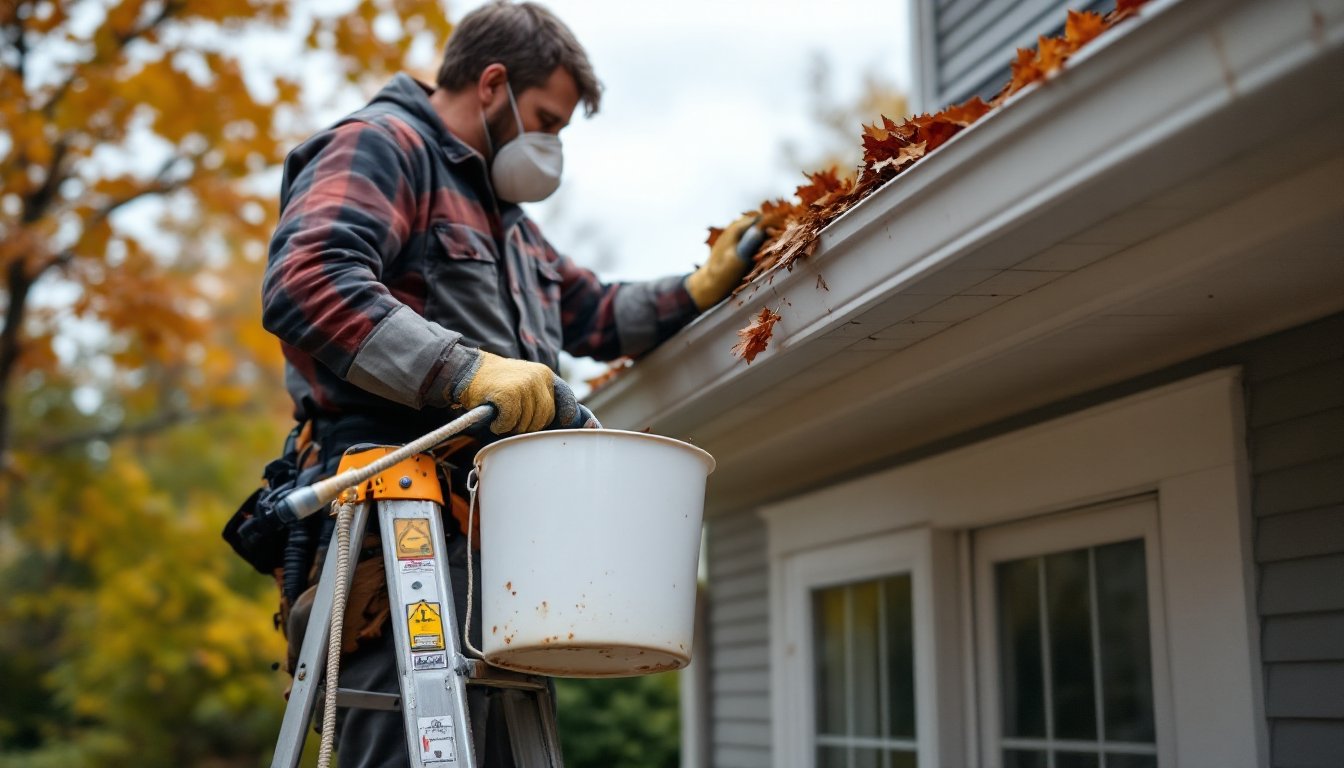
- A bucket to toss debris into (attach it to the ladder with a rope or carabiner to keep both hands free)
- A flashlight or headlamp to spot clogs and check downspout openings
- A plumbing snake or wet/dry vacuum (if downspouts jam)
Safety gear, non-negotiable:
- Safety glasses or goggles to shield eyes from debris and water spray
- A dust mask (especially if gutters hold decomposed leaves and mold spores)
- Sturdy, closed-toe shoes with good grip
- Ear protection if using a wet/dry vac
- A fall harness or roof anchor if your roof pitch is steep (above 6:12 slope) or you’re uncomfortable on height
Ladder safety is the foundation here. Set your ladder on level ground at a 75-degree angle, that’s roughly one foot of distance from the wall for every three feet of height. Have someone stabilize the base, or use ladder feet with stabilizer bars. Never lean sideways more than arm’s length: instead, move the ladder. Falls from ladders cause injuries that seem minor until infection or internal bleeding sets in.
Step-by-Step Gutter Cleaning Process
Preparing and Inspecting Your Gutters
Start by walking the perimeter of your home and looking at the gutters from the ground. Are there visible clogs, sagging sections, or gaps where gutters have pulled away from fascia? Note the downspout locations, knowing where water exits helps you understand flow and spot problem areas.
Check the weather forecast. Don’t clean gutters during or right before rain: you won’t see what you’re doing, and wet debris is heavier and messier. Choose a dry morning or afternoon, ideally when temperatures are above freezing (so dirt and leaves aren’t frozen solid).
Position your ladder firmly against the house near the gutter, making sure it sits on level ground. Climb up slowly and inspect the gutter interior as you move along. Look for patches of sediment (looks like fine dirt), leaf accumulation, and any standing water. If you spot standing water on a dry day, there’s a clog downstream in the gutter or downspout.
Removing Debris and Testing Drainage
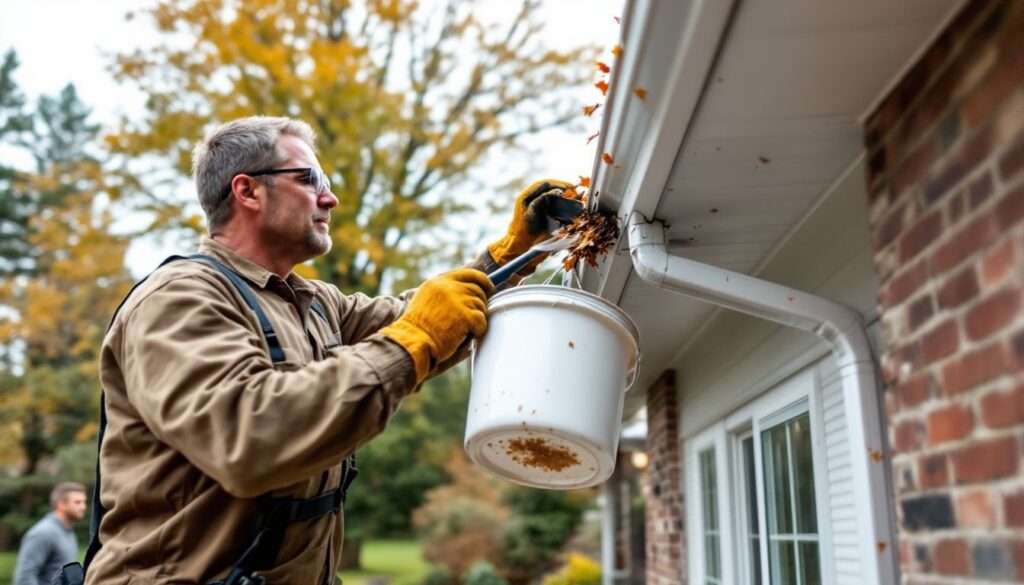
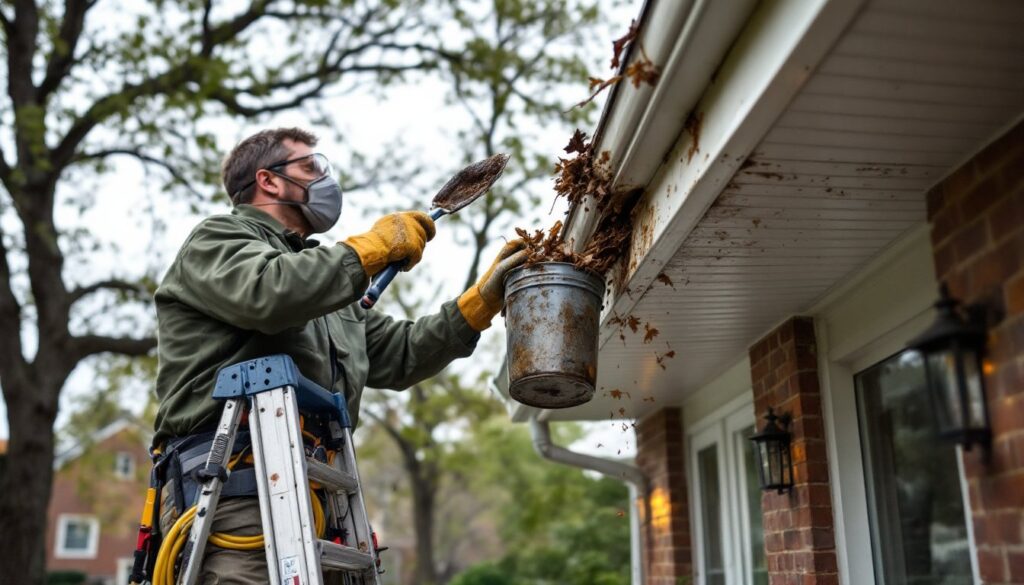
Working from one end of the gutter run toward the downspout, scoop out debris by hand (wearing gloves) or with a gutter scoop. Move the bucket as you progress so you’re never stretching. Loosely packed leaves come away easily: tightly matted or wet debris requires gentle scraping with your scoop to avoid damaging the gutter’s interior coating.
Once you’ve cleared the visible debris, run water through the gutter section using your hose. Watch for water pooling or draining sluggishly. If the water flows freely all the way to the downspout, you’re good. If it pools or drains slowly, there’s still a jam further along, scoop that section or check the downspout.
Testing downspout flow is critical. Position your hose at the downspout entrance and run water. Water should flow out the bottom within seconds. If it doesn’t, the downspout is clogged. Use a plumbing snake pushed up from the bottom opening, or rent a wet/dry vacuum to suction out debris from the top. For stubborn clogs, a pressure washer can help, but be careful not to damage the downspout seams (use low pressure and stand back).
After water runs clear through each downspout section, do a final flush of the entire gutter system. Walk the length with your hose running, watching the downspouts. You’ll see any remaining issues and confirm everything drains. In Lexington’s climate, pay special attention to the corners and elbows where downspouts meet, those are pinch points where silt collects and jams easily.
Best Practices for Lexington’s Climate
Lexington’s four distinct seasons create predictable gutter challenges. Spring brings heavy rain and pollen buildup, making mid-April to late May the ideal first cleaning window. Don’t wait until June: by then, accumulated pollen and early summer heat have baked debris into a stubborn paste.
Fall leaf drop runs roughly from late September through November. A single oak or maple can drop hundreds of leaves into a gutter. Most Lexington homeowners clean gutters in mid-to-late October and again in early December, after the bulk of deciduous leaves have fallen but before ice and cold snap. That second pass catches wind-blown leaves and ensures gutters are clear heading into winter.
Winter ice dams are real in Lexington. If gutters are clogged and ice forms, water backs up under shingles and leaks into the attic. Keeping gutters clean in fall prevents this. If you notice icicles forming along the gutter edge or water stains appearing on the exterior wall below gutters during winter, there’s standing water in the gutter that’s freezing. Clear it out as soon as safely possible (wait for a thaw and use warm water or a heat cable, not an axe).
Summer storms (June through August) bring heavy downpours. Clean gutters before storm season so drainage is at peak capacity. A gutter that drains adequately on a light rain might overflow in a deluge if it’s partially blocked.
Consider gutter guards (mesh screens, covers, or filters) for Lexington homes surrounded by deciduous trees. Guards reduce debris accumulation by 60–80%, meaning fewer cleanings. They don’t eliminate cleaning entirely, silt and pine needles can still accumulate on top, but they dramatically extend the interval between cleanings. The trade-off is upfront cost (typically $500–$1,500 for a full system) and occasional brush-offs rather than full gutter climbs. For homeowners seeking hands-off maintenance, this investment often pays for itself in time and safety over five to ten years. If you’re renting or prefer a hands-on approach, skip guards and stick with the twice-yearly schedule.
If your gutters show rust spots, separation from the fascia, or sagging sections after cleaning, these are signs of aging or structural issues. Home maintenance checklists and seasonal guides can help you prioritize repairs. A gutter section with small rust spots can be sealed with gutter caulk: widespread rust or separation typically means replacement is due soon. Metal gutters last 20–25 years with proper maintenance: if yours are original to a 1980s house, you’re living on borrowed time. Aluminum or vinyl replacements run $4–$9 per linear foot installed, but planning ahead beats emergency repairs after a basement flood. For cost estimates and repair options tailored to Lexington homes, contractor resources can connect you with local professionals.