
Table of Contents
ToggleHiring a deep cleaning company is different from calling someone to tidy up on a Saturday afternoon. These specialists tackle what regular cleaning can’t reach, baseboards, ceiling fans, grout lines, and the dust that settles behind appliances. If you’ve been thinking about a deep clean but don’t know where to start, you’re in the right place. This guide breaks down what to look for, what questions to ask, and how to spot a company that’ll actually deliver the sparkling results your home deserves without wasting your money or time.
Key Takeaways
- Deep cleaning companies tackle hard-to-reach areas like baseboards, ceiling fans, and grout lines that regular cleaning services miss, going beyond weekly maintenance to eliminate months or years of accumulated grime and allergens.
- Verify that any deep cleaning company you hire carries minimum general liability insurance of $1 million and bonding protection, and always request written proof before allowing them access to your home.
- Get written estimates from at least three deep cleaning companies to compare pricing models (square footage, hourly rates, or room-by-room), and be cautious of quotes significantly cheaper than competitors or companies unwilling to inspect your home first.
- Red flags to avoid include demands for cash-only payment, lack of signed contracts, vague descriptions of what will be cleaned, large upfront deposits exceeding 50%, or consistent no-show complaints in customer reviews.
- Prepare your home by removing clutter, securing valuables and personal documents, clearing kitchen counters, and communicating problem areas upfront so the deep cleaning team can work efficiently and adjust their methods for delicate surfaces.
- Choose a deep cleaning company based on clear scope of work, verified credentials and insurance, fair transparent pricing, and positive customer reviews to transform your space while freeing up your personal time.
What Deep Cleaning Companies Offer vs. Regular Cleaning Services
Regular cleaning maintains your home’s baseline. It covers vacuuming, mopping, dusting surfaces, and wiping down bathrooms. Deep cleaning companies do all that and then some, they’re going after the layers of grime, allergens, and buildup that accumulate over months or years.
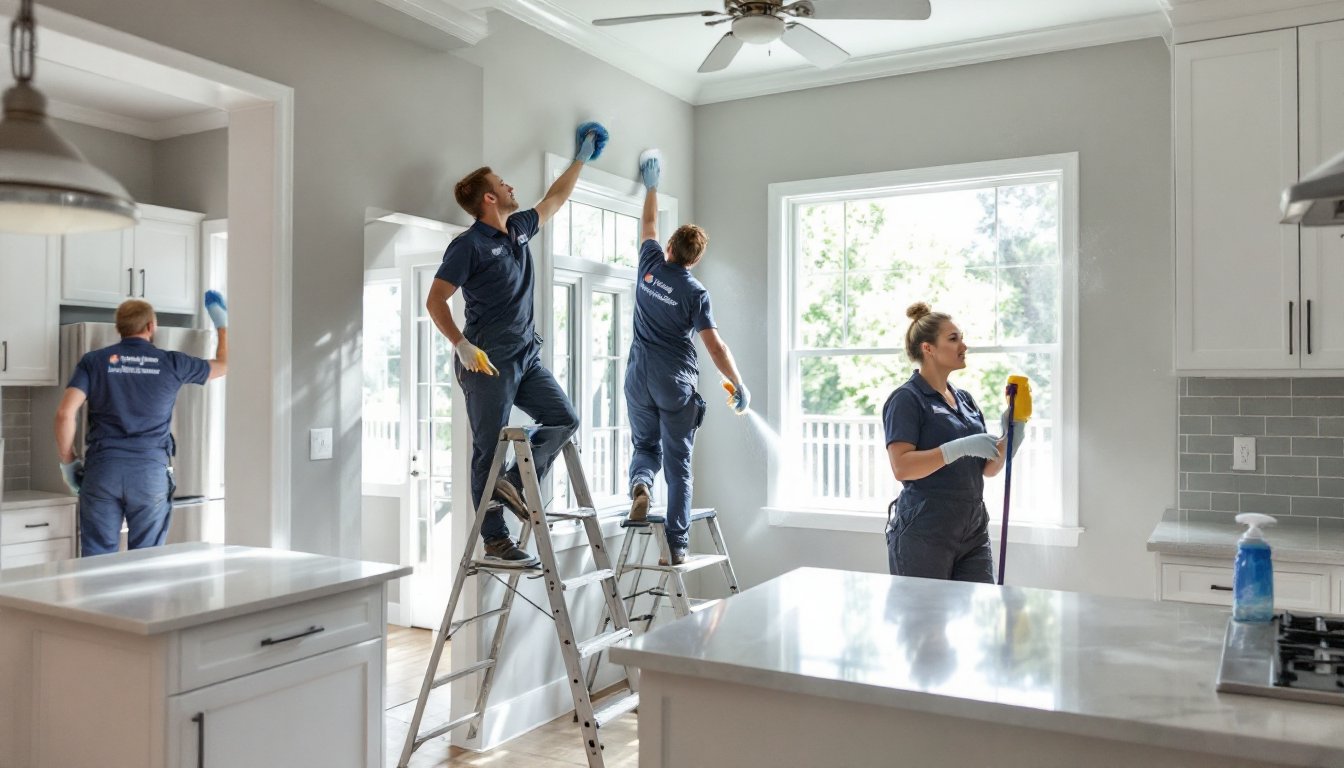
Think of it this way: regular cleaning is the weekly reset: deep cleaning is the spring renovation. A professional deep cleaning tackle baseboards with a fine-tooth comb, clean inside cabinets and appliances, scrub grout lines, degrease range hoods, and wipe down light fixtures and ceiling fans. Some companies also handle carpet shampooing, upholstery cleaning, and window washing as add-ons.
When you’re comparing options for a House Cleaning Service: Reclaim Your Free Time with Professional Help, make sure you understand the scope. Ask what’s included in their standard deep clean package and what costs extra. A trustworthy company will spell this out upfront, no surprises when the invoice arrives.
Key Factors to Consider When Selecting a Deep Cleaning Company
Start with the basics. How long has the company been in business? A few years of operation usually means they’ve worked out the kinks. Do they have a solid online presence with customer reviews? Check Google, Yelp, and the Better Business Bureau. Look for patterns in feedback, one bad review happens: five reviews saying “they broke my lamp” is a red flag.
Ask about their process. A professional outfit should have a checklist and a defined workflow, not just “we’ll wing it.” Request references from past clients, especially those with homes similar to yours (size, flooring type, pet situation). Many companies now offer free estimates, so get three quotes and compare.
Insurance and bonding matter more than most homeowners realize. If a cleaner damages your hardwood or breaks a vase, you need recourse. Verify their credentials before they cross your threshold.
Credentials and Insurance Requirements
Insurance is non-negotiable. A company should carry general liability insurance at minimum, typically $1 million in coverage. If they’re using chemical treatments or handling delicate surfaces, ask about their specific coverage. Request proof of insurance in writing: don’t just take their word.
Bonding is another layer of protection. A bonded company has a third party backing their work, which means you’re protected if they steal or cause damage. Some states don’t require bonding for cleaning services, but reputable companies carry it anyway.
Verify that employees are properly trained. Some states require licenses or certifications for certain services (like carpet cleaning or mold remediation). When you’re ready to book, confirm that the team doing the work matches who you interviewed. Consistency matters. For House Cleaning Near Me:, always ask whether the same crew handles your home each time.
Pricing Models and Getting Accurate Estimates
Deep cleaning pricing varies wildly based on home size, condition, and location. A typical deep clean for a 2,000-square-foot home might run $300–$800, but that’s a broad range. Urban areas cost more: rural regions less. A house that hasn’t been deep cleaned in years will cost more than one with annual maintenance.
Most companies charge by square footage, by room, or by hourly rate. Ask which model they use and why. Square footage pricing ($0.10–$0.25 per sq ft) is straightforward but doesn’t account for difficulty. Hourly rates ($25–$60 per hour) work if the job scope is unclear. Room-by-room pricing ($50–$150 per room) is predictable and easy to compare.
Get written estimates from at least three companies. A legitimate estimate should break down what’s included, special add-ons, and the total price. Beware of vague quotes over the phone, a company that won’t come look at your home before quoting is either lazy or setting you up for price surprises. HomeAdvisor and similar platforms let you request multiple quotes at once, which saves time.
Ask about discounts for first-time customers, monthly maintenance, or multiple rooms. Some companies offer packages that bring the per-room cost down. Check whether the estimate includes extras like carpet treatment or window cleaning, or if those are additional. Finally, understand their cancellation and rescheduling policy. If life happens and you need to postpone, what’s the penalty?
Red Flags and What to Avoid
If a company insists on payment in cash upfront, walk away. Legitimate businesses accept credit cards, checks, or online transfers. Cash payments leave no trail and no recourse if something goes wrong.
Don’t hire someone without liability insurance or who can’t provide proof. If they balk at showing you a certificate, assume they’re not covered and move on. Similarly, if they won’t sign a contract or write down what they’re promising to clean, that’s a setup for disappointment.
Be skeptical of quotes that seem too cheap. If Company A charges $400 for a deep clean and Company B quotes $150 for the exact same job, Company B is either cutting corners (fewer hours, less thorough work) or planning to upsell you once they’re inside. Compare pricing alongside scope and customer reviews.
Watch for vague language in their marketing or estimates. “We’ll clean everything” is not a contract. Get specifics: baseboards, kitchen cabinet interiors, light fixtures, window sills, behind refrigerators. If they avoid detail, they’re being deliberately unclear so they can claim something wasn’t included.
Finally, avoid companies that demand a large deposit before work begins. A 25–50% deposit is standard for large jobs: anything more is excessive. And if customer reviews mention the company no-showing or canceling last-minute, cross them off your list. Good Housekeeping reviews many cleaning products and services: their vetting standards are solid if a company is featured there.
Preparing Your Home for a Deep Clean
You don’t need to deep clean before the deep cleaners arrive, but you should prepare. Walk through and pick up clutter, toys, mail, clothes, books. The team needs clear access to surfaces, floors, and baseboards. If they’re spending time moving your stuff, that’s time they’re not cleaning.
Secure valuables, medications, and personal documents. Lock them in a bedroom closet or safe. It’s not about distrust: it’s about liability and peace of mind. Clear kitchen counters and remove items from under sinks so the team can access everything without extra handling.
Mention problem areas upfront. If you have pet stains, stubborn grout, or delicate surfaces, flag them in advance. A professional will adjust their approach, stronger solvents for grout, gentler methods for marble or hardwoods. This prevents damage and sets realistic expectations.
For a Deep Cleaning House: Transform, confirm access. If you’re not home during the clean, arrange a keypad code or leave a key with a neighbor. Confirm the time window and ask how long the job should take.
One last thing: if you have pets, decide whether they should stay or go. Some cleaners work fine around pets: others prefer they’re out of the house. Communication prevents stress and ensures a quality job. After they finish, do a walkthrough and take photos of anything you want to document.
Conclusion
Choosing a deep cleaning company comes down to three things: clear scope, proven credentials, and fair pricing. Interview multiple companies, verify their insurance, and read customer reviews. A good deep clean transforms your home and buys you time, time you’d rather spend doing literally anything else. When you find a reputable company, use them again. Consistency builds trust and keeps your home at its best.