
Table of Contents
ToggleLos Angeles’s dry, sunny climate might make you think gutter maintenance is optional, but that assumption can cost thousands in water damage when rare heavy rains arrive. Gutters clogged with leaves, debris, and sediment can’t channel water away from your foundation, and the accumulation happens faster in LA than you’d expect, especially during fire season when ash settles on every surface. Gutter cleaning might not be glamorous, but it’s one of the most effective investments a homeowner can make in protecting their property. This guide walks you through cleaning your gutters safely and thoroughly, so you can keep your home protected year-round.
Key Takeaways
- Gutter cleaning in Los Angeles prevents costly foundation damage ($10,000–$50,000+) caused by water overflow during winter rains and accumulated ash debris.
- LA’s dry season accelerates debris buildup including leaves, dust, fire ash, and roof granules that compress into clay-like layers, making regular maintenance critical.
- Proper gutter cleaning equipment includes an extension ladder with stabilizer bars, plastic gutter scoop, 5-gallon bucket, gloves, and a wet/dry vacuum—never use pressure washers that can damage gutters.
- Safety-first positioning requires placing your ladder on level ground with the 4:1 angle ratio, securing the bucket to the ladder with carabiners, and always having a helper support the ladder base.
- Work systematically from one end along the gutter using gentle scooping motions, paying special attention to valleys and elbows where clogs typically form.
Why Gutter Cleaning Matters in the Los Angeles Climate
Los Angeles experiences a unique weather pattern that makes gutter maintenance critical. Winter rains can dump significant water in short periods, and when gutters are packed with debris, that water has nowhere to go, it backs up, overflows, and seeps into fascia boards, soffits, and eventually your interior walls. Even light rainfall strains clogged gutters. The city’s dry season compounds the problem: leaves don’t decompose quickly in the heat, dust and ash accumulate steadily, and roof shingles shed granules that harden into a clay-like layer that traps more debris.
Foundation damage is the expensive consequence most homeowners don’t see coming. Water pooling near your home’s base creates hydrostatic pressure that can crack concrete, weaken structural footings, and lead to basement flooding or crawl-space moisture. Replacing or repairing a foundation in LA runs $10,000 to $50,000+. Gutter neglect also accelerates wood rot on fascia and soffit, components exposed year-round to the sun and occasional moisture, and can void warranties on roofing materials if water damage is deemed preventable through negligence.
Tools and Materials You’ll Need
Before climbing a ladder, gather the right tools. You’ll need a sturdy extension ladder (25 to 35 feet for most single-story homes, accounting for reach) with stabilizer bars or a standoff to keep the base away from the gutter line, this prevents gutter damage and increases safety. A ladder stabilizer costs $30–$60 and is worth every dollar.
For debris removal, a gutter scoop (also called a gutter shovel) or a small hand shovel works better than your bare hands: a plastic scoop won’t damage aluminum gutters the way metal tools can. A 5-gallon bucket with a rope handle lets you hoist it up and secure it to the ladder to catch debris without constant trips down. A wet/dry shop vacuum with an extension hose attachment speeds up the final flush and removes fine sediment that smaller tools miss.
Wear heavy-duty work gloves (leather or nitrile, not garden gloves), safety glasses, and closed-toe boots with good grip. LA sun bounces off metal gutters, wear a light-colored long-sleeve shirt and a hat to avoid heat exhaustion. Don’t skip the ladder safety belt or fall-arrest system if you’re uncomfortable on heights: your insurance company will thank you, and you’ll thank yourself if anything shifts.
A hose with a spray nozzle rounds out your kit. Standard garden hose pressure is fine: avoid pressure washers on gutters, as the force can push water behind the fascia or bend aluminum gutter edges.
Step-by-Step Gutter Cleaning Process
Safety First: Setting Up Properly
Position your ladder on level ground, not on a slope or over soft soil. Extend the ladder so the top sits just below the gutter line, your eye level should be slightly below the gutter, not above it, so you’re looking down into the channel. Angle the ladder so the base is one foot away from the wall for every four feet of height (the 4:1 ratio keeps the angle stable and safe).
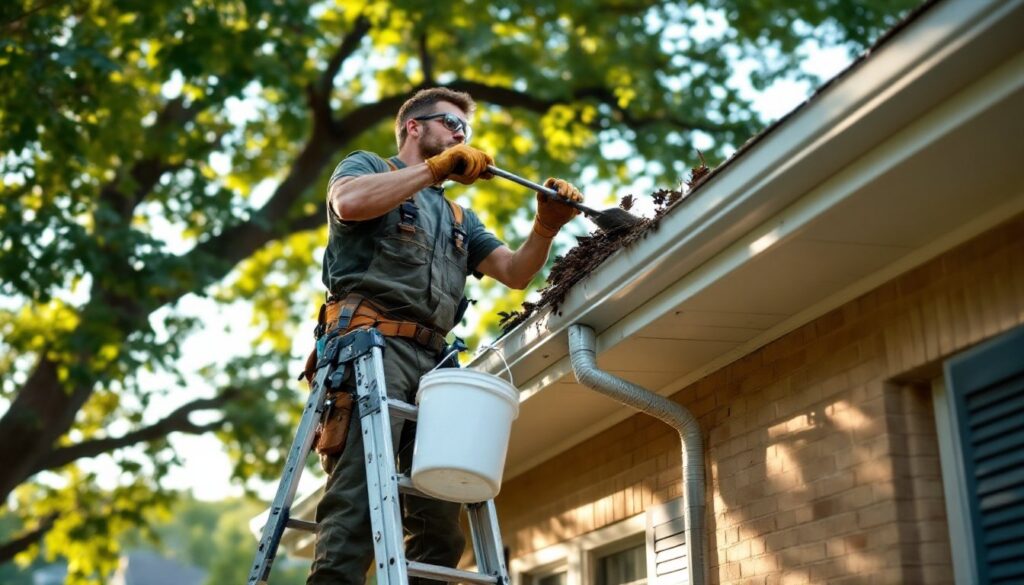
Clip your bucket to the ladder rung with a carabiner or rope, never hang it from the gutter itself, your weight plus debris will strain the fasteners and can tear the gutter away from the fascia. If you’re cleaning alone, consider a rope and pulley system to lower full buckets rather than carrying them, which throws off your balance on the ladder. Have a helper hold the ladder base, even if it feels overkill: statistics show most gutter-cleaning injuries happen when someone overreaches or shifts balance.
Removing Debris and Leaves
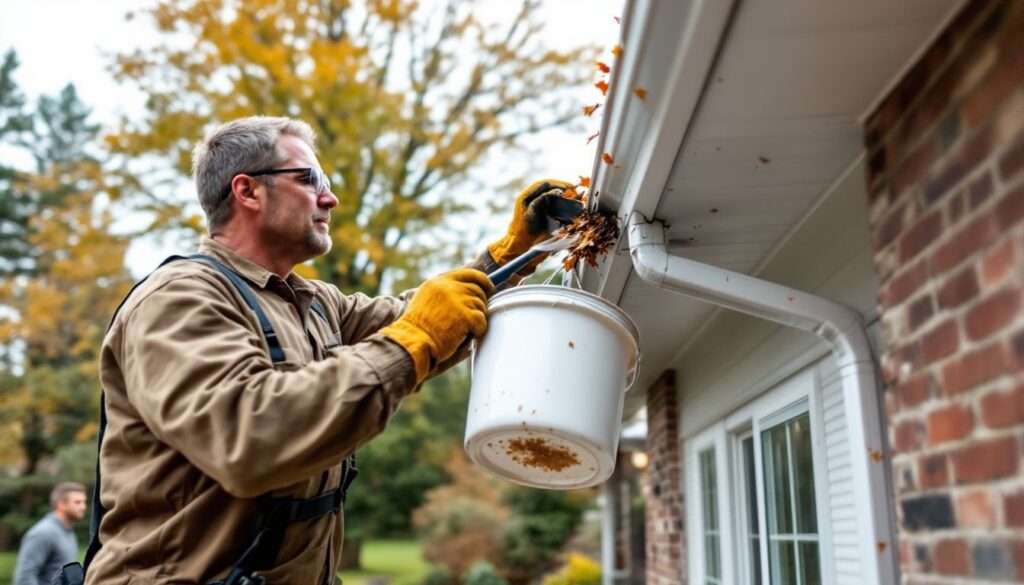
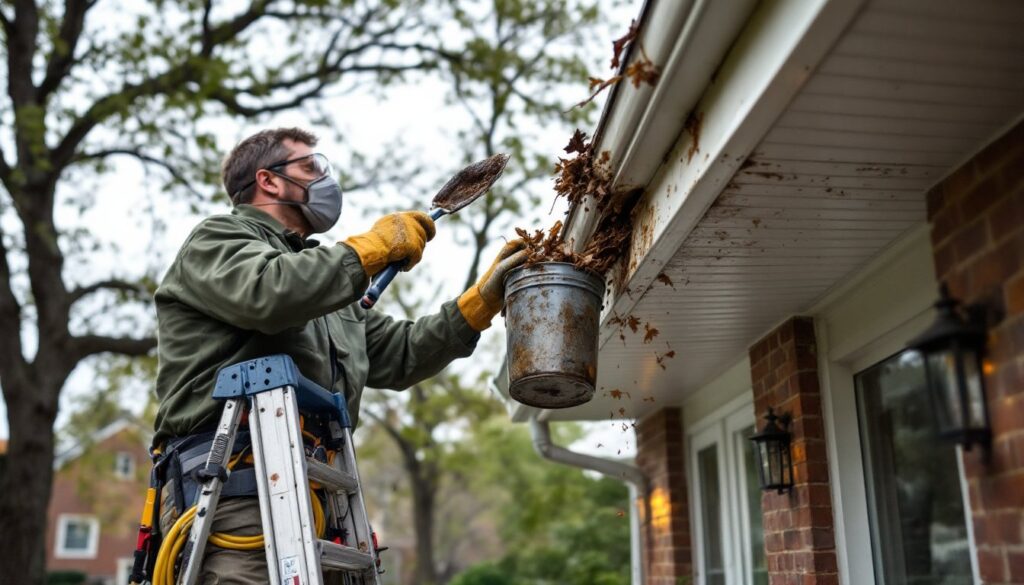
Start on one end and work systematically along the gutter. Use your gutter scoop to push accumulated leaves and debris toward you, then scoop into your bucket. Work gently, you’re not power-washing, you’re hand-clearing. Compressed sediment, especially ash from LA fires, can stick like concrete: a flat-blade putty knife helps break it up without damaging the gutter’s interior.
Pay extra attention to valleys, elbows, and any spots where leaves tend to bunch. Don’t rush, most clogs form at these transition points. If you encounter standing water in the gutter, that’s a sign the slope is wrong or a downspout is blocked: note it for the flushing step. Once you’ve cleared the visible debris, you’re about halfway done: the sticky sediment layer comes next.