
Table of Contents
ToggleStanding on a ladder looking at leaves, twigs, and what appears to be a small bird’s nest in your gutters is never fun, but it’s a reality for most homeowners. Gutter and downspout cleaning might not be glamorous, but it’s one of those maintenance tasks that keeps your home from developing expensive water damage and foundation issues. When gutters clog, water backs up, spills over the edge, and pools around your foundation. That same water can rot fascia boards, weaken roofing shingles, and turn your basement into a swimming pool. The good news: you don’t need a contractor to handle this job. With the right tools, a clear method, and honest assessment of your comfort level, most homeowners can tackle gutter and downspout cleaning themselves.
Key Takeaways
- Neglecting gutter and downspout cleaning can lead to costly water damage, including rotted fascia boards ($300–$800 per section), foundation problems (exceeding $10,000), and basement leaks that most homeowners can prevent themselves.
- Clean your gutters twice yearly (spring and fall), test water flow toward the downspout, and ensure downspouts are clog-free and extend 4–6 feet away from your foundation to prevent water pooling and damage.
- Most DIY gutter cleaning failures occur because debris is removed from visible sections while downspout blockages remain—always test water flow and address deeper clogs before considering the job complete.
- Safety is essential when gutter cleaning: use a stable 6–8 foot ladder positioned properly, wear gloves and eye protection, and hire a professional if you’re uncomfortable at heights, have mobility issues, or lack safe roof access.
- Leaf guards and screens (running $15–$25 per linear foot) significantly reduce debris buildup and can extend cleaning intervals, though they don’t eliminate gutter maintenance entirely.
The Risks of Neglecting Gutter Maintenance
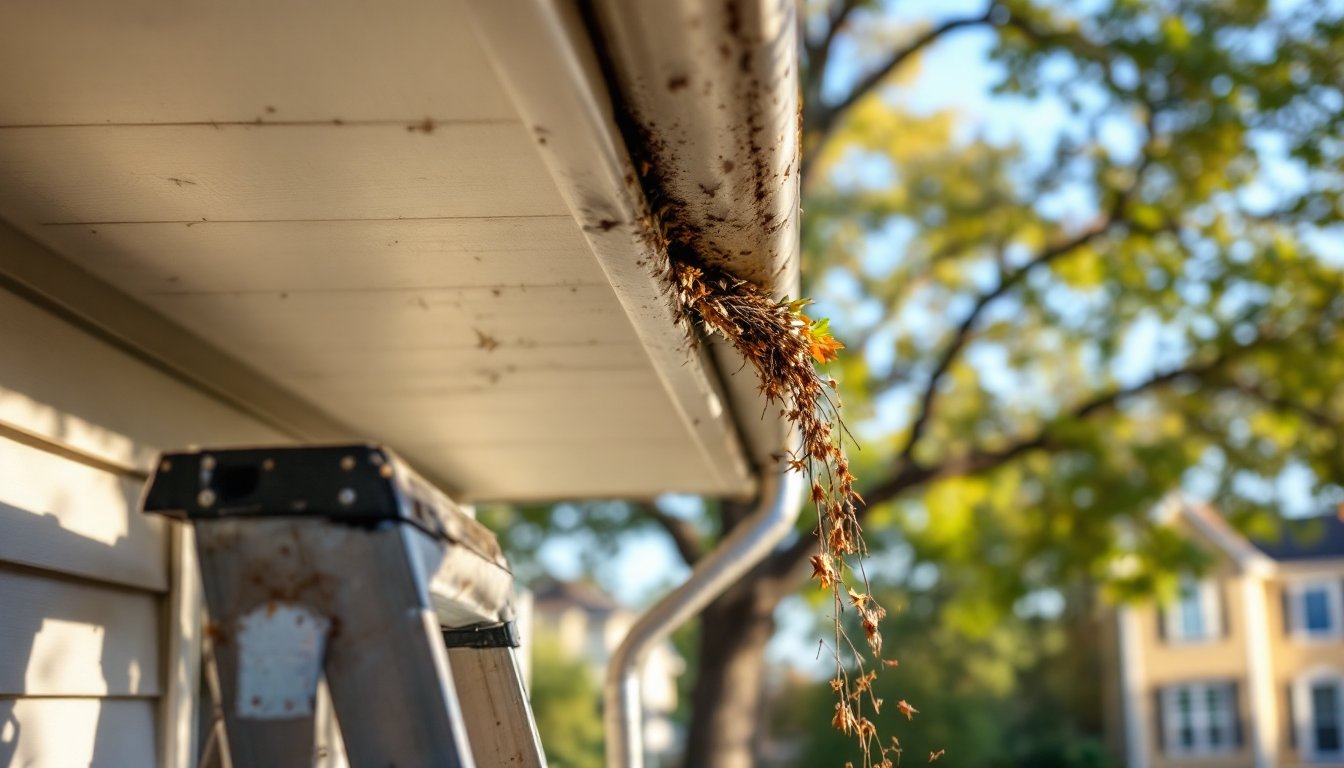
Clogged gutters don’t stay a cosmetic problem for long. Water that can’t flow to the downspout will overflow at the edges, running down fascia boards, siding, and into the soil adjacent to your foundation. Over time, this erodes the soil, allows water to seep into basement walls, and creates an inviting environment for mold and mildew.
Fascia boards, the horizontal boards that hold your gutters, are especially vulnerable. They’re made of wood (usually pine or cedar in older homes, sometimes fiber-composite or PVC in newer ones) and will rot quickly when exposed to constant moisture. Replacing a rotted fascia board runs $300–$800 per section, depending on length and material. That’s just one board: if water damage spreads behind it, you’re looking at structural repairs.
Your roof itself can also suffer. Clogged gutters force water to pool behind shingles, especially at valleys and edges. This standing water accelerates shingle degradation and can lead to leaks inside the attic. Ice dams, that ridge of ice that forms along the roof edge in winter, are worse when gutters are blocked, because they trap meltwater even longer.
Foundation damage is the big one, though. Water pooling around your home’s perimeter weakens the soil and hydrostatic pressure builds inside basement walls. You might notice cracks, efflorescence (white mineral deposits), or dampness. Foundation repair costs can easily exceed $10,000. A few hours of gutter cleaning beats that by a mile.
How to Safely Clean Gutters: Step-by-Step Guide for DIY Homeowners
Essential Tools and Safety Equipment You’ll Need
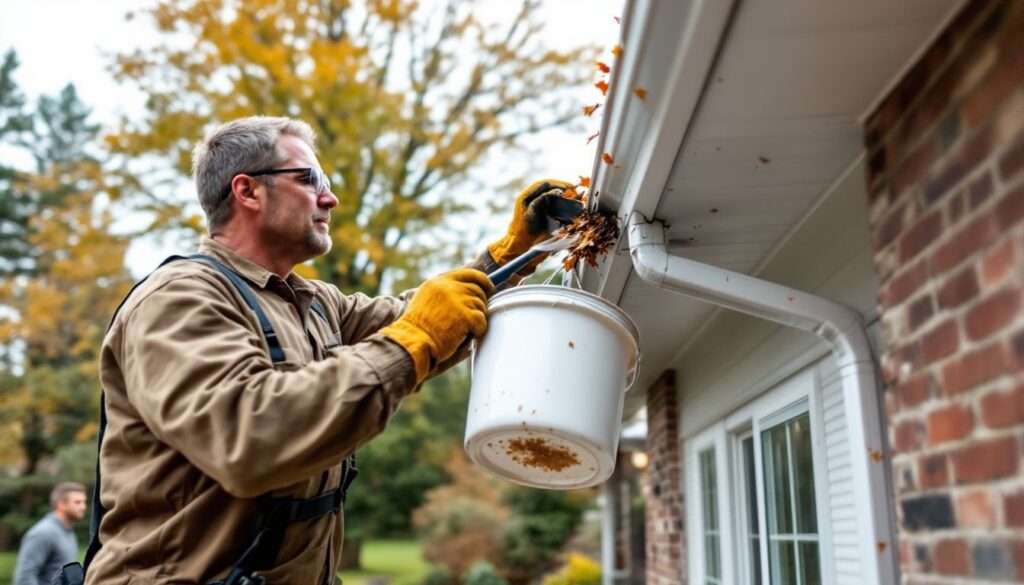
Before you climb, gather everything. You’ll need a stable ladder (6- to 8-foot step ladder for single-story, extension ladder for two-story homes), a gutter scoop (a small shovel-like tool, around $10–$15), a bucket to carry debris, work gloves (heavy leather or nitrile, not thin cotton), and either a garden hose with a spray nozzle or a wet/dry shop vacuum with a gutter attachment.
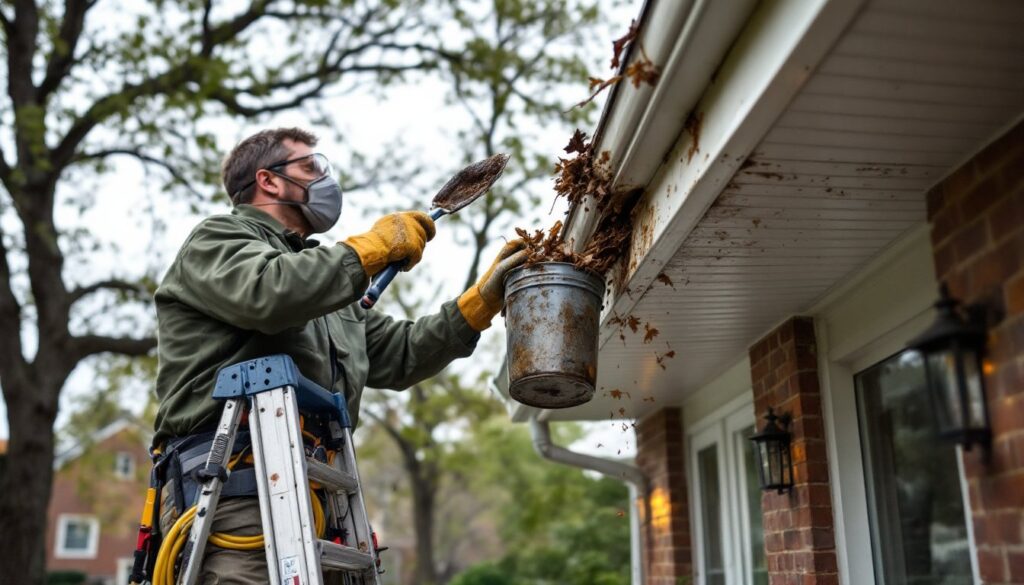
Safety is non-negotiable here. Wear eye protection (safety glasses or goggles) to keep debris out of your eyes, especially when rinsing. Gloves protect against sharp debris, rust, and the occasional wasp nest. If you have a history of balance issues or fear of heights, bring a spotter or hire a professional, no shame in it.
Step-by-Step Cleaning Process:
-
Position your ladder safely. Place it 2–3 feet from the downspout opening you’re approaching, angling the base so it’s 1 foot out for every 4 feet of height. Never lean more than an arm’s length to either side, move the ladder instead.
-
Remove bulk debris by hand. Scoop out leaves, twigs, and sediment into your bucket. Work from the downspout backward along the gutter, moving the ladder as needed.
-
Scrape the gutter bottom with the gutter scoop to dislodge packed silt and smaller debris. Gutters aren’t perfectly smooth: debris compacts into the low spots.
-
Rinse with water. Once most debris is out, use a garden hose or shop vac to flush remaining sediment toward the downspout. If you use a hose, start from the end farthest from the downspout and work toward it, so water carries debris out rather than deeper into the gutter.
-
Test water flow. Turn on the hose and watch water move smoothly toward the downspout. Any backup or pooling means there’s still a clog deeper in the system, address this before moving on.
Don’t rush this step. Most DIY gutter failures happen because folks clean the visible part of the gutter but leave a blockage in the downspout itself. That backup will cause the same overflow you were trying to prevent.
Cleaning Your Downspouts Thoroughly
A clean gutter means nothing if water can’t exit through the downspout. Downspouts often clog 2–5 feet below the gutter connection, where debris compacts and leaves begin to decompose into a sludgy blockage.
Start by testing. With the gutter cleaned, run water into the downspout opening. If it flows freely, you’re done. If it backs up or dribbles, you’ve got a clog.
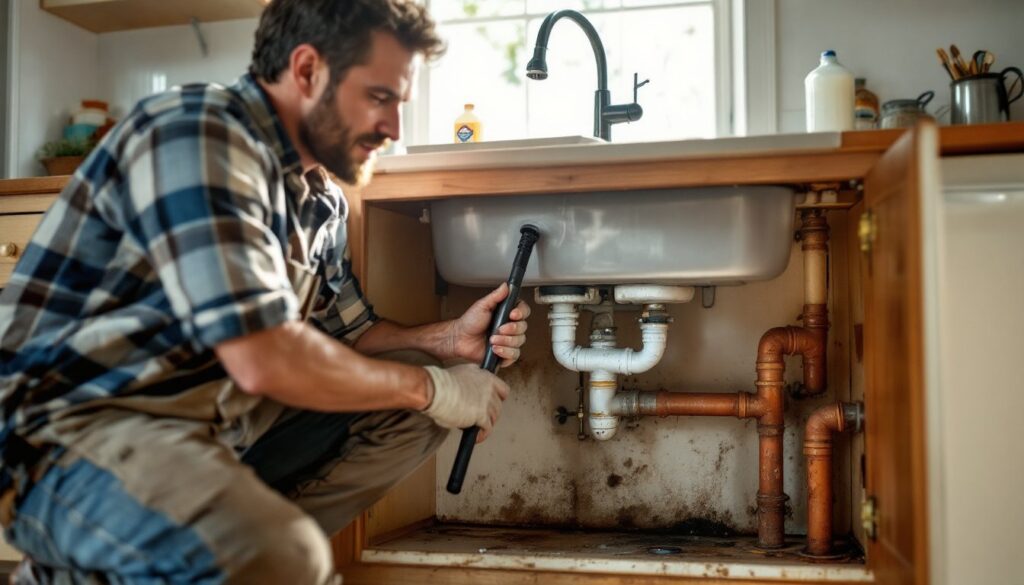
For clogs, try a plumbing snake or a pressure washer first. Push a flexible auger (drain snake) down the downspout from the top, twisting as you go to break up the blockage. A garden hose on high pressure can dislodge some clogs, though be cautious not to damage gutter seams. If you have a shop vac with a ductwork attachment, you can sometimes suction the clog out from the bottom, just disconnect the downspout at the base to access it.
For stubborn blockages, you may need to temporarily disconnect the downspout elbow or extension and fish out the debris manually. This is messier but effective. Wear gloves: downspout sludge is unpleasant. Professional downspout cleaning services offer equipment like high-pressure jets that can clear years of buildup, though the DIY approach works for routine maintenance.
Once clear, reattach everything securely. Downspout extensions should direct water at least 4–6 feet away from your foundation. If your current extension is too short or missing, this is a good time to upgrade.
Best Practices for Preventing Gutter Buildup
Cleaning gutters twice a year, spring (April–May) and fall (October–November), is the standard recommendation for most climates. Homes surrounded by trees may need three cleanings per year, especially if oak or maple trees nearby shed seeds and small branches.
Leaf guards and screens reduce debris significantly, though they aren’t foolproof. These devices sit on top of the gutter and allow water through while blocking large debris. Quality versions (aluminum or steel mesh) run $15–$25 per linear foot installed. They won’t eliminate cleaning entirely, but they can stretch the interval between cleanings to once a year or reduce the volume of debris.
Make sure your downspout extensions are in place and angled away from the foundation. If they dump water close to your house, you’re just moving the problem. Extensions should be removable or adjustable so you can disconnect them during fall leaf season if they get clogged.
Keep gutters sloped slightly toward downspouts (about 1/8 inch drop per 12 feet of run). Flat or backward-sloped gutters trap water. If you notice standing water during a light rain, the gutter slope is off and may need adjustment, this is a job for a handyperson with experience in gutter work.
Monitor your gutters after heavy rains and at the start of winter. If you see overflow or water streaming down fascia boards, clean immediately rather than waiting for the scheduled date. Some damage happens fast.
When to Call a Professional
Not every homeowner should climb a ladder, and that’s okay. If you’re uncomfortable at heights, have mobility issues, or live in a home with a steep roof or high gutters, hire a professional. Gutter cleaning services typically charge $150–$300 per visit depending on home size and debris volume. That’s a small premium compared to the cost of fixing water damage.
You should also call a professional if you discover structural issues during cleaning. If fascia boards are soft or spongy, shingles are missing or curling, or you spot mold growth inside the gutters, your home needs more than cleaning, it needs repairs. Angi and similar service directories let you compare local contractors, read reviews, and get cost estimates.
If you have a two-story home with high gutters and no safe access, it’s not worth the risk. A fall from a ladder can be catastrophic. Pros have scaffolding, insurance, and experience. Similarly, if your gutters have never been cleaned or haven’t been touched in five years, the debris load might be extreme, a professional with a truck-mounted vacuum can clear it much faster and safer than a DIYer with a bucket.
Experienced DIY guides recommend professional help when structural concerns arise or when the scope exceeds your comfort and capability. That’s not failure: it’s wisdom.
Conclusion
Gutter and downspout cleaning is unglamorous work, but it’s genuinely important. A few hours twice a year beats thousands in foundation repairs, roof damage, and mold remediation. You have the skills to do this job yourself if you’re willing to be methodical and safe. Invest in proper tools, take your time, and don’t skip testing downspout flow. If climbing a ladder isn’t your thing, or if your home’s height or condition makes it risky, hiring a professional is the smart choice. Either way, make it a habit. Your home will thank you.