
Table of Contents
ToggleYour car’s interior takes a beating. Spilled coffee, tracked-in dirt, pet hair, crumbs, and dust accumulate faster than you’d think, especially if you commute daily or have kids and pets. A quick vacuum helps, but a real deep clean tackles the hidden grime that regular tidying misses. This guide walks you through a complete interior refresh that’ll make your car feel new again, without hiring a professional detailer.
Key Takeaways
- Car interior deep cleaning improves your health by removing dust, pet dander, and mold spores that can trigger allergies and respiratory issues on long drives.
- Vacuuming with a crevice tool first, then using a brush attachment on carpeted areas, is essential—pay special attention to under-seat gaps and high-traffic zones where debris accumulates.
- Treat fabric stains by spraying upholstery cleaner, letting it sit for 5–10 minutes, gently agitating with a soft brush, and blotting with microfiber cloths to prevent permanent damage.
- Always apply interior cleaner to a microfiber cloth rather than directly onto dashboards and hard surfaces to prevent drips into electronics and streaking.
- A thorough car interior deep cleaning typically takes 2–3 hours and should be done every 3–6 months, with weekly vacuuming and immediate spill cleanup as preventive maintenance.
- Quick maintenance—keeping a microfiber cloth and detailing spray in your glove box—prevents the need for aggressive deep cleaning and maintains your car’s resale value.
Why Deep Cleaning Your Car Interior Matters
Neglecting your car’s interior doesn’t just look bad, it affects your health and resale value. Dust, pet dander, and mold spores trapped in carpets and upholstery can trigger allergies and respiratory issues, especially on long drives with the windows closed. Stains set over time, permanent odors develop, and dirt works into fabric fibers, making them harder to clean later.
Regular deep cleaning maintains your investment. A car with a clean, fresh interior commands better resale value and keeps you healthier. It’s preventive maintenance for comfort and longevity. Most car interiors benefit from a thorough cleaning every 3 to 6 months, depending on use.
Essential Tools and Supplies You’ll Need
Before starting, gather everything. Running in and out of the garage for forgotten supplies kills momentum and eats up time.
Vacuum and Extraction:
• Handheld or shop vacuum (wet/dry vac is ideal for both dry and damp work)
• Upholstery brush attachment
• Crevice tool attachment
• Carpet extraction machine (optional, but valuable for deep stains, rental available at hardware stores)
Cleaning Agents:
• All-purpose interior cleaner
• Upholstery-specific cleaner (fabric-safe formulation)
• Glass cleaner
• Microfiber detailing cloths (at least 3–4)
• Dry cloth towels for buffing
Additional Supplies:
• Soft-bristled detail brush (old toothbrush works in a pinch)
• Compressed air can or handheld air duster (for vents)
• Paper towels or rags
• Safety gear: gloves, eye protection, and a dust mask if you’re sensitive to dust clouds
For the best results, use products designed for automotive interiors. All-purpose household cleaners sometimes leave residue on dashboards or can damage certain plastics.
Vacuuming and Removing Debris
Start with the basics: remove everything from the car. Take out floor mats, the spare tire cover, and any items stored under seats. Shake out floor mats outside to dislodge loose dirt, then set them aside, you’ll clean them separately.
Use your vacuum’s crevice tool first, running it along seams, under seats, between the center console, and around door edges. These gaps trap massive amounts of debris. Follow up with the brush attachment on all carpeted areas, using overlapping passes. Don’t rush: go over high-traffic zones (driver’s side footwell, under the steering wheel) twice.
Pay special attention to under-seat pockets and the rear footwells. Seats often slide forward on tracks, creating hidden caves where dirt, coins, and food particles hide. Vacuum thoroughly here before you can’t see anymore crumbs. For stubborn debris, a handheld extractor works better than a regular vacuum because it agitates fibers and lifts embedded dirt.
Cleaning Upholstery, Carpets, and Mats
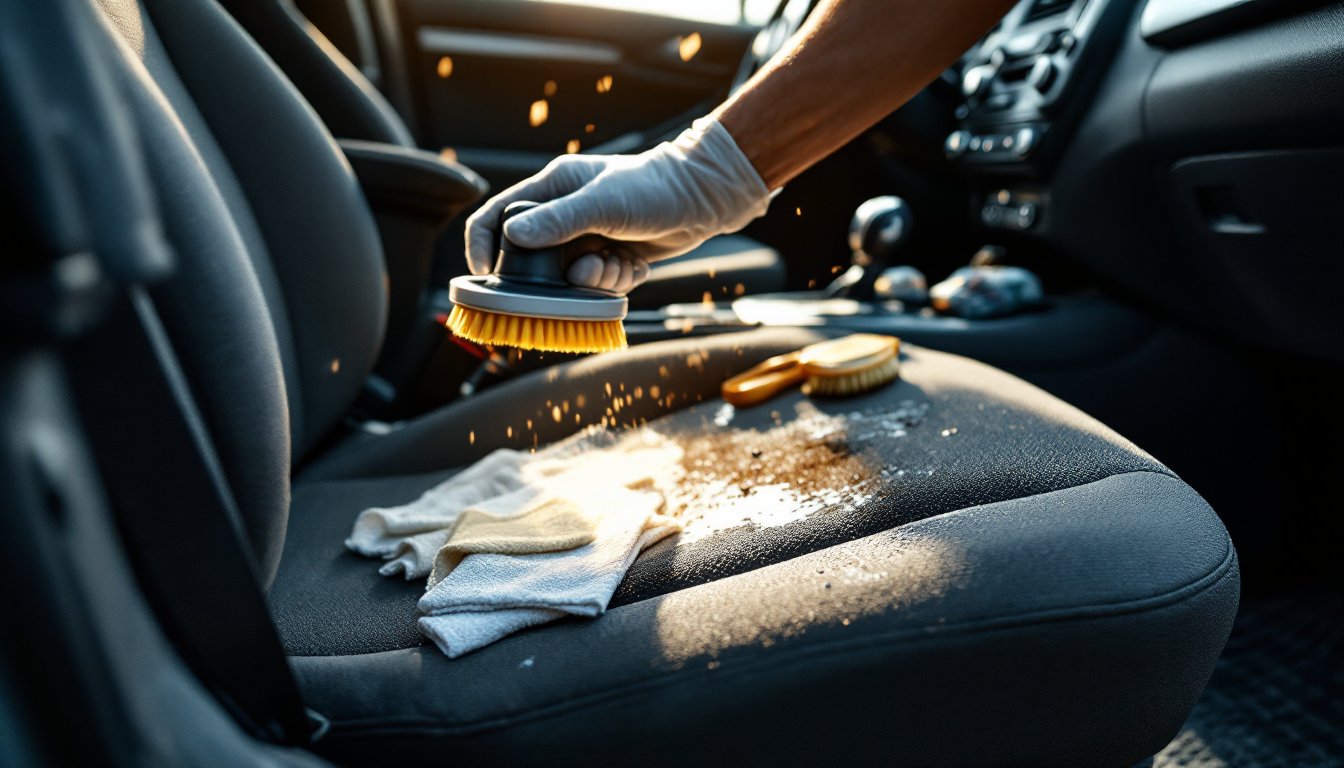
Once you’ve vacuumed, treat stains and odors in fabric areas. Spray upholstery cleaner directly onto soiled spots and let it sit for 5–10 minutes, this gives the solution time to break down grime. Use a soft-bristled brush or old toothbrush to gently agitate the fabric in circular motions. Wipe away loosened dirt with a damp microfiber cloth, then blot with a dry one.
For water-based stains (soda, coffee), work from the outside of the stain inward to prevent it from spreading. For oily stains (sunscreen, food grease), spray cleaner and let it sit a bit longer before scrubbing.
If you’re renting a carpet extraction machine or have a wet/dry vacuum, use it on carpeted floors. Fill the machine’s clean-water tank with hot water and a small amount of upholstery shampoo, then spray and immediately extract. Run over each area 2–3 times, working in overlapping passes. Multiple passes pull out moisture faster, reducing drying time.
For floor mats, spray both sides with upholstery cleaner, scrub with a brush, rinse with a hose, and lay them flat in the sun to dry. Wet mats left in the car overnight breed mold. Recent deep cleaning house guides emphasize the importance of thorough drying to prevent moisture-related odors, the same principle applies to car interiors.
Tackling Dashboards, Vents, and Hard Surfaces
Hard plastic and vinyl surfaces collect dust and fingerprints. Start with a compressed air can or handheld air duster to blow out dust from air vents, steering wheel controls, and the dashboard’s crevices. Short bursts of air dislodge trapped particles that a cloth would just push around.
Spray all-purpose interior cleaner onto a microfiber cloth, never directly onto the dashboard, which can drip into electronics. Wipe the dashboard, steering wheel, center console, and door panels in one direction. Use a second clean cloth to buff and remove streaks. For vents, wrap a slightly damp cloth around a flat tool (like a plastic paint stick) and slide it between slats to trap dust.
Wiping down hard surfaces regularly prevents buildup and keeps your interior looking fresh. Pay extra attention to the steering wheel, which collects oils and grime from your hands. If your dashboard has a glossy finish, use glass cleaner instead of all-purpose cleaner to avoid a dull residue. Resources like Good Housekeeping’s deep cleaning guide recommend microfiber cloths for this step because they trap particles instead of scattering them.
Final Touches and Maintenance Tips
Once upholstery is dry and hard surfaces shine, reinstall floor mats and take a final look for missed spots. Roll down windows fully for 10–15 minutes if the interior feels damp from extraction or cleaning solution residue. Open the doors and let the car air out.
For ongoing maintenance, vacuum weekly if you commute daily, and address spills immediately before they set into fibers. Keep a microfiber cloth and small detailing spray in your glove box for quick dashboard touch-ups. A car air freshener combats odors, but it’s not a substitute for cleanliness. Fix any sources of odor, old floor mats, pet accidents, or moisture, before masking the smell.
If you’re deep cleaning because of pet hair or allergy concerns, consider upholstery seat covers or a wash on alternating months. Simple living strategies, as discussed on Real Simple, emphasize prevention over remediation. The same applies to your car: a little routine cleaning prevents the need for aggressive deep cleaning later.
Conclusion
A deep-cleaned car interior improves your health, comfort, and the car’s resale value. By following this step-by-step approach, vacuuming thoroughly, treating stains, and cleaning hard surfaces, you’ll achieve professional-quality results without hiring a detailer. Plan for 2–3 hours, depending on your car’s condition and whether you’re using an extraction machine. Your future self will thank you every time you slide into a spotless, fresh-smelling interior.