
Table of Contents
ToggleGutter cleaning isn’t glamorous, but it’s one of the most important maintenance tasks a homeowner can tackle. In Columbia, Maryland’s climate, with regular rainfall, spring pollen, and fall leaves, gutters fill up fast. Clogged gutters back up water against your fascia, rot your soffit, and can damage your foundation over time. The good news? Cleaning gutters yourself is straightforward, requires basic tools, and takes just an afternoon. This guide walks you through the process, from safety precautions to knowing when to call a pro.
Key Takeaways
- Gutter cleaning in Columbia, MD should be performed at least twice yearly—in late fall and early spring—to prevent water damage, foundation issues, and pest infestations caused by debris buildup.
- Essential DIY gutter cleaning tools include a stable extension ladder (20–24 feet), gutter scoop, work gloves, bucket, and garden hose; a wet/dry shop vacuum rental ($25–40/day) speeds up the process significantly.
- Always prioritize safety by setting your ladder 1 foot away from the wall for every 4 feet of height, wearing slip-resistant gloves, using a helper as a spotter, and avoiding work on wet ladders or in high winds.
- Professional gutter cleaning services in Columbia typically cost $150–$300 per cleaning and are recommended for multi-story homes, steep roofs, or repairs—making them a smart investment compared to injury risks.
- After removing bulk debris and flushing gutters, always clear downspouts thoroughly and ensure they discharge 4–6 feet from your foundation to prevent foundation cracks and water pooling.
- Inspect gutters during cleaning for rust holes, separated seams, or sagging sections, and mark problem areas for repair or professional replacement to maintain your home’s structural integrity.
Why Gutter Cleaning Matters For Your Columbia Home
Your gutters direct water away from your roof, walls, and foundation. When they’re clogged with leaves, twigs, dirt, and debris, water spills over the edges instead of flowing through downspouts. That overflow soaks your siding, erodes soil around the foundation, and can lead to basement flooding or settling issues, expensive problems that compound fast.
Columbia’s weather patterns make regular gutter maintenance essential. Spring brings pollen and seed pods: fall dumps leaves: and winter ice dams can worsen if gutters are already blocked. Experts recommend cleaning gutters at least twice yearly: once in late fall after leaf drop, and again in early spring. If you have large trees nearby, add a cleaning in mid-summer.
Clogged gutters also become mosquito breeding grounds and can harbor rodents and insects seeking shelter. Beyond pests, standing water in gutters accelerates rust on metal systems and degrades vinyl faster than normal. A quick cleaning twice a year prevents these cascading problems and protects your home’s structural integrity.
Best Tools and Materials For DIY Gutter Cleaning
Essential Equipment You’ll Need
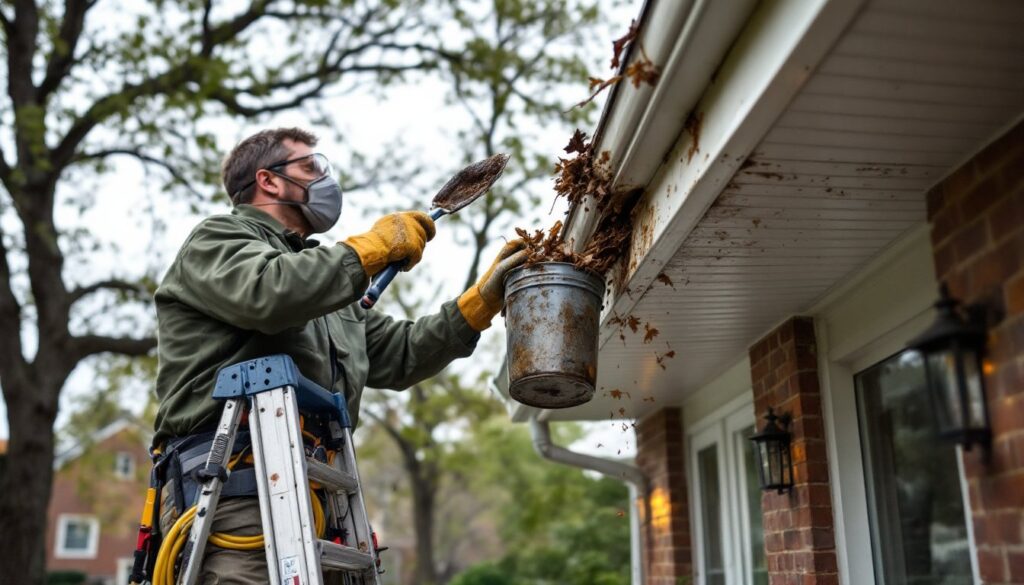
You don’t need fancy gear, but having the right basics makes the job faster and safer. A stable extension ladder (20–24 feet for most single-story homes) is non-negotiable: avoid leaning a short ladder and shifting it constantly. A gutter scoop or small shovel lets you remove bulk debris without getting your hands dirty, an old putty knife or small hand shovel works if you don’t have a dedicated scoop. Heavy-duty work gloves protect your hands from sharp gutter edges, rust, and debris.
A bucket tied to your ladder rung holds scooped debris so you don’t drop it on your head or landscaping. Many pros use a wet/dry shop vacuum with a gutter attachment, which speeds up cleaning significantly and reduces mess. If you don’t own one, renting costs roughly $25–40 per day from equipment rental shops in Columbia. A garden hose with adjustable nozzle rinses gutters clean after you’ve removed debris: a high-pressure washer can work but risks damaging gutter seams if you’re not careful.
Safety Gear and Precautions
Fall hazards are real. Wear safety glasses to keep debris and grit out of your eyes, especially when rinsing. Slip-resistant work gloves improve grip on wet ladder rungs. If you’re working at height for extended periods, consider a fall arrest harness clipped to a roof-mounted anchor: most homeowners skip this for single-story jobs but never skip ladder stabilizers.
Always set your ladder on level ground and have someone spot you, a second set of eyes catches balance shifts before they become falls. Wear long sleeves and long pants: leaves and gutters harbor wasps’ nests and sharp debris. Never work alone, and never work on a wet ladder or during rain or high winds. If you’re uncomfortable on a ladder or your roof is steep-pitched, hire professionals: this isn’t the place to prove something.
Step-by-Step Guide to Cleaning Your Gutters Safely
1. Set Up Your Ladder Safely
Place your ladder perpendicular to the gutter, never parallel. Position it so the base is 1 foot away from the wall for every 4 feet of height, a 20-foot ladder sits about 5 feet from the house. Extend the ladder 3 feet above the gutter line for secure handholds. Lock the stabilizer bar if your ladder has one, and have a helper hold the base or use a ladder stabilizer brace.
2. Remove Bulk Debris
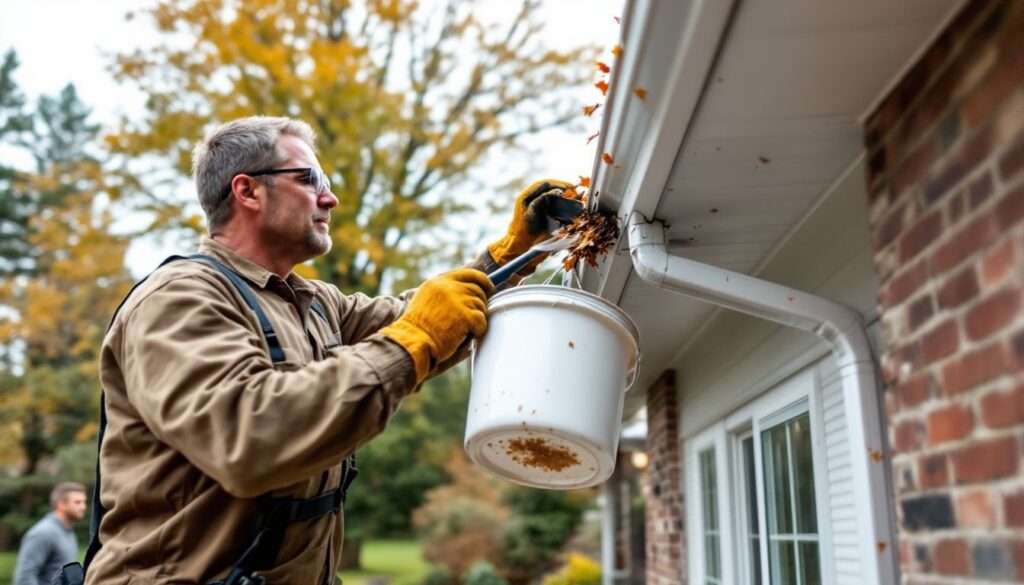
Climb to your work area with your gutter scoop and bucket. Starting at the downspout end, scoop out leaves, twigs, and sediment. Work toward the opposite end, piling debris into your bucket. Don’t rush: loosen compacted debris with your fingers or a small stick if needed. Remove all visible buildup before moving to the next section.
3. Flush the Gutters
Once bulk debris is out, attach your garden hose and turn the water on at medium pressure. Start at the end opposite the downspout and flush toward it, which pushes any remaining sediment and fine debris through. You’ll see where drainage is sluggish or blocked. Pay extra attention to gutter seams and downspout inlets where debris collects.
4. Clear Downspouts
Offten downspouts get clogged too. If water isn’t draining freely, poke a stick up from the bottom or flush water down from the top. Stubborn blockages may require removing the downspout elbow joint for access. Downspout cleaning is essential for preventing water damage, so don’t skip this step even if the gutter itself drains perfectly.
5. Inspect for Damage
While you’re up there, look for rust holes, separated seams, or sagging sections. Mark problem areas with a permanent marker so you can address them later. Minor rust on steel gutters can be wire-brushed and spot-treated, but large holes or widespread rust mean sections need replacement.
6. Check Downspout Direction
Ensure downspouts discharge at least 4–6 feet from your foundation. Water pooling against the house causes foundation cracks and settling. Extend downspouts with PVC pipe or a splash block if they terminate too close to the house.
When To Call Professional Gutter Cleaners in Columbia
DIY cleaning works great for routine maintenance on single-story homes with accessible roofs. But some situations call for professionals. If your roof is steeply pitched, you’re uncomfortable on ladders, or your home is multi-story, hire it out. Professional work might cost $150–$300 per cleaning (depending on home size and debris volume), but it beats a $10,000 emergency room visit from a fall.
You’ll also want pros if you need gutter repairs, cracked sections, leaking seams, or sagging runs require re-sealing or replacement. If gutters are clogged so badly that flushing doesn’t clear them, underground downspouts may be blocked, a problem that requires professional diagnosis. Top-rated gutter cleaners in where you can see reviews and get multiple quotes.
Tools like HomeAdvisor provide cost estimates and contractor matching to help you budget before hiring. Another resource is ImproveNet, which connects homeowners Ask any contractor for references, verify they’re insured and licensed, and get a written estimate before work begins. Regular professional cleanings every 1–2 years, combined with DIY spot-checks after storms, keeps your gutters in top shape year-round.
Conclusion
Gutter cleaning is unglamorous work, but it’s fundamental to protecting your Columbia home. Tackling it yourself twice a year saves hundreds in service fees and keeps you alert to bigger problems like rust or seam leaks before they worsen. Stay safe on the ladder, don’t skip downspout flushing, and know when professional help is the smarter choice. Your foundation, siding, and peace of mind will thank you.