
Table of Contents
ToggleCalifornia’s mild climate might feel low-maintenance, but gutters don’t get a free pass. Rain in fall and winter, combined with year-round debris from trees, can clog your gutters faster than you’d think. When water backs up behind clogged gutters, it pools against your fascia board, foundation, and siding, leading to rot, leaks, and expensive repairs. Whether you’re in Los Angeles dealing with gutter cleaning challenges or anywhere else in the state, staying on top of this one task saves your home thousands. This guide walks you through why gutter maintenance matters in California, how to spot when it’s time to clean, and how to do it safely yourself or know when to call in a pro.
Key Takeaways
- Gutter cleaning in California is essential twice yearly (fall and spring) because year-round debris, Santa Ana winds, and coastal salt spray accelerate clogging and corrosion.
- Clogged gutters cause water to pool against your fascia, foundation, and siding, leading to costly rot, mold, and structural damage that far exceed the cost of regular maintenance.
- DIY gutter cleaning requires proper safety gear, a stable ladder, and a systematic approach: gather debris, flush the system, and inspect for damage—never overreach or work alone.
- Gutter guards and tree-branch trimming can reduce cleaning frequency to 3–4 times yearly, while extending downspouts 5 feet from the foundation prevents foundation pooling.
- Professional gutter cleaning in Los Angeles averages $150–$300 and is worth the investment if your home exceeds two stories, has structural damage, or you’re uncomfortable on a ladder.
Why Gutter Maintenance Matters in California
California’s weather is deceptive. While you’re not dealing with heavy snow gutters in the north, you’re contending with Santa Ana winds that scatter debris, coastal salt spray that accelerates gutter corrosion, and tree pollen and leaf litter that accumulates year-round. Gutters clogged with this debris can’t do their job: directing water away from your home.
When water overflows or backs up, it saturates the fascia board (the trim running along the roofline), the soffit (the underside of the eaves), and eventually your home’s foundation. This moisture invites wood rot, mold growth, and structural damage that costs far more to fix than a simple gutter cleaning. In areas like Los Angeles, where property values are high and older homes are common, preventive maintenance is even more critical. Regular gutter cleaning is one of the cheapest insurance policies you can buy for your home.
When to Clean Your Gutters in California
California’s seasonal patterns mean you’ll need a different gutter cleaning schedule than homeowners back east. Most of California should clean gutters at least twice yearly: once in late fall (November) after trees drop their leaves, and once in spring (April or May) after pollen season and before the summer heat kicks in.
If your home sits near trees or in a windier area, aim for three cleanings, add one in mid-summer if deciduous trees are shedding branches. After heavy storms, always do a quick visual check from the ground. If you spot water pooling at the edge of the roof or hear the gutter overflowing during rain, don’t wait until the scheduled cleaning. The cost of reactive gutter maintenance, repairing water damage, far exceeds proactive cleaning. In drier months, keep an eye out for visible debris buildup, particularly near downspout openings where leaves jam up first.
Tools and Materials You’ll Need
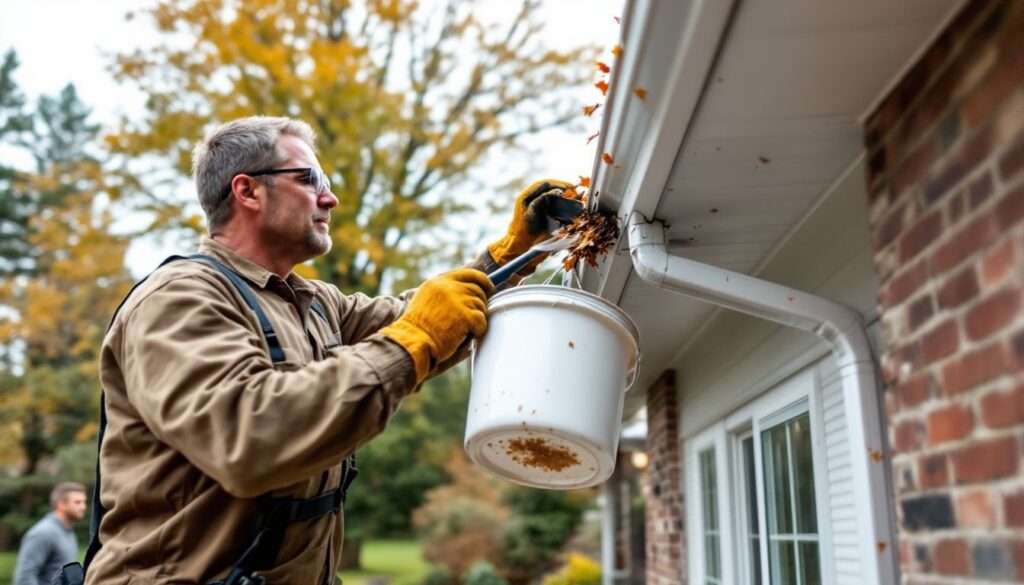
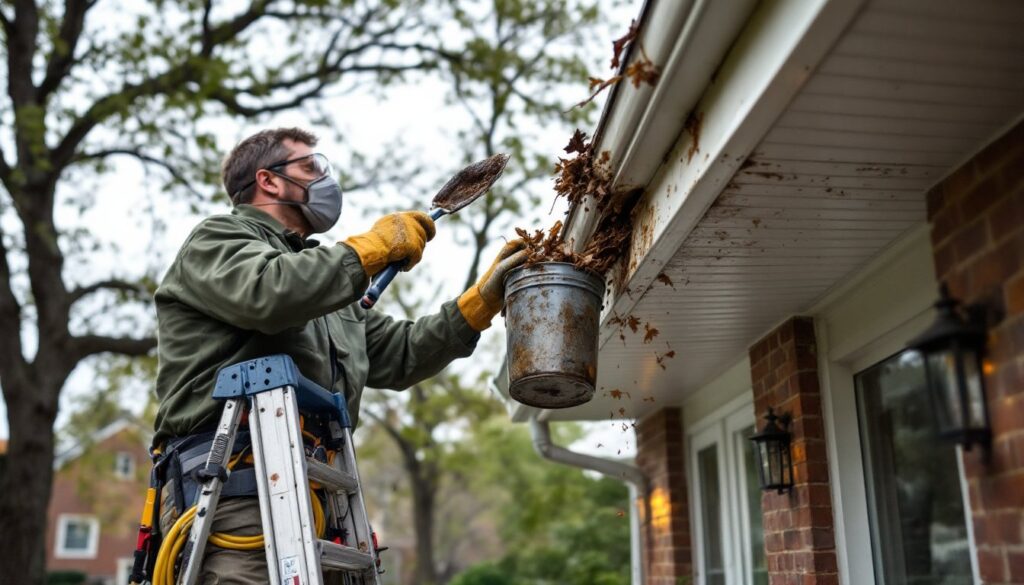
Before you climb a ladder, gather the right gear. You’ll need a stable 20- to 28-foot extension ladder (your roof height determines the exact length), a bucket (5-gallon works well for hauling debris), work gloves (heavy-duty nitrile or leather), and safety glasses. A handheld gutter scoop or an old kitchen spoon works fine for scooping debris: alternatively, a wet-dry shop vacuum with a gutter-cleaning attachment saves time on larger homes.
Consider adding a gutter brush (a soft-bristled brush that clears fine debris after you’ve scooped) and garden hose with a spray nozzle to flush the system afterward. If your gutters have seen better days, grab some roofing cement or gutter sealant to patch small leaks you’ll likely spot during cleaning. Check Downspout Cleaning: Essential Tips for more details on protecting downspouts during the cleaning process.
Step-by-Step Guide to Cleaning Your Gutters
Safety Tips for DIY Gutter Cleaning
Falls are the leading cause of home DIY injuries. Always wear non-slip shoes with good grip, and never stand on the top two rungs of your ladder. Keep your body centered over the ladder rails, not leaning out awkwardly. If you can’t reach a section safely, move the ladder, don’t overstretch.
Wear long sleeves and gloves to protect against sharp metal edges, bird droppings, and mold spores lurking in stagnant water. Use safety glasses to shield your eyes from debris and splashing water. If you’re using a power washer to flush gutters, wear ear protection: that noise tops 90 decibels quickly. Work during daylight in dry weather. Wet gutters and ladders are a dangerous combination. Never work alone if possible: have someone nearby in case you lose your footing. When in doubt about height, ice, or structural concerns, call a professional, it’s worth the cost.
Preventing Future Gutter Problems
Once your gutters are clean, a few upgrades or habits keep them flowing longer. Gutter guards (mesh covers, foam inserts, or helmet-style systems) reduce debris accumulation and can extend intervals between cleanings to 3 to 4 times per year or even longer. They’re not perfect, some still require occasional maintenance, but they’re worth considering if you dislike ladder work.
Trim tree branches overhanging your roof to reduce leaves and twigs dropping directly into gutters. Even small overhanging branches contribute significantly to debris. Ensure your downspouts extend at least 5 feet away from the foundation: short downspouts that dump water near the house can still cause pooling and foundation issues. Consider adding downspout extensions if yours terminate too close to the base.
After heavy wind or storms, do a quick ground-level visual check to catch new clogs early. According to research on gutter cleaning costs in Los Angeles, preventive maintenance is 10-15 times cheaper than water damage repairs. Spending 3 hours twice a year on cleaning beats spending thousands on rot and foundation repairs.
When to Call a Professional
Some situations warrant a pro. If your home is more than two stories tall, climbing becomes risky: professional gutter cleaners have commercial-grade equipment and insurance. If you discover significant rust, sagging sections, or separating seams during inspection, those need replacement, structural gutter issues go beyond cleaning and often require roofing experience.
Also, if you’re uncomfortable on a ladder (age, balance issues, fear of heights), the cost of professional cleaning is worth the peace of mind. Services are widely available across California: resources like ImproveNet and Today’s Homeowner can help you find vetted contractors and understand regional pricing. For Los Angeles homeowners seeking professional help, the average gutter cleaning runs $150 to $300 depending on home size and gutter condition. A single instance of water damage, foundation issues, interior mold, or rotted fascia, easily costs thousands in repairs, making professional maintenance a smart investment for those who can’t safely DIY.