
Table of Contents
ToggleGutters are one of those home features that most people ignore until something goes wrong. Yet, they’re among the most important defenses your house has against water damage. In Windsor, where seasonal weather shifts bring heavy rain and debris, keeping gutters clean isn’t optional, it’s essential maintenance. A clogged gutter can lead to foundation damage, roof leaks, and rotting fascia boards that’ll cost thousands to repair. The good news? Regular gutter cleaning is a straightforward project that any homeowner can tackle with basic tools and some patience. This guide walks you through why gutter cleaning matters, how to spot problems early, and when it’s time to call in reinforcement.
Key Takeaways
- Gutter cleaning in Windsor is essential maintenance that prevents thousands in water damage, foundation cracks, and rotting fascia—particularly critical in areas with seasonal weather shifts and heavy debris.
- Clean gutters twice yearly (late fall and early spring) to prevent clogged gutters that cause water overflow, basement seepage, mold growth, and structural rot.
- Warning signs like water stains, sagging gutters, water sounds during rain, and visible moss growth indicate your gutters need immediate attention to avoid cascading problems.
- DIY gutter cleaning requires basic safety equipment (extension ladder, gloves, safety glasses, gutter scoop, and hose), proper technique, and downspout inspection to ensure water flows freely away from your home.
- Hire a professional gutter cleaner for multi-story homes, heavily damaged gutters, or when foundation issues or persistent water pooling suggests a larger drainage problem requiring expert assessment.
Why Regular Gutter Cleaning Matters for Your Windsor Home
Your gutters have one job: channel water away from your home’s foundation, siding, and roof. When they’re clogged with leaves, twigs, and debris, water overflows at the edges and pools against your foundation or drips behind the gutters, saturating your fascia and soffit boards. Windsor homes face particular pressure during fall and spring when trees shed heavily, plus the freeze-thaw cycles that come with winter weather.
Clogged gutters create standing water, which weighs down the system and can cause the gutters to sag or pull away from the roofline. That pooled water is also a mosquito breeding ground. More seriously, water that doesn’t drain properly can seep into your basement or crawl space, encouraging mold growth and structural rot. A single season of neglect can damage wood framing that costs thousands to replace.
Regular cleaning, ideally twice a year, in late fall and early spring, prevents these cascading problems. Most homeowners find that setting a maintenance schedule and sticking to it costs far less than addressing damage later. The process itself takes just a few hours and requires nothing more than a ladder, gloves, and a bucket.
Signs Your Gutters Need Immediate Attention
Don’t wait for the scheduled cleaning if you notice any of these warning signs. Water stains on your siding or foundation, especially near the downspout outlets, suggest gutters aren’t draining properly. Sagging gutters or gutters that are visibly pulling away from the fascia board are a structural red flag, they’ve likely become too heavy with debris and water.
Listen for water sounds during heavy rain. If you hear water cascading off the edge of the roof instead of flowing through the downspouts, gutters are backed up. Similarly, water dripping between the gutter and fascia means debris is blocking the system. Visible plant growth, moss, seedlings, or actual shrubs sprouting from the gutters, confirms accumulated organic material that’s creating a growing medium. Peeling paint on fascia boards or visible rust on metal gutters also warrants immediate attention.
Water Damage and Foundation Issues
Water pooling at your foundation is the most serious sign of gutter failure. Over weeks and months, this water pressure can crack foundation concrete, shift concrete pads, or seep into basement walls. You might notice cracks that weren’t there before, efflorescence (white mineral deposits on foundation walls), or musty smells in below-grade spaces.
Fascia and soffit rot develops quietly behind the scenes. Water trapped behind gutters or seeping down the exterior wall rots wood from the inside out. By the time rot is visible, it’s often extensive. If you spot soft spots, black staining, or insect damage on fascia boards, call a professional carpenter before tackling gutter cleaning, you may need structural repairs. Windsor’s humid climate accelerates rot, making prevention through clean gutters even more critical.
DIY Gutter Cleaning: Tools and Step-by-Step Instructions
Essential Tools and Safety Equipment
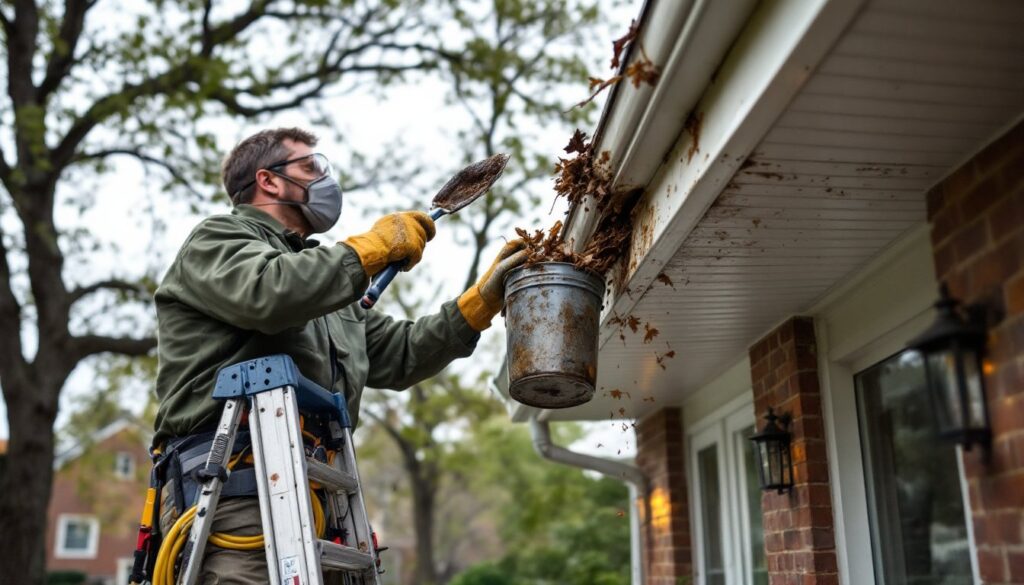
You won’t need expensive equipment, but don’t cheap out on safety. A 20- to 28-foot extension ladder rated for your weight plus 250 pounds of tools and debris is non-negotiable. Set it on level ground and have a helper stabilize it, never lean a ladder against the gutter itself, as they’re not designed to bear lateral load.
Your core tools include:
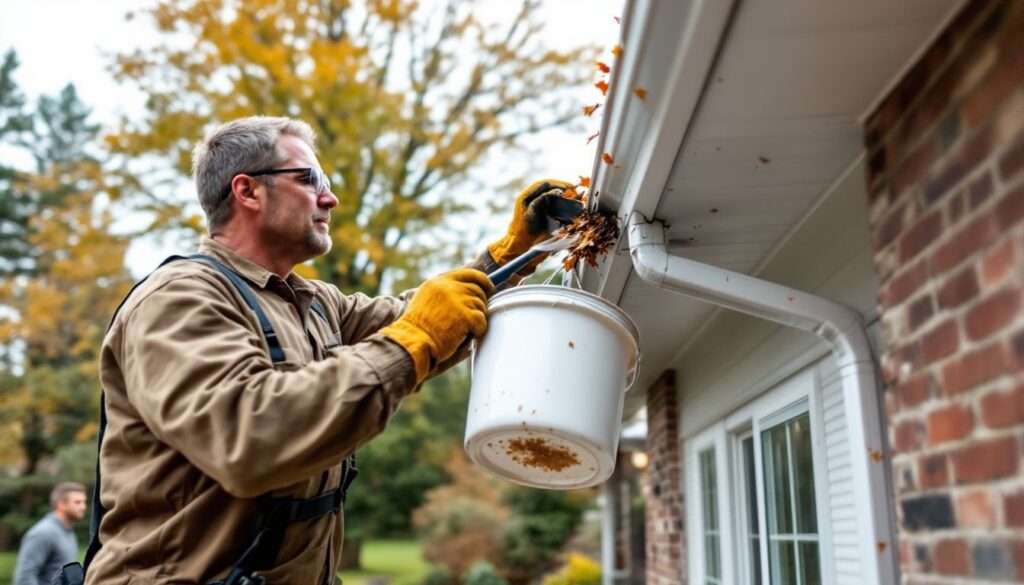
- Heavy-duty work gloves (leather or padded nitrile) to protect against sharp debris and metal edges
- Safety glasses or goggles to shield your eyes from falling debris
- A gutter scoop or small garden shovel (a repurposed kitchen utensil works in a pinch, but a dedicated gutter scoop is faster)
- A bucket or heavy-duty garbage bag to collect debris as you go
- A garden hose with spray nozzle for final rinsing
- Optional: a wet/dry vacuum with an extension tube, which speeds the job if you’re tackling large runs
Consider knee pads if you’ll be kneeling on the roof edge to access gutters. A headlamp or cap light is invaluable if you’re working in early morning or late afternoon when shadows make it hard to see inside gutters.
The Cleaning Process
1. Set up safely and scout the job. Place your ladder at a stable angle (75-degree lean) at one end of a gutter run. Have your helper hold the base and never step above the third rung from the top. Start by looking inside the gutter to assess debris type and volume. Dry leaves come out easily: wet, compacted material takes longer.
2. Scoop out loose debris. Working from one end toward the downspout, use your gutter scoop to pull out leaves, twigs, and soil accumulation. Drop everything into your bucket or bag. Go slow, aggressive scraping can damage gutter liners or dislodge fasteners. Work your way along the entire run, repositioning the ladder as needed.
3. Check the downspout for blockages. Once the gutter trough is clear, water should flow freely to the downspout. If it doesn’t, the downspout itself is likely clogged. Many people forget this step and end up with water still backing up. Use a plumbing snake or a high-pressure burst from your hose to clear the downspout from the top.
4. Rinse the gutter thoroughly. This is where most DIYers rush through and miss problems. Use your garden hose with a spray nozzle to flush the entire gutter from end to end. Watch how water flows, if it pools in low spots or doesn’t reach the downspout smoothly, you’ve found areas where the gutter has sagged and may need re-securing or replacement. Note these locations for future repairs.
5. Inspect fasteners and seams. While water is running, look for leaks at gutter joints or where the gutter attaches to the fascia. Small drips at seams can often be sealed with gutter caulk (silicone or polyurethane, not latex, which degrades outdoors). If fasteners are visibly loose or rust is heavy, tightening or replacing them now prevents worse problems later.
Timing and frequency: Plan to clean gutters in late fall after most leaves have dropped and again in spring before heavy rain season. If you have large deciduous trees overhead, you might need a third cleaning in mid-fall. Mark your calendar or set a phone reminder, this kind of maintenance is easy to postpone until it becomes expensive.
When to Call a Professional Gutter Cleaner
DIY gutter cleaning is straightforward for single-story homes and accessible runs. But some situations warrant hiring a professional. If your home has three or more stories, climbing and working at height becomes genuinely risky, even experienced DIYers slip. Professionals have proper fall protection and equipment to work safely at height.
If gutters are heavily rusted, bent, or sagging significantly, cleaning alone won’t solve the problem. You’ll need structural repairs or replacement, which professionals handle as part of service. When you find standing water that doesn’t drain even after cleaning, or if you spot foundation cracks or interior water damage, a professional can assess whether gutters are the culprit or if there’s a larger drainage problem requiring solutions like French drains or grading adjustments.
Resources like Angi, ImproveNet, and HomeAdvisor let you get quotes from local gutter specialists and read reviews from other Windsor homeowners. Most pros charge between $150 and $300 for a standard home cleaning, depending on gutter length and debris volume. Some offer gutter guards, mesh covers that let water through while blocking leaves, as an add-on. Guards reduce cleaning frequency but aren’t foolproof: they still need occasional clearing.
Regular maintenance, whether you do it yourself or hire help, is the real secret. A homeowner who cleans gutters twice yearly and watches for signs of damage will avoid the foundation issues, rot, and expensive repairs that catch unprepared homeowners off guard. Your gutters protect the structure that protects everything you own, treat them with the attention they deserve.