
Table of Contents
ToggleMinneapolis homeowners face a unique gutter-cleaning challenge. The city’s four-season climate, heavy spring snowmelt, summer thunderstorms, and autumn leaf drop, keeps gutters working overtime. Clogged gutters don’t just look neglected: they redirect water toward your foundation, rot fascia boards, and create ice dams in winter. Gutter cleaning Minneapolis is a task most homeowners can handle themselves with the right tools, a clear head, and proper safety measures. This guide walks you through the process, from understanding why it matters in Minnesota’s climate to executing the job like a seasoned DIYer.
Key Takeaways
- Gutter cleaning Minneapolis is essential twice yearly—in late fall and early spring—to prevent ice dams, foundation cracks, and costly water damage caused by the city’s harsh climate.
- Proper safety equipment and tools are non-negotiable: use a 20–24 foot fiberglass extension ladder with a stabilizer bar, wear gloves and a respirator, and always have a helper on the ground.
- Clear debris systematically with a gutter scoop, flush with water toward downspouts, and use a plumbing snake or wet/dry vacuum to unclog downspouts—the most common clog location.
- Install downspout extensions or splash blocks to redirect water at least 3–4 feet from your foundation, preventing the wet soil expansion that stresses Minnesota’s clay foundations.
- Trim tree branches 6 feet back from your roofline and consider gutter guards ($5–15 per linear foot) to reduce debris entry and extend cleaning intervals.
Why Regular Gutter Cleaning Matters In Minnesota’s Climate
Minneapolis winters are brutal on gutters. Snow and ice accumulate on roofs, then melt and refreeze in the gutters, creating heavy ice dams that trap water behind them. That backed-up water seeps under roofing shingles, into attic spaces, and down exterior walls, potentially causing tens of thousands of dollars in water damage.
Then there’s spring. Snowmelt runoff is heavy, and if your gutters are choked with winter debris, that water has nowhere to go but sideways, toward your foundation. Minnesota’s clay soil is particularly prone to expansion when wet, which stresses foundation walls and can lead to cracks.
Autumn leaf drop in Minneapolis is also substantial. Oak, maple, and ash leaves pack tightly into gutters, trap moisture, and create an ideal environment for mold and rot. Decomposing leaves also break down into sludge that clogs downspouts.
The takeaway: a clean gutter system is preventative maintenance, not luxury. Most Minneapolis homes should be cleaned twice yearly, once in late fall after leaves drop, and once in early spring before snowmelt peaks. Homes surrounded by large trees may need three cleanings per year.
Essential Tools And Safety Equipment You’ll Need
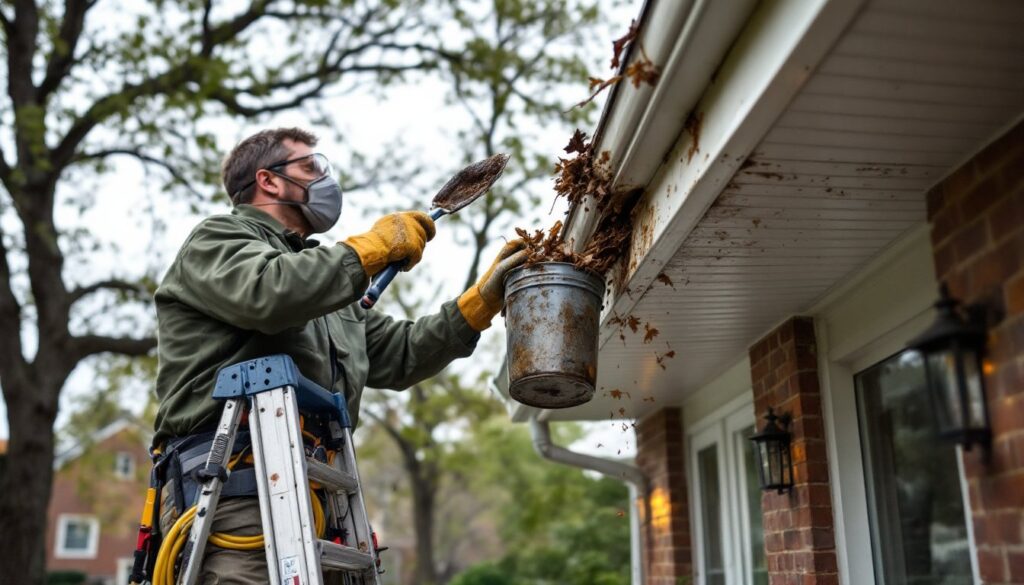
Before you climb that ladder, gather the right tools. A shortcut here leads to a fall, and falls from ladders send over 240,000 Americans to the ER each year.
Tools:
• 20–24 foot extension ladder (fiberglass or aluminum, fiberglass won’t conduct electricity if you’re near power lines)
• Ladder stabilizer bar or standoff bracket (keeps the ladder away from your gutters and prevents damage)
• Heavy-duty work gloves (leather or nitrile-coated: gutter sludge is sharp and dirty)
• Gutter scoop or hand shovel (a plastic gutter scoop is gentler on gutters than a metal shovel)
• 5-gallon bucket with a hook that clamps to the ladder
• Wet/dry shop vacuum (optional but a game-changer for speed and mess reduction)
• Hose with spray nozzle (for flushing out sludge and testing downspout flow)
• Downspout extensions or splash blocks (to redirect water at least 3-4 feet from the foundation)
Safety Equipment:
• ANSI-rated safety glasses (debris flies)
• Respirator or N95 mask (mold spores and decomposed leaves aren’t great to breathe)
• Long sleeves and long pants (protects skin from debris and sharp gutter edges)
• Slip-resistant shoes (wet gutters are slippery)
• A second person to stabilize the ladder and hand you tools
Don’t skimp on the ladder. A wobbly ladder or one that’s too short forces you to overreach, which is how most ladder accidents happen.
Step-By-Step Guide To Cleaning Your Gutters
Setting Up Your Work Area And Safety Measures
Start by inspecting the gutter from the ground. Look for sagging sections, rust holes, or gaps where pieces have separated, these might need professional attention or replacement before cleaning.
Position your ladder on level ground, perpendicular to the gutter run. Use a ladder stabilizer bar to keep the ladder arms a foot or so away from the gutter itself: this prevents the ladder from resting on (and denting) the gutter channel. Always maintain three points of contact on the ladder, two hands and a foot, or two feet and a hand.
Have your helper stand at the base of the ladder, ready to stabilize it and pass tools. Never work alone on a ladder, especially at heights where a fall is possible. Set your bucket within arm’s reach, and tie it to the ladder with a rope or strap so it doesn’t tip and spill debris on your helper’s head. Wear your goggles and gloves before you climb.
Removing Debris And Unclogging Downspouts
Step 1: Scoop Out the Large Debris
Start at one end of the gutter run (typically near a downspout) and work systematically toward the other end. Use your gutter scoop or hand shovel to scrape out leaves, twigs, and accumulated sludge into your bucket. Work slowly and scrape the bottom and sides of the gutter to get everything. Don’t rush, thorough prep work prevents clogs later.
Step 2: Flush With Water
Once you’ve scooped out the visible debris, use your hose to flush the gutter. Start at the high end of the run and spray toward the downspout. Watch how the water flows: it should move freely toward the downspout without pooling or backing up. If water pools in a section, the gutter may be sagging and might need to be releveled or replaced, that’s beyond a DIY cleaning but worth noting for future repairs.
Step 3: Clear the Downspout
This is where most clogs happen. Direct the hose spray up into the downspout from below, or use a plumbing snake if water doesn’t flow freely. A wet/dry vacuum also works well: position the hose over the downspout opening and let it suck out the clog. You’ll hear the sludge get pulled in, not pleasant, but effective.
If the downspout is severely clogged, you may need to disconnect it at the base (usually held by a bracket and one or two screws or rivets) and clear it by hand or blow it out with a compressor. Reconnect securely and test the flow again with the hose.
Step 4: Final Flush and Inspection
Once the downspout is clear, do a final full-length flush of the gutter. Water should move smoothly from the high end all the way down into the downspout. Check that the downspout itself directs water at least 3-4 feet away from your foundation. If it dumps water right against the house, that’s a foundation risk. Install a downspout extension or splash block to redirect that flow.
Preventing Future Buildup: Maintenance Tips For Minneapolis Homes
You’ve cleaned your gutters once. To avoid doing it again in two months, adopt a prevention mindset.
Trim overhanging branches. Tree branches that hang directly over your roof are a gutter’s worst enemy. They drop leaves, twigs, and needles straight into the channel. Trim back branches at least 6 feet from your roofline so debris has less of a direct path into gutters.
Consider gutter guards. Screens, meshes, and solid-top gutter covers reduce (but don’t eliminate) debris entering the system. Solid covers with a curved design that sheds leaves are more effective than simple screens, which can clog with fine debris and sludge. Gutter guards range from $5–15 per linear foot installed. They’re not perfect, and gutters behind guards still need occasional inspection, but they reduce cleaning frequency. Professional installers in Minneapolis can handle this, or you can install some systems yourself.
Schedule twice yearly. Mark your calendar for mid-November (after leaf drop) and early April (before spring thaw peaks). If you have multiple large trees, add a summer cleaning in June.
Check for damage. While you’re up there, look for holes, cracks, or rust. Small holes can be patched with gutter caulk or a patch kit. Rust holes in steel gutters usually signal replacement is needed, aluminum gutters resist rust better. Gutter replacement is a contractor job, but you can get cost estimates from local professionals. Professional gutter cleaning services in Minneapolis often offer repair and replacement quotes as well.
Upgrade your downspout setup. Make sure all downspouts have extensions that push water at least 3–4 feet away from the foundation. Splash blocks are cheap ($10–20) and more effective than you’d think. Some homeowners connect downspouts to underground drainage systems or dry wells to manage large volumes of runoff, though that’s a more advanced project.
Monitor for ice dams in winter. If you notice ice damming (a thick ridge of ice at the roof edge with icicles hanging below), the problem isn’t always the gutters, it’s often poor attic insulation or ventilation allowing heat to melt roof snow. Ice dams are a separate issue, but clean gutters help them form less frequently. Consult homeowner maintenance guides for seasonal winterization steps beyond gutter cleaning.
Conclusion
Cleaning gutters is a straightforward DIY task when you respect the height, gather proper tools, and don’t rush. Minneapolis’s climate makes it a necessity, not an option. Twice yearly, you’ll spend 2–4 hours on a ladder to prevent thousands in water damage and extend your roof’s life. If heights make you uncomfortable or your home’s layout is unusually complex, hiring a professional is a smart investment, the cost is modest compared to foundation repair. But for most homeowners, this is a project worth owning. Keep your gutters clean, and your home’s drainage system will reward you with dry basements and healthy wood framing for decades.