
Table of Contents
ToggleIf you’re a homeowner in Baltimore, gutter cleaning might not be top-of-mind, until water starts pooling in your basement or shingles begin to rot. Baltimore’s climate brings heavy spring rains, summer thunderstorms, and abundant leaf fall, all of which conspire to clog gutters fast. Neglecting this simple task can lead to foundation damage, fascia decay, and costly repairs. Whether you tackle gutter cleaning Baltimore MD style as a DIY project or call in the pros, understanding what’s at stake and how to keep your gutters flowing freely is essential. This guide walks you through the when, why, and how of keeping your gutters in top shape year-round.
Key Takeaways
- Baltimore gutter cleaning should be performed at least twice yearly (spring and fall) due to heavy rains, seasonal storms, and abundant leaf fall that quickly clog gutters.
- Neglecting gutter maintenance can lead to foundation damage, fascia decay, ice dams, and costly repairs—signs include sagging gutters, standing water, and water stains on fascia or basement walls.
- DIY gutter cleaning requires proper safety equipment (extension ladder, gloves, glasses, gutter scoop) and careful technique, but professional services in Baltimore typically cost $150–$400 per visit and offer faster, insured alternatives.
- Install gutter guards or screens and extend downspouts 4–5 feet away from your foundation to prevent debris accumulation and water damage that threatens structural integrity.
- Trim overhanging tree branches and check gutter slope (about 1/4 inch per 10 feet) twice yearly to maintain proper drainage and reduce the frequency of cleaning needed year-round.
Why Gutter Cleaning is Critical in Baltimore’s Climate
Baltimore summers bring intense humidity and thunderstorms that dump water on roofs faster than gutters can handle if they’re clogged. Fall is even worse, the city’s trees shed leaves by the thousands, and combined with pollen and twigs, your gutters turn into composting bins in weeks. Winter ice dams form when clogged gutters trap water that freezes and backs up under your shingles, creating leaks inside your attic.
The Chesapeake Bay’s proximity means higher moisture content in the air, which accelerates rust and corrosion on metal gutters. Water that sits in clogged gutters becomes stagnant, attracting mosquitoes and breeding bacteria. More critically, standing water behind a gutter dam puts pressure on fascia boards and soffit, rotting wood that’s expensive to replace.
Most Baltimore homes need gutter cleaning at least twice a year, spring and fall, though homes surrounded by trees may need three or four cleanings annually. Ignoring this maintenance compounds problems: sagging gutters, separation from the roofline, and foundation cracks from misdirected water all stem from deferred cleaning.
Signs Your Baltimore Gutters Need Immediate Cleaning
Seasonal Debris and Common Issues
Look for visible debris spilling over the gutter edge, leaves, twigs, and shingle granules are the usual culprits in Baltimore. If you notice standing water or algae growth inside the gutter (a dark, slimy film), that’s a sign water isn’t draining. Sagging gutter sections or visible separation from the fascia board mean the weight of debris and water is pulling the gutter down, this needs attention before structural damage spreads.
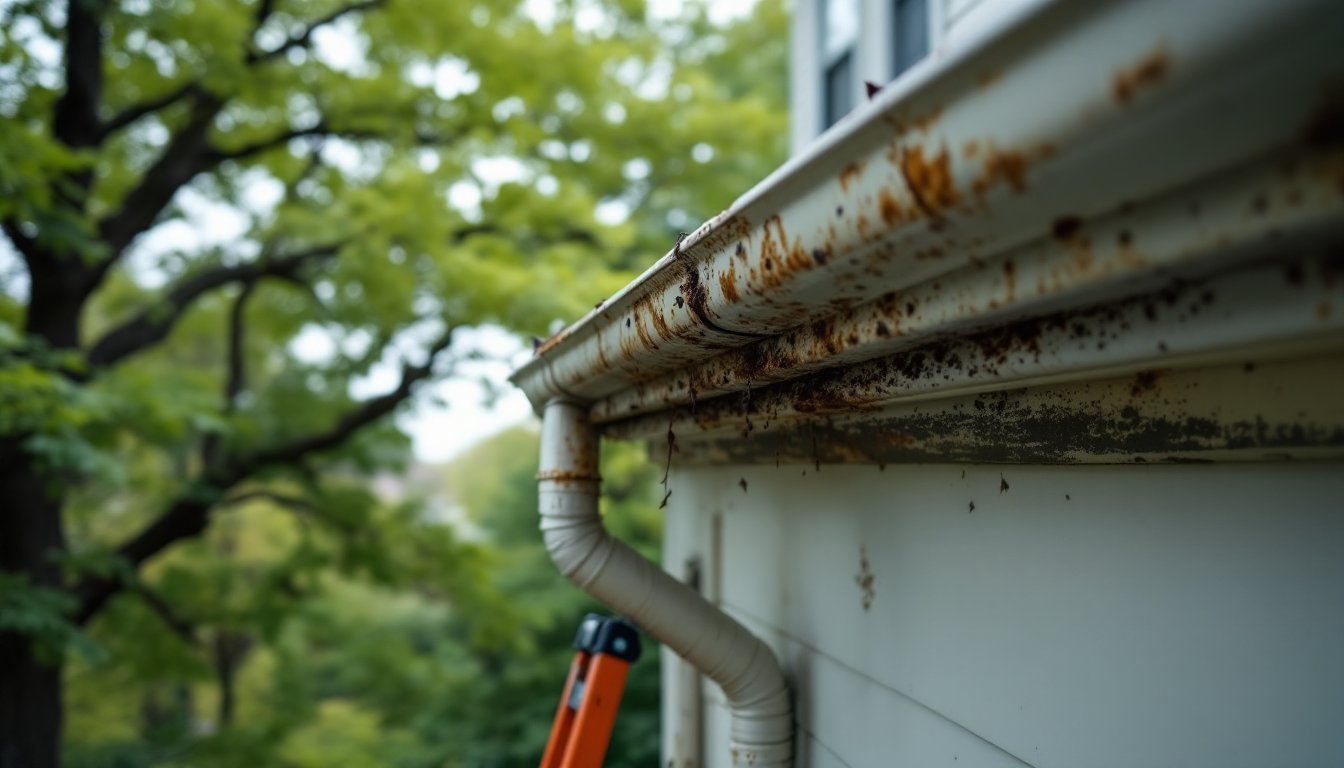
Water stains on the exterior of your fascia or on the ground below downspouts indicate overflow. Listen during rainstorms: if water is dripping or splashing outside the gutter instead of flowing through the downspout, you’ve got a blockage. Peeling paint or rust spots on metal gutters suggest water is pooling and corroding the finish from the inside.
Check your downspouts too. If water isn’t flowing out the bottom during or after rain, the downspout itself is likely clogged, debris can accumulate inside the pipe, or the outlet may be blocked. When was the last time someone gave your downspouts a little TLC? If you can’t remember, it’s probably time for a downspout cleaning to prevent water damage and costly foundation repairs.
Indoors, check for water marks on your basement walls or ceiling stains below soffit areas. These point to leaks caused by clogged or failed gutters. Don’t wait for visible damage, cleaning at the first sign of blockage costs far less than fixing rot.
DIY Gutter Cleaning: Step-by-Step Guide for Baltimore Homeowners
Tools and Safety Equipment You’ll Need
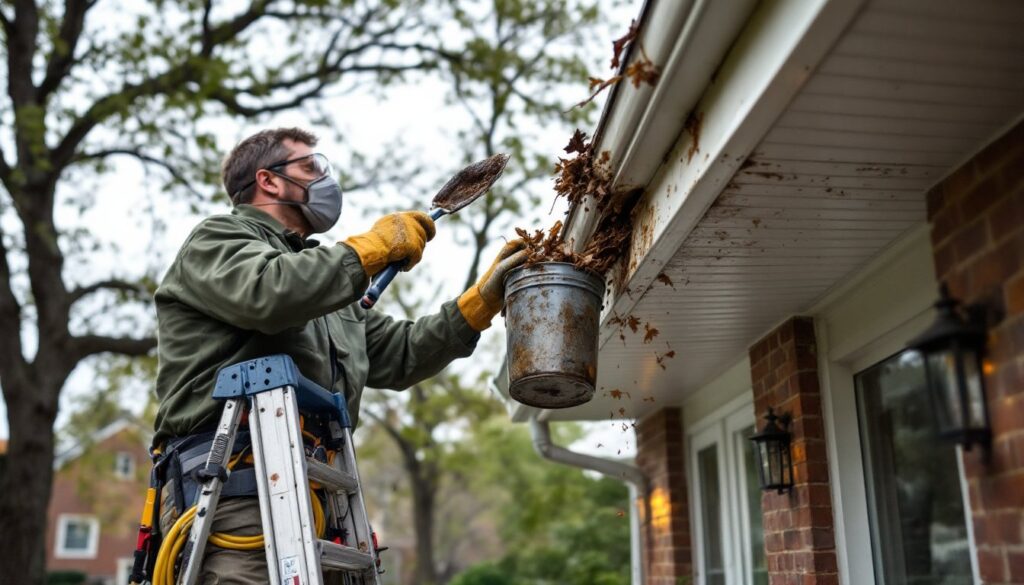
Before you climb a ladder, gather the right gear. You’ll need a sturdy 20- to 24-foot extension ladder (longer than you think, you’ll want to avoid overreaching). A gutter scoop or small hand shovel works better than a trowel for scooping out packed debris. Wear heavy-duty work gloves (leather or nitrile coated) to protect against sharp gutter edges and rusty fasteners. Safety glasses keep debris out of your eyes, and a dust mask protects you from mold spores and dried bird droppings that accumulate in gutters. Sturdy shoes with good grip matter more than people realize, you’re leaning into a ladder one-handed.
If you don’t have a ladder stabilizer or stand-off, grab one. It keeps the ladder from resting directly against the fascia, which can crack trim and makes balance harder. A garden hose with a spray nozzle or a pressure washer on low setting (below 1500 PSI, higher and you’ll damage the gutter) helps flush debris downstream toward downspouts. Bucket or tarp at the base catches what falls.
Here’s the process:
- Set the ladder on level ground at least 3 feet from the gutter (so you’re leaning, not twisting sideways). Never overreach, reposition the ladder every few feet along the roofline.
- Scoop out the bulk of leaves, twigs, and debris into your bucket or tarp.
- Once the major debris is out, flush the gutter with your hose, working downslope. Watch how water flows, if it pools anywhere, that section may be sagging and needs adjustment or reinforcement.
- Flush the downspout from above, pushing water down through the pipe. If water backs up, the downspout is clogged: you may need a plumbing snake or pressure washer to clear it.
- Check the gutter outlet where it meets the downspout for debris caught in the elbow: clear any blockages.
Safety reminder: Never work on a ladder alone, especially on a roof. Have someone spot you from below. Wear long sleeves to protect against cuts from sharp gutter edges and metal fasteners. Don’t rush, most ladder accidents happen when people overreach or hurry.
If your gutters are sagging significantly, have multiple holes, or show heavy rust, professional replacement or repair may be smarter than cleaning. Baltimore’s saltier air speeds corrosion on aluminum and steel: if gutters are more than 20 years old, replacement with a quality product like K-style or half-round gutters in aluminum or copper makes financial sense.
Professional Gutter Cleaning vs. DIY: Which is Right for You?
DIY gutter cleaning saves money, usually $100–$300 if you already own a ladder, but it demands physical confidence, a clear schedule, and good weather. Baltimore’s wet springs and falls limit your window to work safely on a wet ladder. If you’re uncomfortable on heights, have a large two-story home, or your roof pitch is steep, hiring professionals is the smarter play.
Professional gutter cleaners in Baltimore typically charge $150–$400 per visit depending on home size and debris load. They carry insurance, use industrial-grade equipment, and finish in an hour what might take you half a day plus setup time. Many services also inspect gutters while they’re there, spotting damage you’d miss from a ladder.
You can find vetted gutter cleaning professionals through resources like Baltimore’s top-rated gutter cleaning services, which list reviews and ratings from homeowners. If you’re planning a larger project or need advice on gutter replacement, platforms like ImproveNet help you connect with local contractors and compare estimates.
Hybrid approach: DIY clean your gutters in spring, and hire professionals for fall when the debris load is heaviest and weather becomes unpredictable. This splits the cost and the physical burden.
Preventing Future Gutter Problems in Baltimore
Install gutter guards or screens to reduce debris entry, mesh or solid covers block leaves while allowing water through. They’re not foolproof (pine needles and shingle granules still accumulate), but they cut cleaning frequency by 50% or more. Popular options include brush inserts (inexpensive but require frequent attention) and solid covers with curved overhangs (pricier but more durable).
Ensure downspouts extend at least 4–5 feet away from your foundation. Water dumped directly against your basement wall causes cracks and leaks. Flexible downspout extensions or underground drainage pipes (if your lot slopes poorly) redirect water safely away.
Check gutter slope twice a year. Gutters should slope slightly (about 1/4 inch per 10 feet) toward downspouts. Water pooling in low spots invites clogs and corrosion. If you notice sag, tighten the gutter hangers or call a professional to re-hang and secure them.
Trim overhanging tree branches to reduce leaf drop onto your roof and gutters. In Baltimore’s neighborhoods, this alone cuts cleaning frequency significantly. Schedule gutter cleaning in mid-April and mid-October, after spring storms but before summer heat, and after most leaves fall but before winter ice dams. Stay consistent, and you’ll avoid the emergency calls.
For comprehensive guidance on seasonal home maintenance beyond gutters, Today’s Homeowner offers seasonal checklists and repair guides that help you stay ahead of weather-related damage.
Final Thoughts: Keep Your Gutters Flowing
Gutter cleaning might seem tedious, but it’s one of the easiest maintenance tasks to prevent thousands in foundation, roof, and structural damage. Baltimore’s climate demands discipline, two cleanings a year keeps most homes protected. Whether you climb the ladder yourself or hire a local pro, consistency beats heroic one-time effort. Your gutters are the unsung heroes of your home’s health: treat them that way.