
Table of Contents
ToggleGutters clogged with leaves, pine needles, and debris aren’t just an eyesore, they’re a direct threat to your foundation, siding, and roof in New York’s demanding climate. The state’s mix of heavy spring rains, wet autumn leaves, and freeze-thaw cycles puts extra stress on gutter systems. Whether you’re a first-time homeowner or a seasoned DIYer, knowing how to clean gutters in New York and when to call in a professional can save you thousands in water damage repairs. This guide covers the essentials: when to clean, how to do it safely, what problems warrant professional help, and how to keep your gutters working year-round.
Key Takeaways
- Gutter cleaning in New York should be performed twice yearly—once in late fall (mid-November through early December) and again in late spring (May/June)—to prevent water damage from heavy rains, leaf accumulation, and freeze-thaw cycles.
- Professional gutter cleaning should be called if you spot separation from fascia, rust or holes, seeping seams, mold, or cracked sections, as these indicate structural damage beyond DIY repair.
- Safety is critical when cleaning gutters: always use a stable ladder on level ground, maintain proper reach distance, never stand on the top rung, work in daylight, and have a spotter present to prevent falls.
- Gutter guards or covers can reduce cleaning frequency to every 3–4 years and cost between $1,000–$3,000 installed, though they don’t eliminate the need for periodic maintenance.
- Trimming overhanging branches 4–6 feet back from gutters and ensuring downspout extensions discharge at least 4–6 feet from the foundation significantly reduces debris accumulation and foundation water damage.
Why Gutter Cleaning Matters in New York’s Climate
New York experiences four distinct seasons, each bringing its own gutter challenges. Spring rains can dump heavy water loads on clogged systems, causing water to back up under roofing and into walls. Fall brings the infamous leaf dump, a single mature oak or maple can drop thousands of leaves onto your roof and gutters. Winter’s freeze-thaw cycles are particularly brutal: water trapped in clogged gutters freezes, expands, and can crack or warp the gutter structure itself.
When gutters overflow, water doesn’t just wet the fascia board, it runs down your siding, saturates the soil around your foundation, and seeps into basements or crawl spaces. Over time, this moisture rots wood framing, rusts steel beams, and creates perfect conditions for mold and mildew. In New York, where older homes are common and foundation issues can cost $10,000 or more to repair, a clean gutter is genuinely cheap insurance.
Guards and screens help, but they’re not foolproof. Finer debris still gets through, and even the best guards need periodic inspection and cleaning. The bottom line: your gutters are part of your home’s water management system, not just decorative trim.
The Best Time to Clean Gutters in New York
In New York, aim for two thorough cleanings per year: one in late fall after leaves have dropped (typically mid-November through early December) and another in late spring (May or early June) after winter damage is visible and spring rains begin. If you have many trees near your home, consider four cleanings, adding early fall (September) and early spring (March).
Fall cleaning is critical. A gutter full of wet leaves becomes heavy, compacts, and can pull away from the fascia. Winter snow and ice can then build up behind clogged gutters, creating ice dams that force water under your shingles. Don’t wait until December: clean while you can still stand safely on a ladder and the debris is dry enough to move easily.
Spring cleaning is about damage assessment. After winter, check for icicles, sagging sections, or loose fasteners. This is also when you’ll spot any leaks or damage from freezing and thawing. If gutters already show wear, prioritize professional inspection before the heavy summer thunderstorm season begins. Cleaning in pleasant weather (50–70°F, no rain forecast) makes the work safer and faster. Avoid cleaning during or right after rainstorms, when gutters are heavy and the ladder base can slip on wet ground.
DIY Gutter Cleaning: Tools and Step-by-Step Instructions
Materials and Tools You’ll Need:
• Ladder – A 24-28 foot extension ladder is typical for single-story homes: measure twice before buying or renting.
• Work gloves – Heavy-duty leather or nitrile (not thin cotton).
• Safety glasses or goggles – Essential: debris flicks upward more than you’d think.
• Gutter scoop or small shovel – A plastic scoop designed for gutters beats a putty knife: a small garden shovel works too.
• Bucket – 5-gallon for debris: tie it to the ladder with a rope to keep your hands free.
• Garden hose with spray nozzle – For flushing and final rinse.
• Ear protection – If using a power washer (optional but recommended).
Step-by-Step Instructions:
-
Set up safely. Place the ladder on level, solid ground, not on soft mulch or gravel. If you’re on concrete or asphalt, place a rubber mat under the legs to prevent slipping. Position the ladder so your hips stay within the side rails: never lean more than an arm’s length to either side.
-
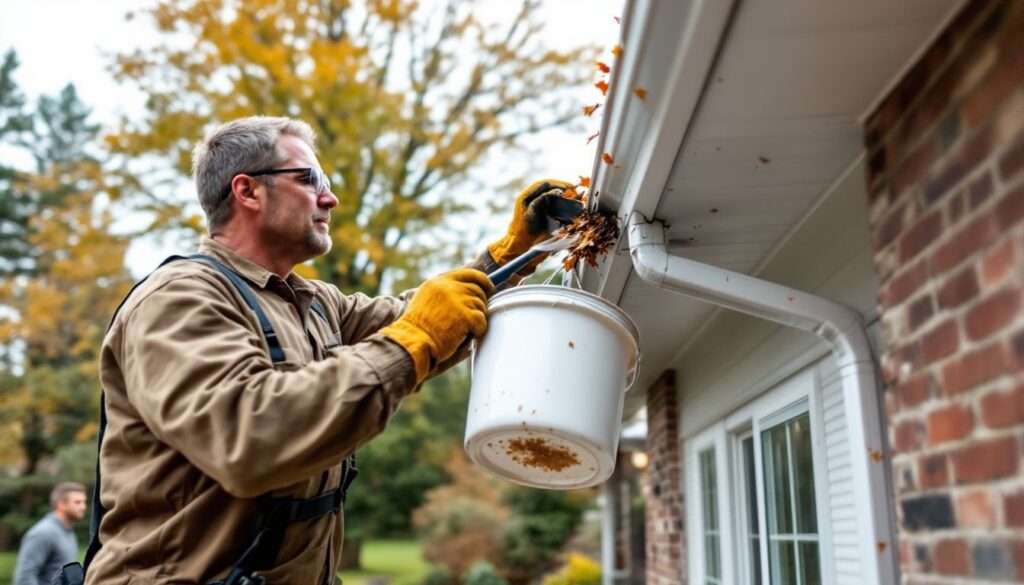
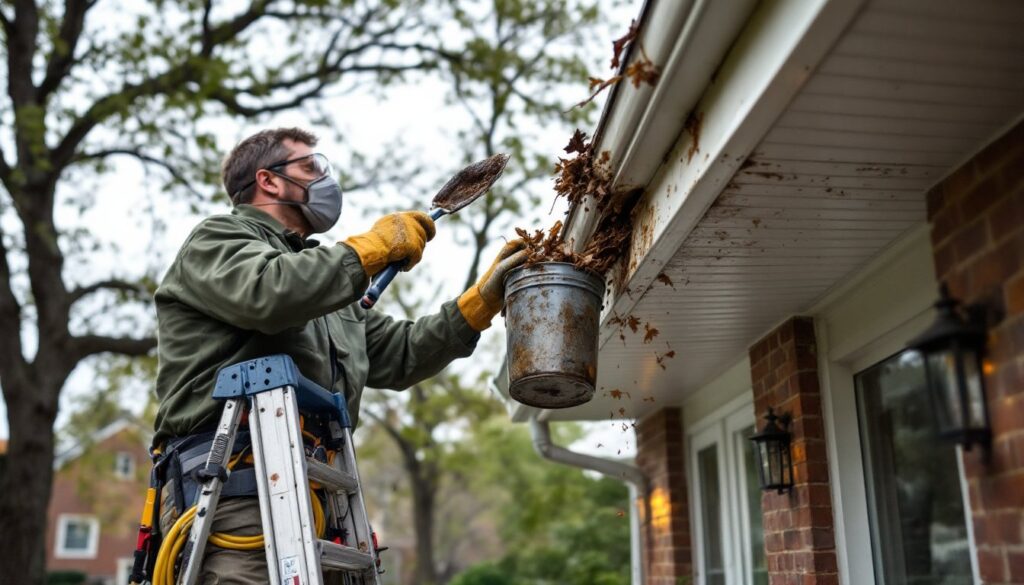
Scoop out debris. Start at one end and work toward the downspout. Use the gutter scoop or small shovel to remove leaves, twigs, and packed silt. Drop debris into the bucket. Wear your gloves, you’ll encounter soggy leaves, bird nests, and sometimes animal droppings.
-
Flush the section. Once scooped, use the hose to rinse out remaining silt and smaller debris. Work from the far end toward the downspout so water carries debris out. If water backs up, the downspout or the section ahead is clogged: see the next section for downspout clearing.
-
Check the pitch. As water runs, watch whether it flows smoothly toward downspouts. If it pools or runs the wrong direction, the gutter has sagged or shifted. Note this: you may need fastener adjustment or professional releveling.
-
Move and repeat. Reposition the ladder and work through the entire system. Don’t rush: take breaks and stay hydrated.
-
Final flush. Run water through the entire gutter and downspout system one more time to confirm everything drains cleanly.
Essential Safety Precautions for Ladder Work
Never skip this. Ladder accidents send thousands of homeowners to the ER each year. Before climbing:
• Inspect the ladder. Check for bent rails, loose rivets, or cracked side rails. A damaged ladder is garbage, don’t use it.
• Wear appropriate footwear. Boots or sneakers with good tread. No flip-flops or socks.
• Have a spotter. A second person keeps the base stable and can grab a bucket or hand tools up to you. They also call for help if you fall.
• Avoid power lines. Keep the ladder and yourself at least 10 feet from overhead wires. Electrocution is silent and fatal.
• Don’t overreach. If you need to stretch more than an arm’s length, move the ladder. Falling from 20 feet happens in a split second.
• Never stand on the top rung. The top three rungs are for hand placement only.
• Work in daylight. Cleaning gutters at dusk or using only a flashlight is risky. Schedule for morning or early afternoon.
• Don’t go it alone. Tell someone what you’re doing and when you’ll be done. If you slip, you need help nearby.
If you’re uncomfortable on a ladder, have mobility issues, or have a large or steeply pitched roof, hire a professional. No gutter is worth a hospital visit.
How to Spot Gutter Problems That Need Professional Attention
While cleaning, watch for red flags that signal structural damage or wear beyond simple debris removal. If your gutters show any of these signs, call a pro, or at minimum, get a written estimate before attempting repairs:
Separation from fascia. If the gutter is pulling away from the eaves (gaps wider than 1/4 inch, sagging sections), fasteners have failed or the fascia is rotted. This isn’t a DIY tightening job: you need proper fasteners and possibly fascia replacement.
Rust, holes, or coronal damage. Small holes rust through gutters and allow water to weep onto fascia and siding. Rust typically means the gutter is nearing end-of-life (15–25 years, depending on material). Patching a small hole with silicone sealant buys time, but if you see widespread rust or multiple holes, replacement is cheaper than chronic leaks.
Seams separating or leaking. Seams at gutter joints often fail first, especially in older systems. Water running out of a seam during flushing means the sealant has failed. Professional resealing or joint replacement is the fix.
Downspout clogs or damage. If water doesn’t drain from gutters even after you’ve cleared visible debris, the downspout or underground drain is blocked. A professional can snake or camera-inspect the line. Blocked underground drainage can cause foundation flooding, don’t ignore it. Many homeowners find downspout cleaning essential for water damage prevention when addressing gutter issues.
Mold or mildew inside the gutter. This suggests chronic moisture retention, often from poor pitch or sealing. It’s not just cosmetic: mold can accelerate gutter deterioration and occasionally affects indoor air quality if spores reach your attic vents.
Cracked or split sections. Freezing and thawing cycles crack aluminum and vinyl gutters. Once cracked, they’ll only worsen. Replacement is the only proper fix.
Preventative Maintenance to Reduce Cleaning Frequency
Cleaning twice a year is standard, but a few preventative steps can reduce the mess and extend your gutters’ lifespan:
Install gutter guards or covers. Mesh, brush, or helmet-style guards block leaves while allowing water through. They’re not perfect, finer debris still gets in, but they dramatically cut cleaning frequency, especially if you have deciduous trees overhead. Cost varies widely: expect $1,000–$3,000 for a whole-house system installed professionally. They don’t eliminate cleaning, but homeowners with guards often go 3–4 years between major cleanings.
Trim overhanging branches. The easiest way to keep debris out of gutters is to not let it get there. If branches hang directly over the gutter, trim them back at least 4–6 feet. This also reduces shade on the roof, which helps prevent moss and mold growth.
Check downspout extensions. Make sure downspouts discharge at least 4–6 feet away from the foundation, not right at the soil line. Many gutter problems start when water pools around the foundation and then seeps in. Some homeowners use splash blocks or underground French drains for even better water management. Resources like ImproveNet and HomeAdvisor offer cost guides if you’re considering professional installation.
Inspect after storms. A heavy windstorm or ice accumulation can knock branches into gutters or bend sections. A quick visual inspection from the ground (with binoculars if needed) after major weather events catches damage early.
Seal small leaks promptly. A pinhole leak in a gutter becomes a larger hole in two seasons. Silicone-based gutter sealant or patching tape can buy time, but address the root cause, rust, a failing seam, or fastener corrosion, soon.
Know your region’s building codes. New York doesn’t have state-specific gutter code requirements, but local jurisdictions sometimes have provisions in their building codes about downspout drainage, foundation setbacks, and storm water management. Check with your town’s building department if you’re replacing gutters or adding drainage modifications. Gutter cleaning costs vary regionally: typical New York pricing for professional service, so DIY saves money if you’re comfortable on a ladder.
Conclusion
Gutter cleaning isn’t glamorous, but it’s one of the few maintenance tasks that directly protect your home’s structural integrity. Two cleanings per year, fall and spring, will handle most New York homes. Do the work safely, know when to stop and call a pro, and address problems early. Your gutters will last longer, and your foundation will thank you.